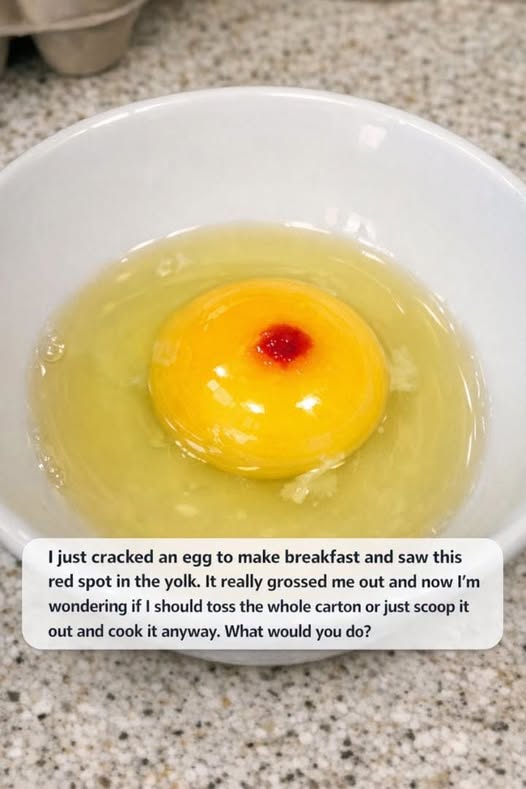
Few things are more surprising than cracking open an egg and seeing something unusual inside. For many people, a small red or brown spot in the yolk can immediately raise concerns about whether the egg is spoiled, unsafe, or something that should be thrown away.
While the sight may look unpleasant, experts explain that these spots are usually a natural occurrence rather than a sign that the egg is dangerous. Understanding what causes them can help prevent unnecessary food waste and reduce confusion in the kitchen.
Why Do Red Spots Appear in Egg Yolks?
The small red marks sometimes found in eggs are generally known as blood spots. They occur when a tiny blood vessel in the hen’s reproductive system breaks during the formation of the egg. Egg production is a complex biological process. As the yolk develops, it moves through different parts of the hen’s reproductive tract before the shell forms around it. Occasionally, a small vessel may rupture, leaving a tiny spot of blood trapped inside the egg. The presence of a blood spot does not mean the egg is fertilized, unhealthy, or contaminated. It is simply a natural variation that can happen during egg formation.

Are Eggs With Blood Spots Safe to Eat?
In most cases, an egg containing a small red spot is safe to consume as long as it has been properly handled, stored, and cooked. Food safety experts recommend checking eggs for other signs of spoilage before using them. A normal-looking shell, fresh smell, and proper storage are good indicators that the egg remains suitable for cooking. If the appearance of the spot is unpleasant, it can easily be removed with the tip of a clean spoon or knife before cooking. Many people choose to do this simply because they prefer the appearance of the egg without the mark. However, if an egg has an unusual odor, a strange texture, or visible signs of spoilage, it should be discarded.
How to Keep Eggs Fresh and Safe
Proper storage plays an important role in maintaining egg quality. Keeping eggs refrigerated helps slow bacterial growth and extends their usable life. It is also recommended to keep eggs in their original carton rather than transferring them to open containers. The carton helps protect the shells from absorbing strong odors from other foods and reduces the chance of accidental damage. When preparing meals, washing hands before and after handling raw eggs is an important food safety habit. Cooking eggs thoroughly is especially important for young children, older adults, pregnant individuals, and people with weakened immune systems.
Not Every Imperfection Means a Problem
Consumers often expect food products to look completely uniform, but natural foods can have small differences. Eggs can vary in yolk color, shell appearance, size, and texture depending on factors such as the hen’s diet and natural biology. A darker yolk, a slightly uneven white, or a small spot inside the egg does not automatically indicate poor quality. Modern food production includes safety checks, but occasional natural variations are unavoidable. Learning what is normal can help people make better decisions about the food they prepare at home.
Reducing Food Waste Through Knowledge
Finding something unexpected in an egg can be alarming, but throwing away an entire carton because of one small blood spot is usually unnecessary. Knowing the difference between harmless variations and actual signs of spoilage allows consumers to use food more confidently. The next time a red spot appears in a yolk, there is no need to panic. A quick inspection, proper cooking, and good kitchen hygiene are usually all that is needed to enjoy a safe and nutritious meal.