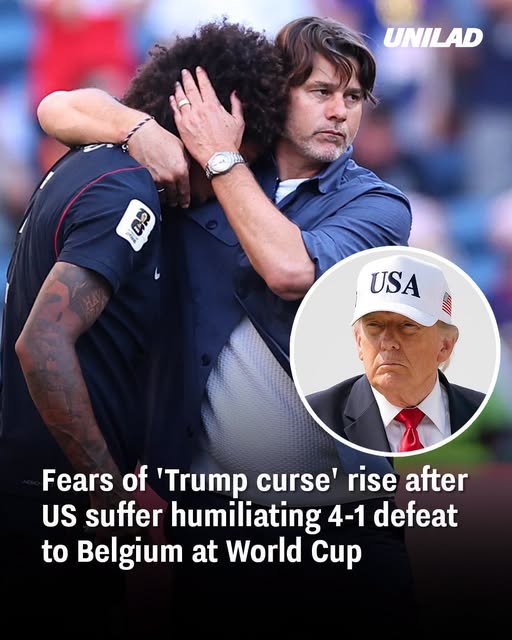
The United States’ dream of making a deep run at the 2026 FIFA World Cup came to a disappointing end after a heavy 4-1 defeat to Belgium in the Round of 16. While Belgium’s impressive performance earned praise, much of the online conversation quickly shifted away from football and toward a familiar internet theory known as the “Trump Curse.”
The phrase has once again gone viral, with thousands of social media users suggesting that former President Donald Trump’s involvement with sporting events is somehow followed by disappointing results for the teams he supports. Although the idea is clearly intended as a joke rather than a serious explanation, it has become one of the tournament’s biggest talking points.
A Controversial Build-Up
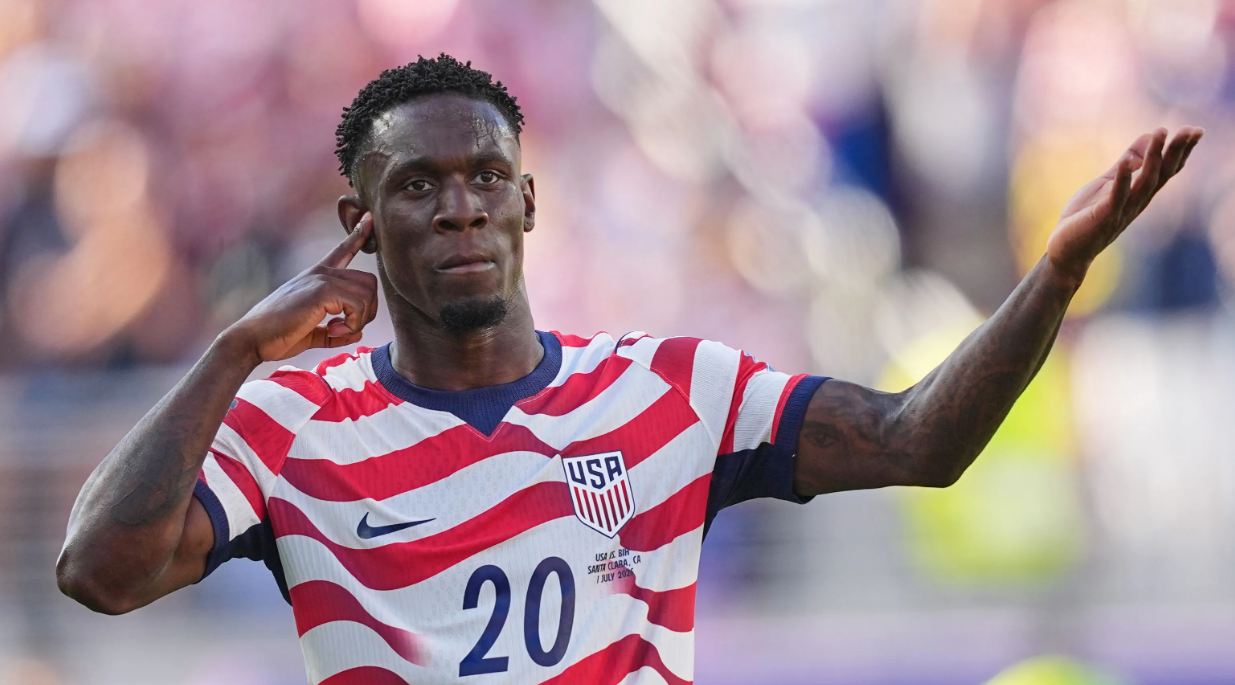
The match was already surrounded by controversy before kickoff. Days earlier, USA striker Folarin Balogun had received a red card that was expected to rule him out of the knockout clash. However, FIFA later lifted the suspension after reviewing the incident, allowing Balogun to return for the match against Belgium. The decision sparked criticism from football fans, former players, and officials across Europe, with many questioning the timing and fairness of the ruling. Despite Balogun’s availability, the United States struggled throughout the match as Belgium controlled the game and secured an emphatic 4-1 victory.
Social Media Revives the “Trump Curse”
Soon after the final whistle, social media platforms filled with posts claiming the result was another example of the so-called “Trump Curse.” The theory suggests that teams associated with or publicly supported by Donald Trump often suffer unexpected defeats. There is no evidence that such a curse exists, but the phrase has become a recurring internet meme whenever one of those teams loses. Some users shared previous examples they believe fit the pattern, while others joked that Belgium had avoided the curse by defeating the United States so convincingly. The discussion quickly spread across X, Reddit, and other platforms, with many treating the idea as lighthearted sports humor rather than a genuine belief.
Previous Events Fuel the Narrative
Supporters of the viral theory pointed to several sporting events over the past year. One example frequently mentioned was the New York Knicks’ NBA Finals campaign. Trump attended one of the games that ended in defeat, leading some fans to jokingly blame his appearance for the loss. The Knicks later recovered to win the series, prompting humorous posts claiming the “curse” had been broken. Other examples referenced online include the Ryder Cup, NFL games, college football, and even the Super Bowl, where predictions linked to Trump did not match the eventual outcomes. While each event has completely different circumstances, internet users have grouped them together to support the growing meme.
Belgium’s Celebration Adds More Attention
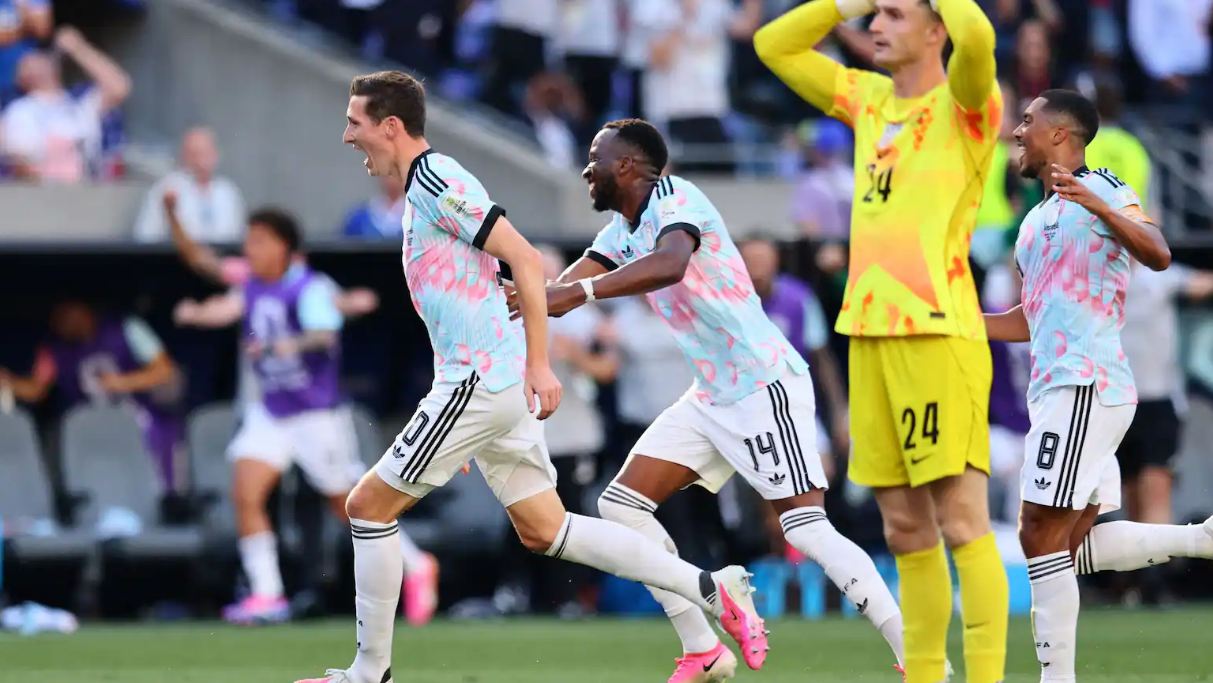
Belgium’s players added another layer to the story after scoring their fourth goal. Several members of the team celebrated by performing the dance move commonly associated with Donald Trump. The celebration quickly spread across social media, with many interpreting it as a playful reference to the controversy surrounding Balogun’s suspension. Belgium’s official social media account also posted a message saying “Overturn this,” which many fans viewed as a direct response to the pre-match debate over FIFA’s decision. The celebration became almost as widely discussed as the match itself.
Coincidence or Just Internet Humor?
There is no factual basis behind the so-called “Trump Curse.” Sports outcomes are determined by preparation, tactics, player performances, and countless unpredictable moments—not by political figures attending games or expressing support. Still, sports fans have always enjoyed creating superstitions and humorous theories to explain surprising results. Whether it involves lucky jerseys, stadium rituals, or supposed curses, these stories often become part of the entertainment surrounding major tournaments. For now, the “Trump Curse” remains exactly that—a viral internet joke that resurfaced after one of the biggest upsets of the World Cup knockout stage. Belgium earned its place in the quarter-finals through a dominant performance on the pitch, while the online debate continues to provide football fans with another memorable storyline from an already dramatic tournament.