Few people in the world possess wealth on the scale of Elon Musk. As the billionaire entrepreneur continues to expand his business empire, public fascination with his fortune remains as strong as ever. One question that frequently captures attention is what would happen if his enormous wealth were divided equally among his children.
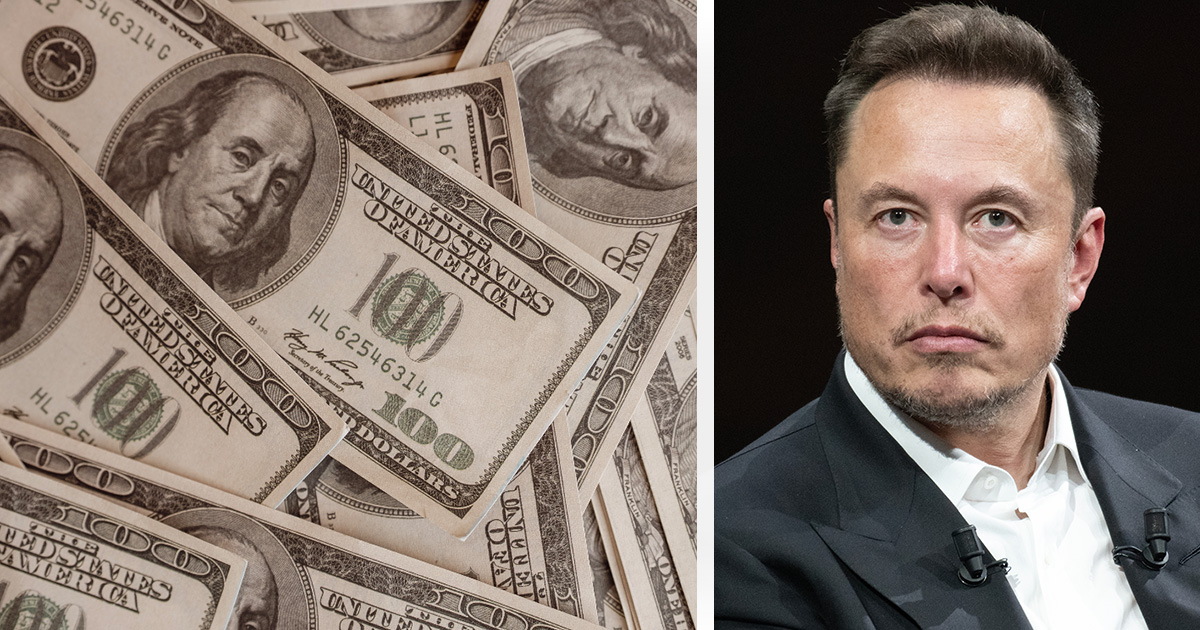
With an estimated net worth often fluctuating in the hundreds of billions of dollars depending on stock market performance, Musk’s fortune is regularly ranked among the largest on the planet. Because he is also the father of a large family, many people have wondered just how much each child could theoretically inherit.
A Fortune Unlike Almost Any Other
Much of Musk’s wealth comes from his stakes in companies such as Tesla and SpaceX. Unlike traditional cash fortunes, a significant portion of his net worth exists in company shares, meaning the value can rise or fall dramatically based on market conditions. Despite these fluctuations, Musk has remained one of the wealthiest individuals in modern history. His fortune has repeatedly crossed the $300 billion mark during periods when Tesla’s stock price surged, placing him in competition with other global billionaires for the title of the world’s richest person. Because of the sheer size of his wealth, even a relatively small percentage would represent a life-changing amount of money.
How Many Children Does Musk Have?
As of 2026, Musk is known to have at least 14 children with several different partners. The size of his family has become a frequent topic of public discussion, particularly because Musk has openly spoken about declining birth rates and the importance he believes population growth plays in the future of civilization. His children range in age from adults to very young infants, and many have attracted media attention due to their unusual names and their connection to one of the world’s most famous entrepreneurs.
The Viral Calculation
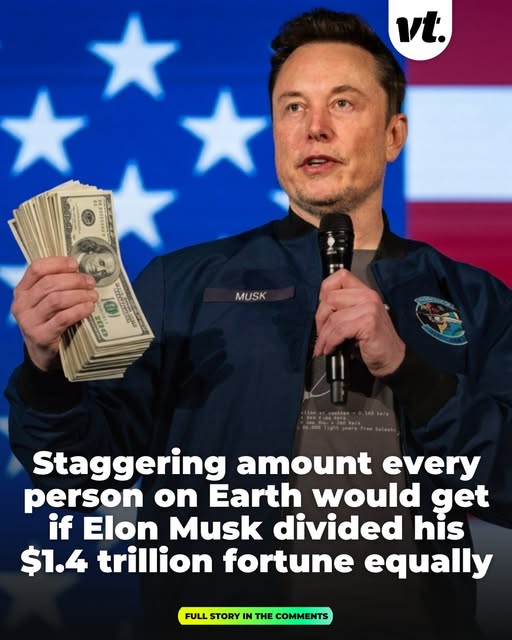
The article that sparked online discussion examined a hypothetical scenario involving Musk’s fortune being divided equally among his children. Using a valuation of approximately $420 billion, each of Musk’s 14 children would theoretically receive around $30 billion if the wealth were split evenly. That amount alone would instantly make every child one of the richest individuals in the world. To put the figure into perspective, $30 billion exceeds the entire fortunes of many well-known billionaires and corporate leaders. It is also larger than the annual economic output of some smaller nations.
Why the Reality Could Be Different
Financial experts point out that inheritance rarely works through a simple equal division of total net worth. Much of Musk’s wealth is tied to ownership stakes in companies, and any future estate planning could involve trusts, charitable donations, tax considerations, or other arrangements. Wealthy individuals often structure their estates years in advance to manage how assets are distributed. Musk himself has previously indicated that he does not necessarily believe in automatically handing vast fortunes to children. He has suggested that wealth should be directed toward people who demonstrate an ability to use it effectively and contribute positively to society. As a result, there is no guarantee that any future inheritance would be divided equally.
Public Fascination With Extreme Wealth
The discussion highlights society’s ongoing fascination with billionaire fortunes. For many people, numbers measured in hundreds of billions of dollars are almost impossible to comprehend. When those figures are converted into individual inheritances, however, the scale becomes easier to visualize. The idea that each child could receive tens of billions of dollars naturally attracts attention because it demonstrates just how extraordinary modern billionaire wealth has become. The conversation has also reignited broader debates about wealth concentration, inheritance, and the responsibilities that come with enormous financial resources.
More Than Just a Number
While the calculations are fascinating, they remain purely hypothetical. Net worth estimates change constantly, and future inheritance decisions remain entirely up to Musk and any estate plans he chooses to establish. Still, the viral discussion offers a remarkable glimpse into the scale of wealth accumulated by some of the world’s most successful entrepreneurs. Whether divided equally or not, the figures involved are so large that they continue to capture the imagination of people around the globe. For now, the question remains a mathematical curiosity, but it also serves as a reminder of how dramatically billionaire fortunes can reshape perceptions of money, inheritance, and wealth in the modern era.