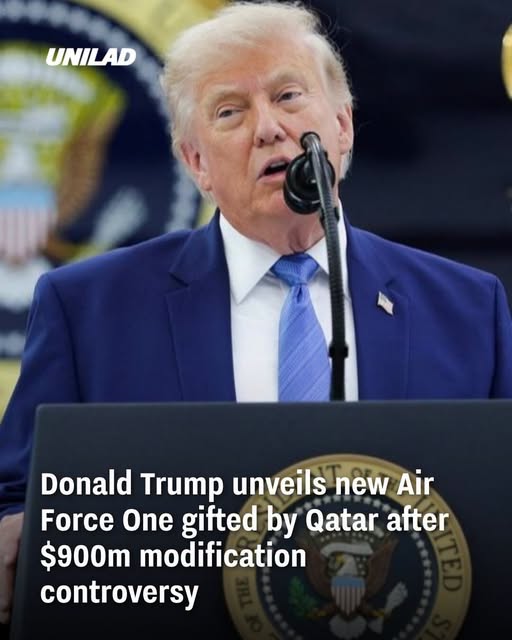
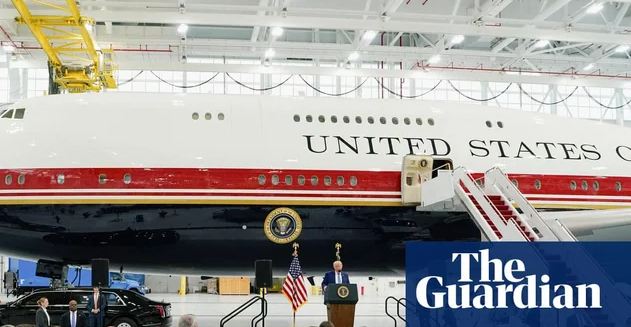
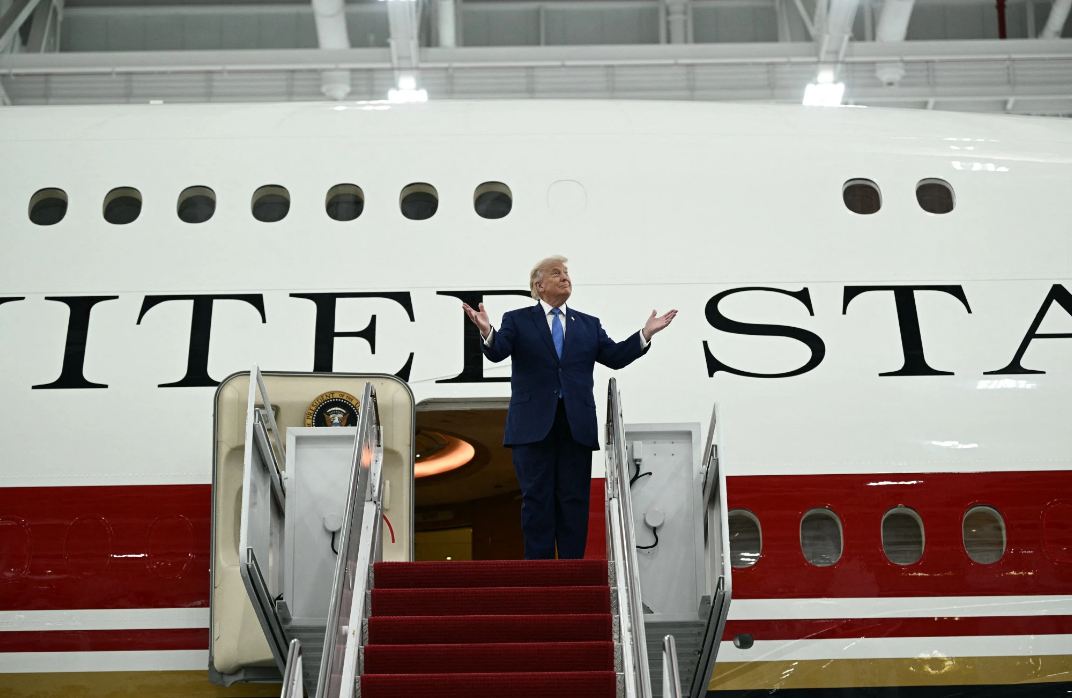
President Donald Trump has officially unveiled a newly modified Air Force One aircraft that will temporarily serve as the primary presidential plane while long-delayed replacements continue to be developed. The aircraft, a converted Boeing 747-8 originally gifted by the government of Qatar, was presented during a ceremony at Joint Base Andrews in Maryland. Trump emerged from the aircraft and showcased a dramatic new red, white, blue, and gold color scheme that differs significantly from the traditional design used on presidential aircraft for decades.
Why a New Air Force One Was Needed
The current Air Force One fleet consists of aging Boeing VC-25A aircraft that have been in service since 1990. Maintenance costs have steadily increased, while the official replacement program has experienced years of delays and budget overruns. The newly unveiled aircraft is intended to act as a temporary “bridge” plane until Boeing completes the next generation of presidential aircraft, which are now expected to enter service around 2028. Officials say the jet will help fill the gap while ensuring the president continues to have access to a modern airborne command center.
Extensive Modifications Were Required
Although the aircraft was originally a luxury jet, significant work was required before it could be used for presidential travel.The plane underwent extensive upgrades involving communications systems, security equipment, and defensive capabilities needed for presidential missions. Reports indicate that the modification program cost hundreds of millions of dollars, with some estimates placing the overall investment near $900 million, while other reports suggest costs could eventually exceed that figure. The U.S. Air Force has emphasized that the aircraft was thoroughly evaluated and modified to meet the strict standards required for transporting the commander-in-chief. Commissioning flights and final testing are expected before full operational use.
A New Look for a Historic Aircraft
One of the most noticeable changes is the aircraft’s appearance. For more than half a century, presidential aircraft have largely followed the iconic light-blue design introduced during the administration of John F. Kennedy. Trump’s new version replaces that style with a darker and more patriotic color scheme featuring navy blue, bright red accents, and a large American flag displayed on the tail. Trump praised the aircraft’s design and craftsmanship during the unveiling, describing it as a modern symbol of American prestige and power. He argued that the United States should operate an aircraft that matches or exceeds the standards of planes used by other world leaders.
Controversy Surrounding the Gift
Despite the fanfare surrounding the unveiling, the aircraft has generated considerable political debate. Critics have questioned the ethics of accepting such a valuable aircraft from a foreign government and have raised concerns about transparency, security, and the ultimate cost to taxpayers. Some lawmakers and ethics experts have argued that accepting the aircraft creates the appearance of a conflict of interest, even if all legal requirements were followed. The administration has defended the decision, maintaining that the aircraft was accepted legally by the U.S. government and provides a practical solution while Boeing’s replacement program remains delayed. Officials have also stressed that the plane underwent rigorous security modifications before being approved for presidential use.
What Happens Next?
The aircraft is expected to begin service in the near future and could be used on both domestic and international trips. It is also scheduled to participate in high-profile national events, including celebrations connected to America’s 250th anniversary. While the new aircraft will temporarily join the presidential fleet, it is not expected to replace the future Boeing VC-25B aircraft permanently. Instead, it will serve as an interim solution until the official next-generation Air Force One program is completed. The unveiling marks one of the most significant changes to presidential air travel in decades and ensures that debate over the aircraft’s cost, origins, and symbolism is likely to continue long after its first official flight.