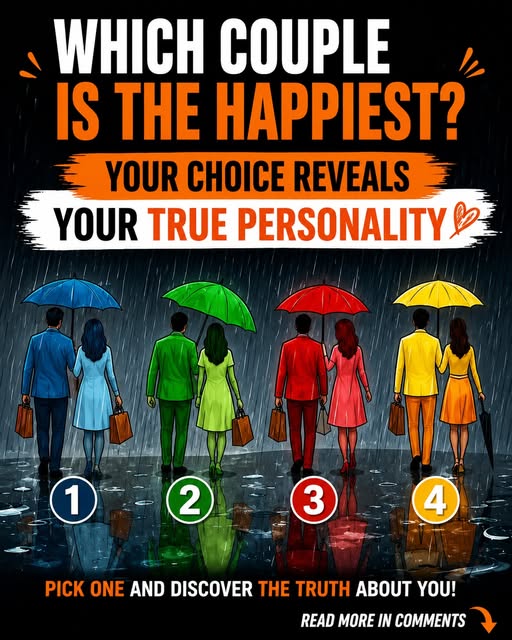
Personality quizzes based on images have become increasingly popular online. One common example asks viewers to look at several couples and choose the one that appears happiest. The idea is that the selection can reveal hidden traits about a person’s character, relationships, or outlook on life.
While these visual tests can be entertaining and thought-provoking, psychologists caution that they should not be viewed as scientifically accurate assessments of personality. Instead, they often provide insight into personal preferences, perceptions, and emotional tendencies.
Why People Enjoy Visual Personality Tests
Humans naturally look for patterns and meaning in the world around them. When presented with an image, people quickly make judgments based on facial expressions, body language, posture, and other visual cues. These first impressions are influenced by personal experiences, values, beliefs, and past relationships. As a result, two people may look at the same image and come to entirely different conclusions about which couple appears happiest. This is one reason visual personality quizzes continue to capture people’s attention. They encourage self-reflection while offering a fun opportunity to compare perspectives with others.
What Your Choice May Reflect
Rather than uncovering secret truths about your personality, your choice may reveal what you personally associate with happiness and healthy relationships. For example, some people may choose a couple that appears affectionate and physically close. Others may be drawn to a pair that seems relaxed, independent, or playful. The qualities that stand out most often reflect what individuals value in their own relationships and social interactions. Psychologists refer to this tendency as projection—the process of interpreting situations through the lens of personal experiences, expectations, and emotions.
If You Chose the Affectionate Couple
People who gravitate toward couples displaying obvious affection often value emotional openness and connection. They may believe strong relationships are built on communication, warmth, and frequent expressions of love and support. Such individuals often prioritize close personal bonds and enjoy spending meaningful time with family and friends. They tend to view emotional intimacy as a key ingredient of happiness.
If You Chose the Relaxed Couple
Some people are drawn to couples who appear comfortable simply being together without dramatic displays of affection. This preference may suggest an appreciation for stability, trust, and emotional security. Individuals who make this choice often believe that true happiness comes from feeling accepted and understood rather than constantly seeking excitement or validation. For them, companionship may be more important than grand romantic gestures.
If You Chose the Playful Couple
Couples who appear energetic, humorous, or adventurous often attract people who value spontaneity and fun. Those who choose this option may enjoy new experiences, social activities, and maintaining a sense of excitement in their daily lives. They frequently view laughter and shared adventures as important parts of a healthy relationship. Such individuals often bring enthusiasm and creativity into their personal connections.
The Science Behind Personality Assessment
Although these image-based quizzes are entertaining, they differ significantly from scientifically validated personality assessments. Professional personality tests are developed through extensive research and are designed to measure traits consistently across large populations. They undergo rigorous testing to ensure accuracy and reliability. By contrast, visual quizzes are generally created for entertainment purposes and do not provide objective psychological evaluations. The results may feel accurate because the descriptions are often broad enough to apply to many people—a phenomenon psychologists call the Barnum Effect.
Why Results Often Feel Surprisingly Accurate
The Barnum Effect occurs when people interpret vague, general statements as highly personal and specific to themselves. For example, descriptions such as “you care deeply about those close to you” or “you value honesty in relationships” apply to a large portion of the population. Because the statements seem meaningful, many people feel the quiz has accurately described them. This helps explain why personality quizzes continue to be shared widely across social media platforms.
A Fun Exercise in Self-Reflection
Despite their lack of scientific precision, personality quizzes can still serve a useful purpose. They encourage people to think about their values, preferences, and perceptions of happiness. The most interesting aspect is often not which answer is supposedly “correct,” but why a particular image stood out to you in the first place. Your choice may reveal more about what you admire, seek, or appreciate in relationships than it does about your fixed personality traits.
The Real Meaning of Happiness
Ultimately, there is no universally correct answer when choosing the happiest-looking couple. Happiness can take many forms, and different people recognize it in different ways. Some see happiness in affection and closeness. Others find it in trust, independence, humor, adventure, or quiet companionship. Rather than revealing a hidden personality type, these quizzes often highlight the qualities that matter most to us personally. And perhaps that is what makes them so enjoyable—they invite us to reflect on what happiness looks like through our own eyes.