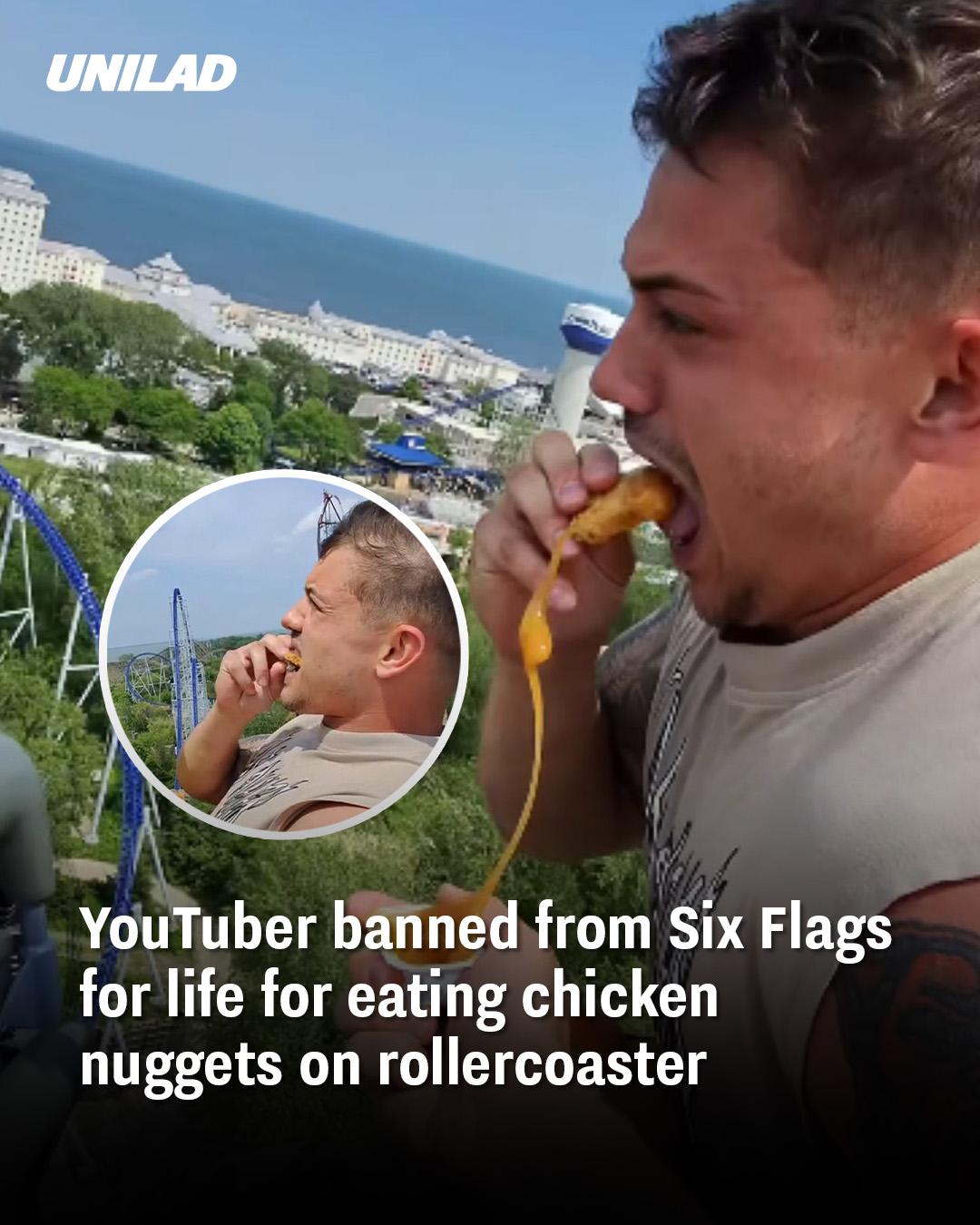
A popular YouTuber has found himself at the center of online debate after being banned from a major theme park following a stunt that involved eating chicken nuggets while riding a roller coaster. The unusual challenge, which was filmed and shared online, quickly attracted millions of views and sparked discussions about safety, social media content, and amusement park rules.
While many viewers found the stunt amusing, park officials were far less entertained. The incident ultimately resulted in the content creator being prohibited from returning to the park, highlighting the growing tension between viral internet challenges and public safety regulations.
The Viral Roller Coaster Challenge
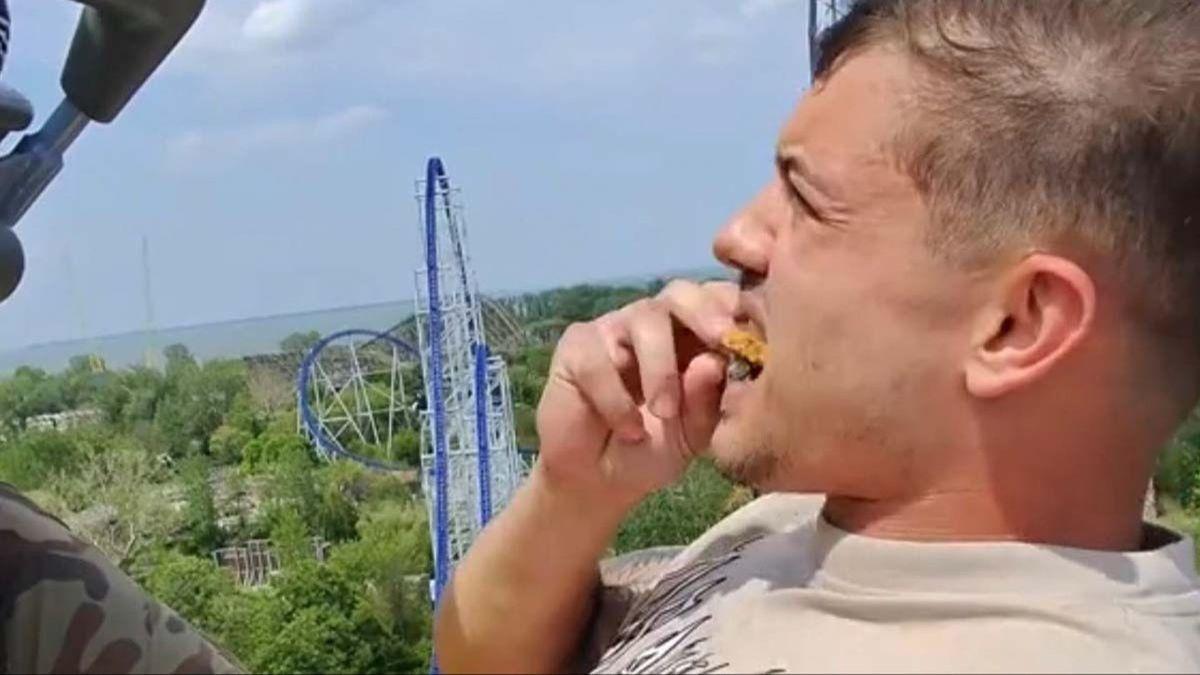
The YouTuber is known for creating entertaining and often unconventional videos designed to attract attention on social media platforms. In this particular challenge, he attempted to eat chicken nuggets while riding a high-speed roller coaster. At first glance, the challenge may have seemed harmless. However, riding a roller coaster requires passengers to keep their hands and belongings secure throughout the experience. Trying to handle food while being subjected to sudden drops, twists, and turns created concerns about the potential risks involved. The footage showed the creator attempting to complete the task while the ride moved at high speed, creating a spectacle that quickly spread across the internet.
Why the Park Took Action
Theme parks operate under strict safety guidelines designed to protect guests and employees. These rules typically prohibit loose objects, food items, and activities that could distract riders or create hazards during attractions. Officials reportedly determined that the stunt violated park policies. Their concerns were not limited to the individual performing the challenge but also extended to the safety of other guests nearby. Food or other unsecured items can become airborne during roller coaster rides. Even small objects can potentially strike riders, interfere with ride operations, or create unexpected dangers. For this reason, amusement parks generally require visitors to store personal items securely before boarding.
As a result of the incident, park management decided to ban the YouTuber from returning.
Social Media Reactions
The ban quickly became a topic of conversation online. Some viewers argued that the punishment was excessive and viewed the challenge as harmless entertainment. Others supported the park’s decision, pointing out that safety rules exist for a reason. Many social media users noted that viral challenges often encourage others to imitate risky behavior. What begins as a joke or publicity stunt can sometimes lead to injuries if copied without considering the potential consequences. The incident once again highlighted the influence content creators can have on their audiences, particularly younger viewers who may be tempted to recreate attention-grabbing challenges.
The Rise of Extreme Online Content
Competition for views and engagement has intensified across social media platforms in recent years. As a result, some creators continually search for more unusual and dramatic ideas to capture audience attention. Challenges involving amusement parks, public spaces, and extreme activities frequently generate large numbers of views because they combine entertainment with an element of risk. However, experts often warn that pursuing viral fame can sometimes encourage behavior that disregards established safety rules. Many platforms and organizations have introduced policies aimed at discouraging dangerous stunts, especially those that could place participants or bystanders at risk.
A Reminder About Safety
Although the roller coaster challenge generated widespread attention, the incident serves as a reminder that amusement park regulations are designed to protect everyone involved. Roller coasters are carefully engineered attractions that rely on guests following specific instructions throughout the ride experience. While viral content can be entertaining, safety remains the top priority for parks and ride operators. The YouTuber’s ban demonstrates that even seemingly lighthearted challenges can have consequences when they conflict with established rules. As social media continues to reward creative and unusual content, the balance between entertainment and responsibility is likely to remain an ongoing discussion for creators, viewers, and businesses alike.