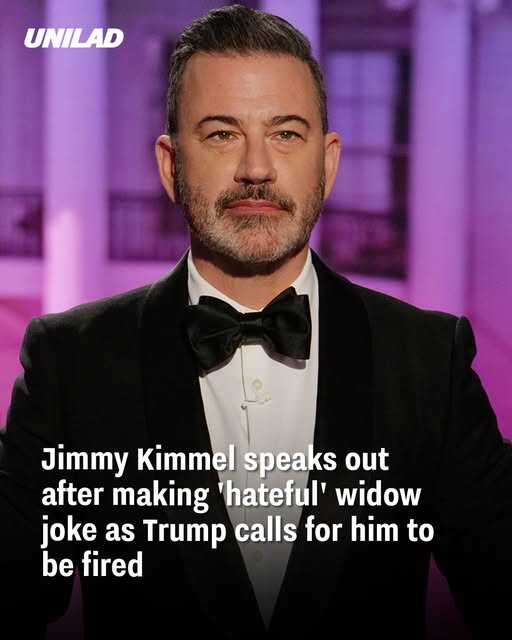
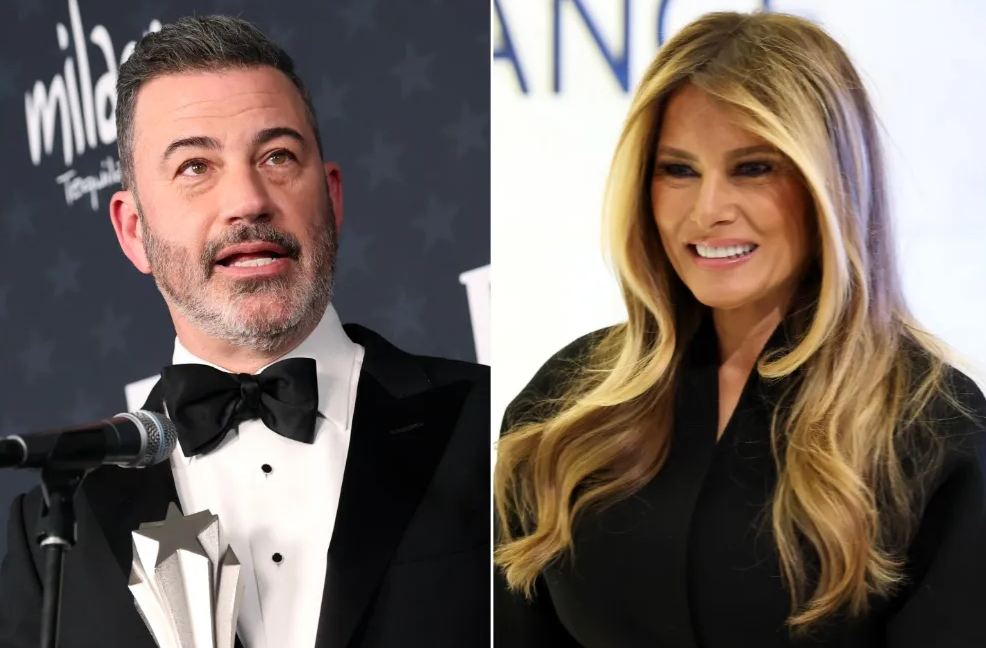
A joke made by late-night host Jimmy Kimmel has ignited a heated political and media storm after it referenced Melania Trump in a way critics called inappropriate. The remark, delivered during a parody tied to the White House Correspondents’ Dinner, described the First Lady as having “a glow like an expectant widow.”
Although the comment was intended as part of a comedic roast, it quickly drew backlash—especially given the tense atmosphere following a security incident at the same event. What might have otherwise been dismissed as typical late-night humor instead escalated into a national debate about satire, responsibility, and timing.
Strong Reaction From the Trumps
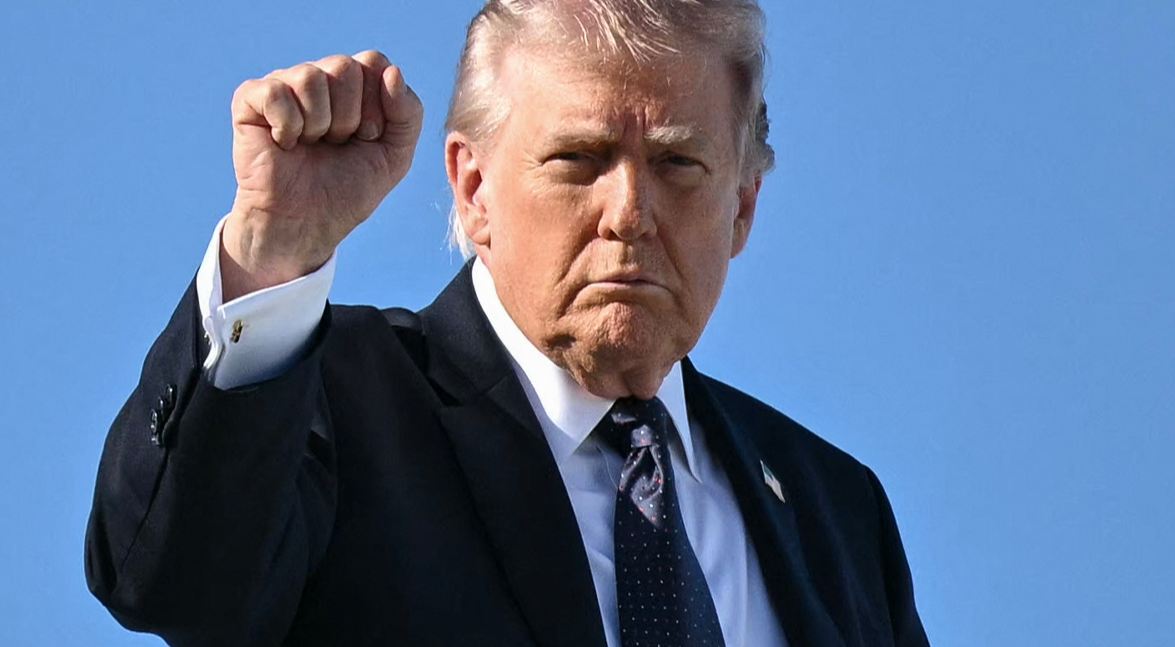
The response from the Trump family was swift and forceful. Donald Trump publicly condemned the joke and called for Kimmel to be fired from his show, while Melania Trump labeled the remark “hateful” and linked it to a broader culture of dangerous rhetoric.
The criticism intensified because the joke aired shortly before a shooting incident connected to the high-profile dinner. For Melania Trump, the timing made the comment feel especially offensive, as it appeared to reference violence in a moment when real danger had just occurred.
Kimmel Breaks His Silence
In response to the backlash, Kimmel addressed the controversy directly on his show. He firmly rejected the idea that his joke encouraged violence, stating that it had been misunderstood. According to him, the line was simply a “light roast” about the age difference between Donald and Melania Trump, not a serious or threatening statement.
He emphasized that comedy often involves exaggeration and satire, especially in settings like political dinners where roasting public figures is expected. Kimmel also pointed out that the joke aired before the shooting took place, distancing it from the incident entirely.
Free Speech vs Responsibility
The situation has reignited a long-standing debate: where is the line between free speech and harmful rhetoric? Supporters of Kimmel argue that political comedy plays an important role in democratic societies and should not be censored simply because it offends those in power.
Others, however, believe that public figures—especially those with large audiences—have a responsibility to be more mindful, particularly during times of heightened political tension. The combination of humor and real-world violence has made this case especially sensitive.
Industry and Public Reactions
The controversy has also drawn reactions from within the entertainment industry. Some public figures have defended Kimmel, arguing that jokes, even controversial ones, are part of the tradition of satire.
Meanwhile, media companies have found themselves caught in the middle. The network behind Kimmel’s show has reportedly continued to support him, despite political pressure and calls for disciplinary action.
The situation has even attracted attention from regulators, highlighting how a single joke can evolve into a broader institutional and political issue.
A Growing Cultural Debate
At its core, the incident reflects deeper divisions in how people interpret humor, especially when it intersects with politics. For some, Kimmel’s joke represents a harmless example of late-night satire. For others, it crosses a line by invoking themes that feel too close to real-world threats.
As discussions continue, the controversy serves as a reminder that in today’s media landscape, even a single sentence can carry enormous weight—shaping public opinion, sparking outrage, and fueling debates that go far beyond the original moment.
Conclusion
What began as a comedic remark quickly escalated into a national controversy involving politics, media, and free speech. While Kimmel stands by his intent, the strong reaction from the Trump family and others shows how sensitive the boundaries of humor have become. In an era of heightened tension, the question remains: how far is too far when it comes to satire?