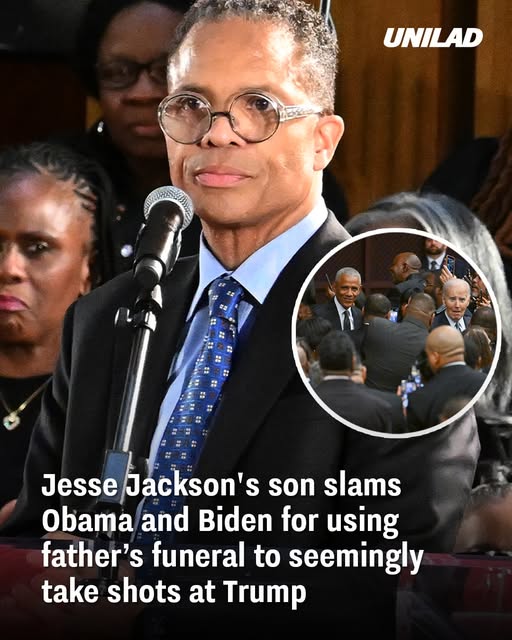
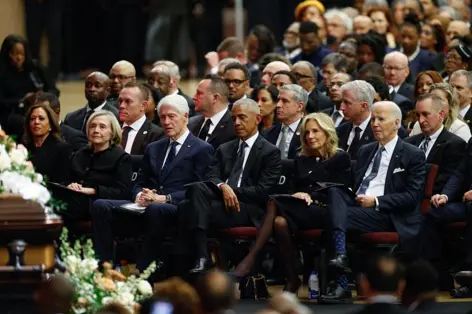
The memorial service for longtime civil rights leader Jesse Jackson drew national attention as political leaders, activists, and supporters gathered to honor his life and legacy. Among the high-profile figures present were former presidents Barack Obama, Joe Biden, and Bill Clinton. The ceremony was intended to celebrate decades of activism and public service. However, the event also sparked controversy after Jackson’s son, Jesse Jackson Jr., publicly criticized the tone of some speeches delivered during the memorial. According to him, the focus of the gathering should have remained solely on his father’s achievements and the causes he dedicated his life to advancing.
Jackson Jr. said he was disappointed that parts of the ceremony shifted toward modern political commentary. He argued that the moment should have been reserved for reflection on his father’s work rather than broader political discussions.
The Life and Work of Jesse Jackson
Jesse Jackson spent more than half a century advocating for equality and civil rights in the United States. He first rose to national prominence in the 1960s as a close associate of Martin Luther King Jr. during the height of the American civil rights movement. Over the years, Jackson became known as a passionate speaker and organizer. He founded the Rainbow PUSH Coalition, an organization that worked to promote social justice, economic fairness, and political participation among marginalized communities. Jackson also made history in electoral politics. In the 1980s he ran twice for the Democratic presidential nomination, inspiring millions of voters and encouraging greater involvement from minority communities in the political process. For many supporters, Jackson’s career symbolized perseverance and a commitment to challenging inequality wherever it appeared.
A Son’s Frustration with the Memorial
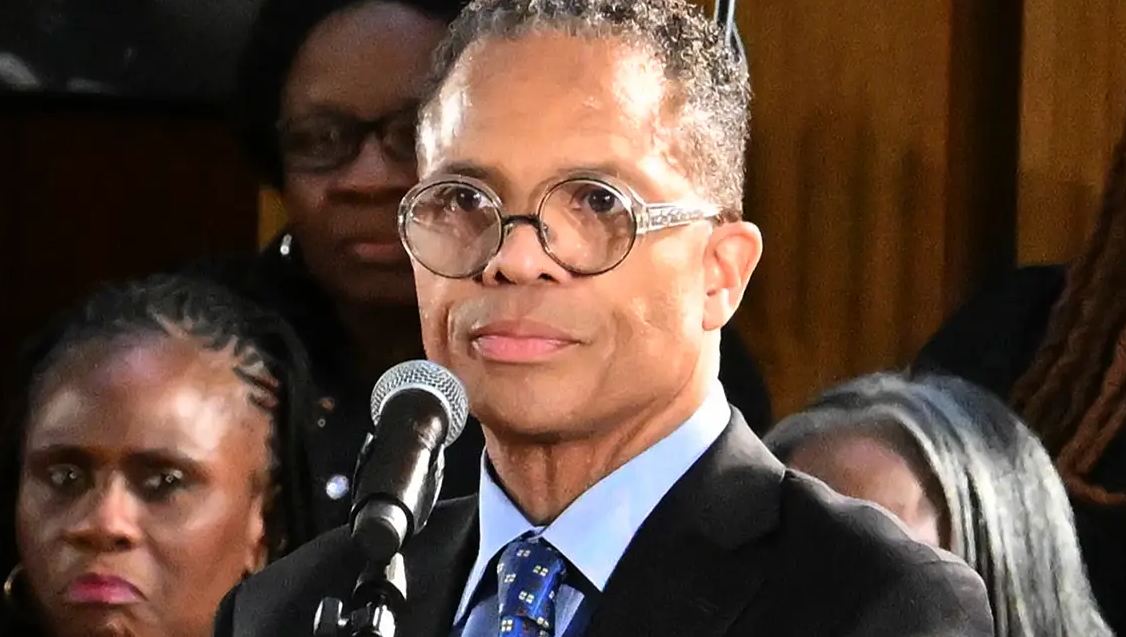
After the memorial concluded, Jesse Jackson Jr. expressed frustration with how some speakers portrayed his father’s legacy. He suggested that several political leaders misunderstood the complex role Jackson played throughout his life. According to Jackson Jr., his father was never tied to one political faction. Although he worked with many prominent leaders and supported progressive causes, he also challenged those in power when he believed they were failing to serve the public. Jackson Jr. emphasized that his father believed in holding every administration accountable, regardless of party affiliation. In his view, the civil rights leader stood for principles that went beyond partisan politics. Because of this, Jackson Jr. felt that political commentary during the memorial distracted from the deeper message of his father’s life and work.
Concerns About Political Messaging
Another issue raised by Jackson Jr. was the inclusion of remarks referencing the current political climate. Some speeches reportedly included criticism related to the presidency of Donald Trump. Jackson Jr. said that introducing partisan themes risked turning a memorial service into a political debate. He had previously encouraged speakers to keep their remarks focused on honoring his father rather than discussing contemporary conflicts. His comments highlighted the delicate balance often present at public memorials for influential figures. When well-known political leaders attend such events, speeches can sometimes reflect the broader national conversation rather than remaining strictly personal.
Remembering a Lasting Legacy
Despite the disagreements surrounding the memorial, many attendees agreed that Jesse Jackson’s influence on American history remains profound. His decades of activism helped expand opportunities for minority communities and encouraged political participation across the country. From organizing grassroots campaigns to mentoring future leaders, Jackson left a lasting imprint on the civil rights movement. His ability to mobilize communities and bring attention to social inequality made him one of the most recognizable activists of his generation. While debate about the memorial’s tone may continue, the significance of his work is widely acknowledged. For supporters and critics alike, Jesse Jackson’s life stands as a reminder of the ongoing struggle for equality and justice in America.