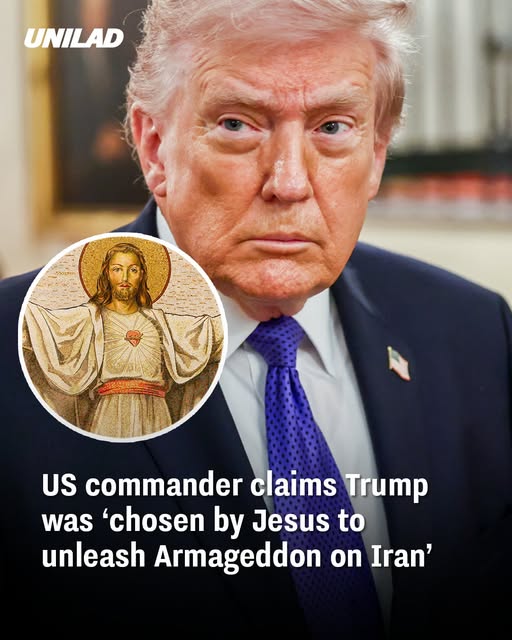
Recent allegations involving the U.S. military have sparked widespread debate after reports suggested that a commander told troops that President Donald Trump had been “anointed by Jesus” and that the conflict with Iran could lead to the biblical event known as Armageddon. The claims have raised serious questions about religion in the military, political influence, and how the war in the Middle East is being presented to service members.
Complaints From U.S. Service Members
According to multiple reports, more than 200 complaints were submitted by American service members across various military branches. These complaints allege that certain commanders framed the war against Iran as part of a divine plan connected to Christian prophecy.
Several troops said their leaders referenced passages from the biblical Book of Revelation during briefings. Some reportedly told soldiers that the ongoing military actions could trigger Armageddon and even lead to the return of Jesus Christ. One noncommissioned officer claimed that a commander stated Trump had been chosen or “anointed” by Jesus to lead the conflict. These comments quickly drew criticism from both inside and outside the military, particularly because the U.S. armed forces are required to remain politically and religiously neutral.
Watchdog Group Raises Alarm
The complaints were reportedly collected by a nonprofit organization that monitors religious freedom within the U.S. military. The group said it had received reports from troops stationed at dozens of installations. The organization warned that promoting religious ideology within the chain of command could pressure service members who do not share the same beliefs. Military culture already involves strict hierarchy, meaning junior personnel might feel unable to challenge statements made by superiors. Critics argue that blending religious prophecy with military operations risks undermining constitutional principles, particularly the separation of church and state.
Political and Military Fallout
The controversy has begun attracting attention from lawmakers in Washington. Some members of Congress are now calling for an investigation into whether military leaders improperly promoted religious beliefs while addressing troops. The issue is especially sensitive because the United States is currently engaged in escalating military operations in Iran, part of a broader conflict that has already destabilized large parts of the Middle East. As the war continues, critics worry that rhetoric about divine missions or biblical prophecy could further inflame tensions and complicate diplomatic efforts.
Religious Language and Military Culture
Religion has historically played a role in the lives of many service members, with chaplains and voluntary faith services commonly available. However, military regulations strictly prohibit commanders from imposing personal religious views on subordinates. Experts say that when high-ranking officers present conflicts as part of God’s plan, it may create an environment where soldiers feel pressured to accept a specific worldview. Supporters of religious expression within the military argue that individuals should be free to discuss their faith. However, they also acknowledge that leaders must be careful not to blur the line between personal belief and official military messaging.
Ongoing Debate
The allegations have intensified the already heated debate surrounding the war with Iran and the role of religion in American politics. For many observers, the central question is whether the comments represent isolated incidents by individual officers or a broader cultural shift within parts of the military leadership. As investigations and political scrutiny continue, the controversy highlights how sensitive the intersection of religion, politics, and military power can be—especially during an international conflict.