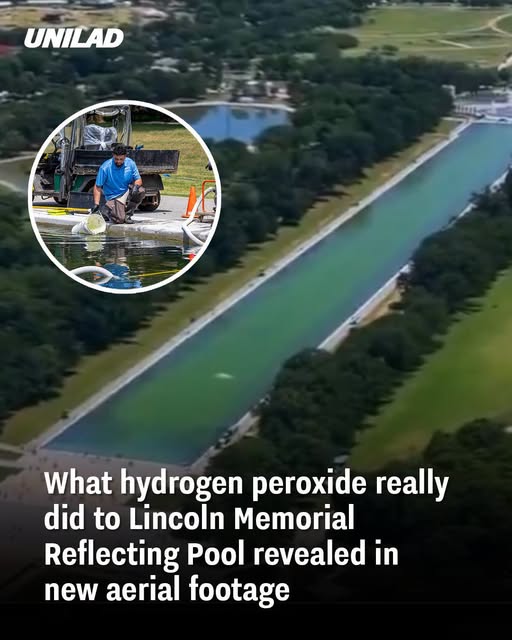
Visitors to Washington, D.C.’s most famous landmarks recently witnessed an unusual sight when the iconic Reflecting Pool near the Lincoln Memorial turned a striking shade of green. The unexpected color change quickly attracted attention from tourists, photographers, and social media users, many of whom wondered what had happened to the historic site.
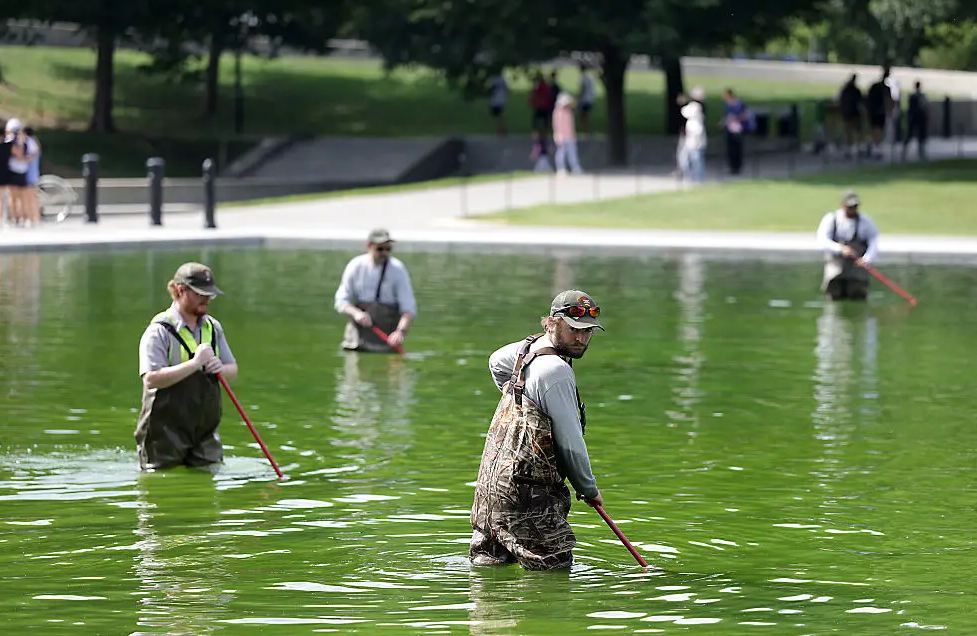
Officials soon revealed that the dramatic transformation was caused by a significant algal bloom that developed in the water during a period of hot weather and increased sunlight.
An Unexpected Change at a Historic Landmark
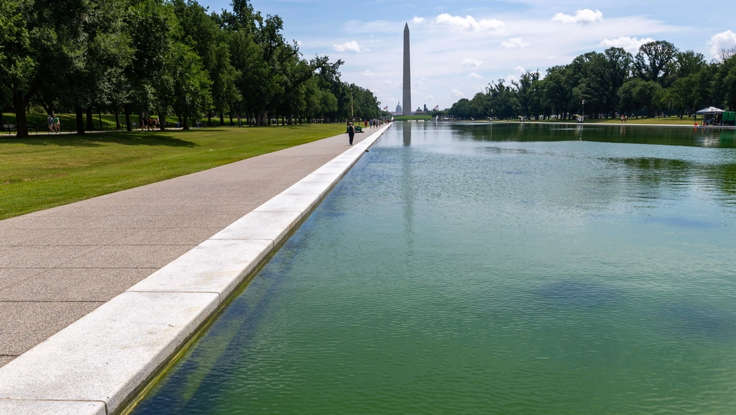
The Reflecting Pool is one of the most recognizable locations in the United States. Stretching between the Lincoln Memorial and the Washington Monument, it attracts millions of visitors every year. When the water suddenly appeared bright green, many visitors were surprised by the change. Photos of the unusual scene quickly spread online, leading to widespread speculation about the cause. While the appearance was striking, officials explained that the green color was not the result of pollution or a chemical spill. Instead, it was caused by naturally occurring algae multiplying rapidly in favorable conditions.
What Causes an Algal Bloom?
Algal blooms occur when algae grow quickly in bodies of water. Warm temperatures, sunlight, and nutrients in the water can create ideal conditions for this growth. During summer months, still water can become particularly vulnerable to algae expansion. As the organisms multiply, they may create a green layer or tint that dramatically changes the appearance of the water. Although many algal blooms are harmless, some can negatively affect water quality and create unpleasant odors. In severe cases, blooms may reduce oxygen levels and impact aquatic life.
Officials Take Action
To restore the Reflecting Pool, maintenance crews implemented a treatment plan using hydrogen peroxide. The substance is commonly used in water management projects because it can help control algae without causing long-term damage to the environment when used properly. The treatment was introduced to reduce the bloom and return the water to its normal appearance. Officials monitored the process closely to ensure the solution worked effectively. Hydrogen peroxide breaks down into water and oxygen, making it a practical option for addressing algae issues in public water features.
Why the Problem Developed
Experts note that warm weather played a major role in the bloom’s development. High temperatures combined with abundant sunlight created ideal growing conditions for algae. Water features that experience limited circulation can become especially susceptible during hotter periods of the year. Even carefully maintained locations can occasionally experience blooms when environmental conditions align. The Reflecting Pool’s size and exposure to direct sunlight make it vulnerable to seasonal changes that influence water quality.
Visitors React to the Green Water
Many tourists were fascinated by the unusual appearance. Some stopped to take photographs, while others questioned whether the color change was intentional. For first-time visitors, the bright green water created a very different impression from the reflective surface typically seen in postcards and travel guides. Despite the unusual look, officials reassured the public that efforts were already underway to address the issue. The event also served as a reminder of how natural processes can affect even the most carefully maintained landmarks.
Returning to Normal
As treatment efforts continue, officials expect the Reflecting Pool to gradually return to its familiar appearance. The goal is to restore the clear reflective surface that has become an iconic part of the National Mall experience. While the bright green water generated considerable attention, the situation is not unprecedented. Similar algae blooms can occur in lakes, ponds, and decorative water features around the world when environmental conditions become favorable. For now, the temporary transformation has offered visitors a rare glimpse of how nature can unexpectedly alter one of America’s most famous landmarks.