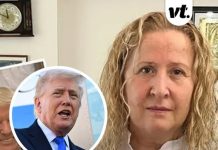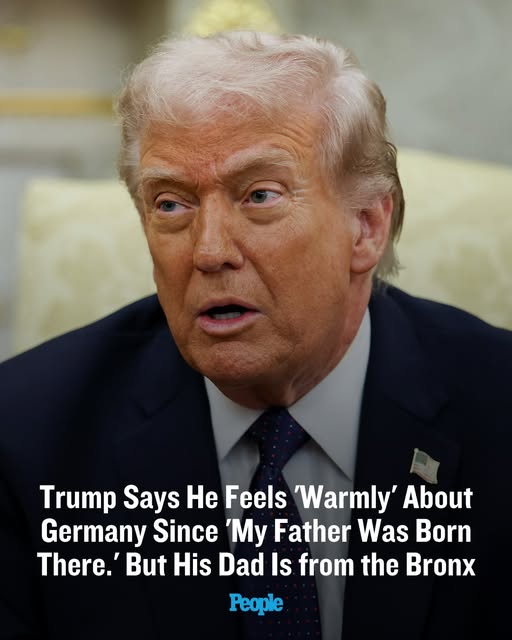
During a recent appearance at the White House, Donald Trump made a remark about Germany that quickly generated headlines. While speaking alongside German Chancellor Friedrich Merz, Trump said he felt “very warmly about Germany” because, as he put it, “my father was born there.”
The statement was intended to highlight a personal connection to Germany during a broader discussion about international relations. However, the comment immediately stood out because it is factually incorrect. Trump’s father was not born in Germany, but in New York City.
The Historical Record
Trump’s father, Fred Trump, was born in the Bronx in 1905. He later became a prominent real estate developer in New York and played a major role in shaping his son’s early business career. Public records, biographies, and historical documentation all confirm that Fred Trump was American-born. The German connection in the Trump family actually traces back one generation further. Trump’s paternal grandfather, Friedrich Trump, was born in Bavaria in 1869 before emigrating to the United States as a teenager. That immigration history is well established and forms the basis of the family’s German heritage. Despite this clear historical background, Trump has on multiple occasions stated publicly that his father was born in Germany. The repetition of this claim has drawn renewed scrutiny each time it resurfaces.
Context of the Remarks
The comment occurred during a meeting focused on transatlantic relations and broader geopolitical issues. Trump had been discussing U.S. relationships with European nations, including Germany, the United Kingdom, and Spain. In that context, he referenced his family background while expressing goodwill toward Germany. Observers noted that the remark appeared unscripted and conversational. While it was clearly meant to signal friendliness and shared history, the factual error became the focal point of media coverage. Trump did accurately reference his mother’s origins in other remarks. His mother, Mary Anne MacLeod Trump, was born in Scotland before moving to the United States. However, the confusion regarding his father’s birthplace has persisted for years.
Public and Political Reaction
The reaction to Trump’s statement has varied. Critics argue that misstating such a basic element of personal family history raises questions about attention to detail, particularly in a formal diplomatic setting. Some commentators pointed out that such inaccuracies can be amplified in high-profile moments, especially when foreign leaders are present. Supporters, on the other hand, have suggested that the comment was likely a simple verbal slip rather than a significant issue. They emphasize that Trump was attempting to underscore his family’s European roots and express positive sentiment toward Germany. Regardless of interpretation, the remark reignited online discussions and fact-checking efforts. Media outlets quickly clarified the historical record, highlighting the distinction between Trump’s father and grandfather.
Broader Implications
While the comment itself may seem minor, it underscores how closely public figures’ words are examined — particularly when discussing heritage and international relationships. Personal anecdotes in diplomatic settings often carry symbolic weight, and inaccuracies can shift attention away from broader policy discussions. Trump’s longstanding reference to Germany as part of his family background is rooted in truth at the grandparent level. However, the repeated misstatement about his father’s birthplace continues to attract notice. In the end, what was meant as a gesture of warmth toward Germany instead became a conversation about historical fact — illustrating how even brief remarks can dominate headlines in today’s political climate.