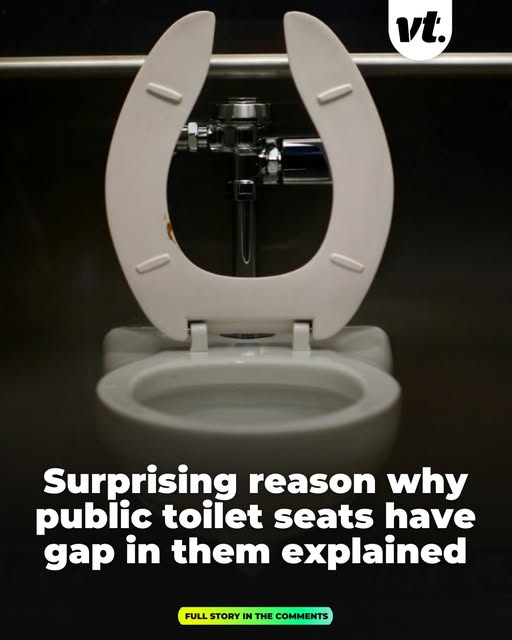
Many people have noticed that public toilet seats often have an unusual open gap at the front, but few actually know why the design exists. While some assume it is simply for comfort or cost-cutting, the real explanation is connected to hygiene, safety, and accessibility.
The U-shaped toilet seat design has been widely used in public restrooms for decades, especially across North America. Experts say the opening serves several important practical purposes that make public bathrooms cleaner and easier to use.
Designed to Reduce Contact
One of the main reasons for the front gap is to help users avoid direct contact with the toilet seat. The open-front design allows people to sit down more easily without sensitive areas touching the front portion of the seat. Health experts have explained that this reduces the amount of body contact with surfaces used by hundreds or even thousands of people each day. Public restroom fixtures are specifically designed to lower the spread of bacteria and improve overall sanitation. The shape also helps prevent urine from collecting on the front edge of the seat, which is a common issue in high-traffic bathrooms. By removing that section entirely, cleaning becomes easier and restrooms can stay more hygienic between maintenance checks.
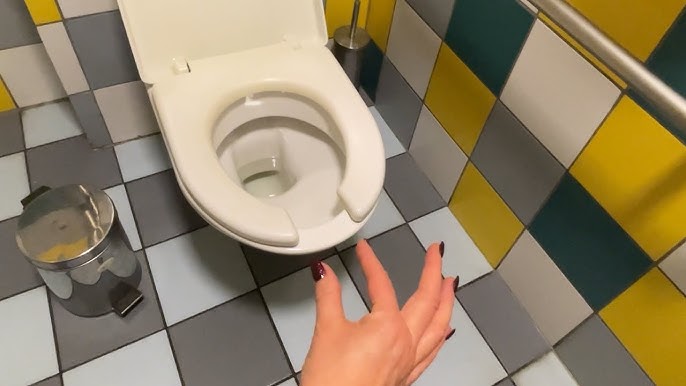
Easier for Cleaning Staff
Another major reason behind the design is efficiency. Cleaning crews can sanitize open-front seats much faster because there are fewer tight areas where dirt and bacteria can build up. Since public restrooms in airports, malls, restaurants, schools, and offices are used constantly, maintenance teams need fixtures that are quick to wipe down and disinfect. Experts say the gap improves visibility during cleaning and reduces hidden surfaces where germs may remain. In busy public facilities, even small design changes can significantly improve sanitation standards over time.
Accessibility and Comfort Benefits
The opening in the seat can also make public toilets more accessible for a wider range of users. Some accessibility specialists note that the design allows for easier positioning and movement, particularly for people with mobility challenges. Additionally, the open-front shape can reduce pressure on sensitive areas while sitting, making the experience more comfortable for many users. Although the design is sometimes joked about online, engineers and public health experts say it was created with functionality in mind rather than appearance.
Standardized in Many Countries
In the United States, open-front toilet seats are actually recommended in many public settings through plumbing and sanitation guidelines. The design became increasingly common during the 20th century as health regulations evolved. Many commercial restroom manufacturers adopted the style because it aligned with hygiene recommendations and simplified maintenance requirements. However, not every country follows the same standard. In many parts of Europe and Asia, fully closed oval toilet seats remain more common even in public facilities.
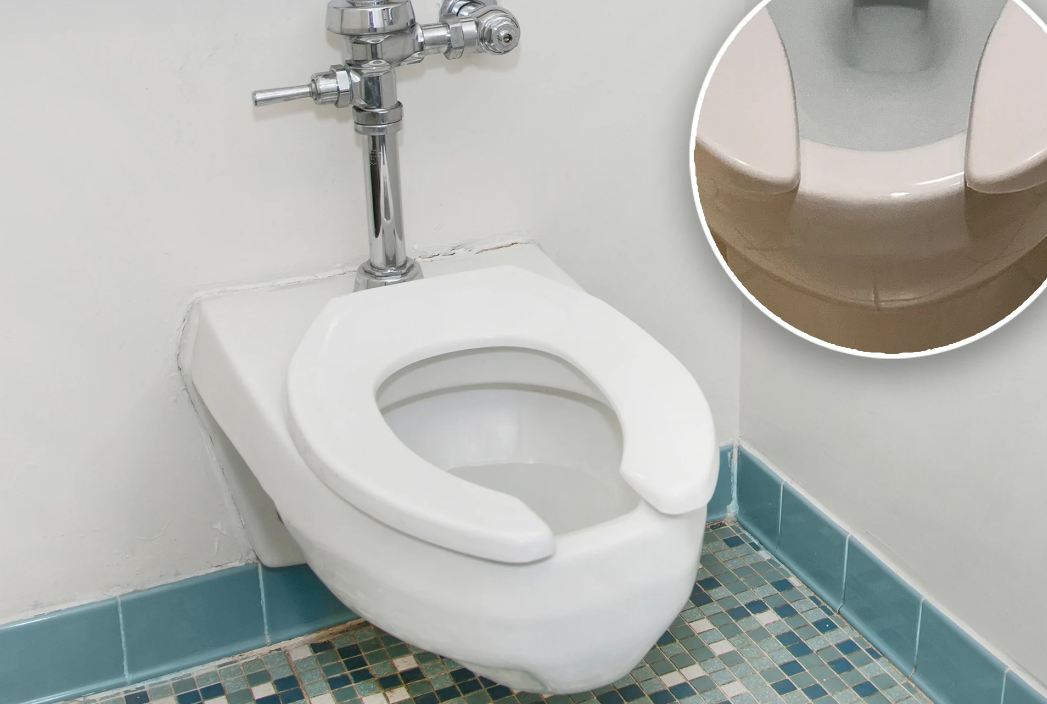
Internet Users React to the Explanation
The topic recently gained attention online after social media users shared surprise at learning the real purpose behind the unusual seat shape. Many admitted they had never questioned the design before, while others said they assumed the gap existed purely to save material during manufacturing. Others joked that discovering the reason behind the toilet seat opening was one of those oddly satisfying facts people never knew they needed explained. While the design may seem strange at first glance, experts say the open-front seat is ultimately a practical solution created to improve cleanliness, efficiency, and user comfort in heavily used public restrooms.