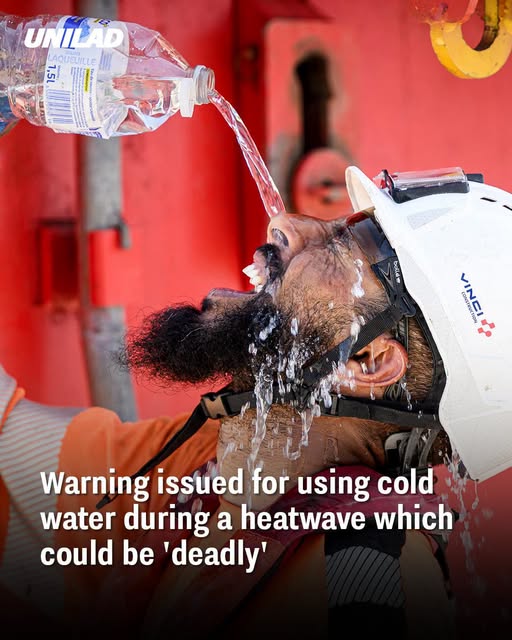
Millions of Americans are being urged to prepare for an intense heatwave expected to stretch across much of the United States during the days leading up to and beyond the Fourth of July holiday. Weather experts say this will not be an ordinary spell of summer heat, with some regions facing temperatures that could challenge long-standing records. Alongside the heat, officials are warning about another serious danger that many people overlook: cold water shock.
Dangerous Heat Expected Across Multiple States
Meteorologists forecast that the hottest conditions will affect large parts of the Central and Eastern United States. Heat indexes are expected to climb well above 100°F (38°C), while some locations could experience “feels like” temperatures exceeding 105°F (40.5°C). The hottest conditions are expected between July 3 and July 9, with record-breaking temperatures possible across the Midwest, Mid-Atlantic, and parts of the Northeast. Even after sunset, temperatures may remain unusually high, providing little overnight relief and increasing the risk of heat-related illnesses.
Why Cold Water Can Be Dangerous
As temperatures soar, many people naturally head to beaches, lakes, rivers, and reservoirs to cool off. However, experts warn that entering cold water too quickly can trigger a potentially life-threatening reaction known as cold water shock. Despite the hot weather, natural bodies of water often remain much colder than the surrounding air. A sudden plunge into water below approximately 59°F (15°C) can cause an immediate shock response in the body. The sudden temperature change may cause an uncontrollable gasp reflex, rapid breathing, and a sharp increase in heart rate. These reactions can make it difficult for even experienced swimmers to stay calm or remain afloat during the first few critical moments after entering the water.
Hidden Risks in Lakes and Rivers
Open water presents hazards beyond cold temperatures. Rivers may contain powerful currents that are difficult to see from the surface, while lakes and reservoirs often have steep underwater drop-offs, uneven bottoms, and poor visibility.
Unlike swimming pools, these natural environments usually lack controlled conditions, making them much more challenging if an emergency occurs. Even confident swimmers can become disoriented or exhausted within minutes.
How to Stay Safe During the Heatwave
Health officials recommend avoiding strenuous outdoor activities during the hottest hours of the day, drinking plenty of water, and spending time in air-conditioned buildings whenever possible. Anyone planning to swim should enter the water gradually rather than diving straight in. Giving the body time to adjust to the colder temperature can reduce the likelihood of experiencing cold water shock. People should also avoid swimming alone and choose locations where lifeguards are present whenever possible. Children should be supervised closely around all bodies of water, regardless of their swimming ability.
Recognizing Heat-Related Illness
Heat exhaustion often develops before heat stroke and can cause heavy sweating, dizziness, weakness, nausea, headaches, and a rapid pulse. Without prompt treatment, it may progress to heat stroke, a medical emergency that can be fatal. Signs of heat stroke include confusion, slurred speech, a body temperature above 103°F (39.4°C), loss of consciousness, and hot skin. Anyone showing these symptoms should receive emergency medical attention immediately.

Holiday Crowds Increase the Risk
The warning comes as millions of Americans prepare for Independence Day celebrations, with beaches, lakes, and parks expected to be especially busy. Officials are encouraging everyone to plan ahead, stay hydrated, check on elderly neighbors and vulnerable family members, and never leave children or pets inside parked vehicles. Experts stress that while cooling off in the water may seem like the perfect escape from extreme temperatures, understanding the dangers of cold water shock could prevent a tragic accident. Taking a few extra precautions can make holiday celebrations both enjoyable and safe.