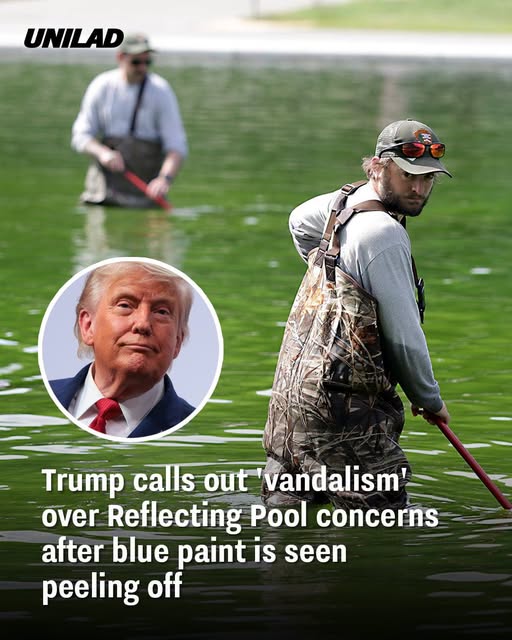
President Donald Trump has claimed that vandalism is responsible for ongoing problems at the recently renovated Lincoln Memorial Reflecting Pool in Washington, D.C., just weeks after a multi-million-dollar restoration project was completed.
The controversy has attracted widespread attention after reports emerged showing algae growth, peeling surfaces, and damage around the historic landmark. Trump insists the issues are not the result of construction flaws but instead stem from deliberate acts of vandalism that occurred shortly after the project was finished.
A Costly Renovation Project
The renovation was launched as part of a broader effort to improve major monuments and memorials ahead of America’s 250th anniversary celebrations. According to reports, the project cost more than $14 million and included a complete makeover of the famous reflecting pool. One of the most noticeable changes was the installation of a new blue-colored surface, described by Trump as “American Flag Blue.” The administration promoted the upgrade as a long-term solution designed to improve both the appearance and maintenance of the landmark. When the work was completed earlier this month, officials expressed confidence that the renovated pool would remain attractive for years to come. However, problems appeared almost immediately after the pool was refilled with water.
Algae and Peeling Surfaces Spark Concern
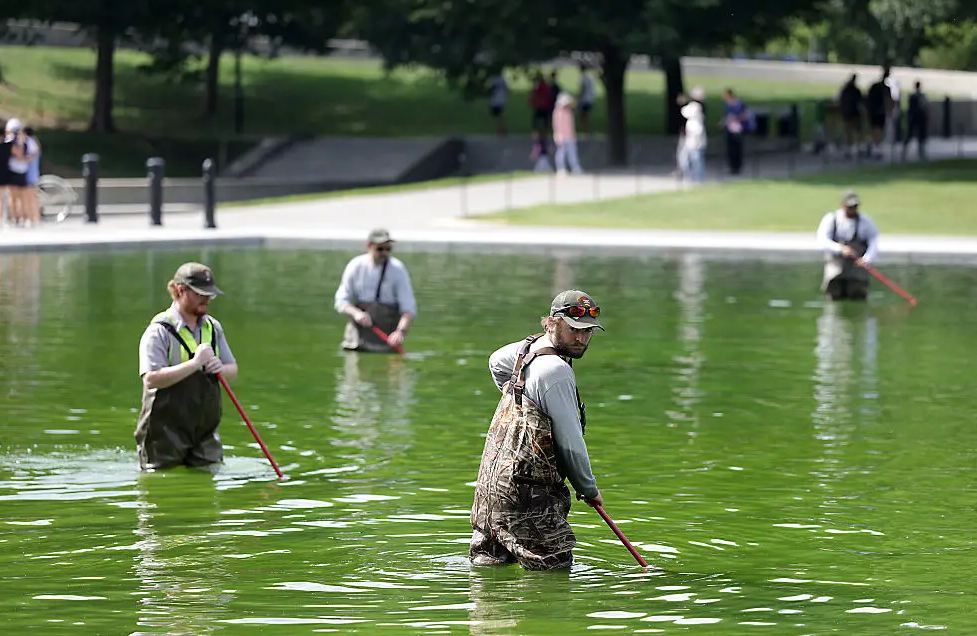
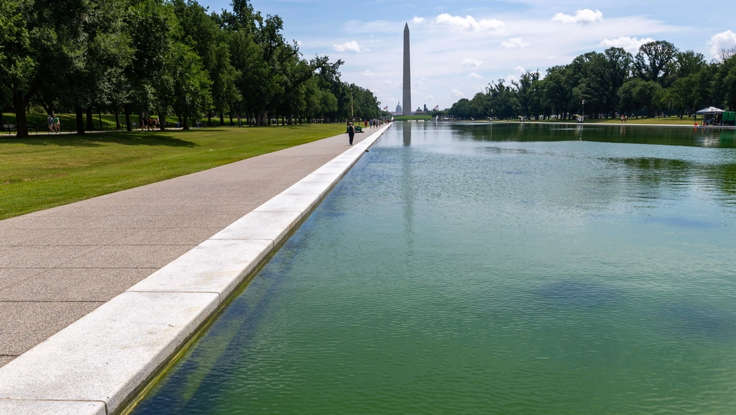
Within days of reopening, visitors began noticing green algae spreading throughout sections of the water. Photos and videos shared online showed areas where the water had become discolored, while reports also highlighted sections of the newly installed surface that appeared to be peeling away. The issues quickly fueled criticism from opponents who questioned the effectiveness of the expensive renovation project. Officials responded by deploying workers to remove algae and apply additional treatments designed to improve water quality. The administration later stated that most of the algae problem had already been addressed.
Trump Points the Finger at Vandals
In a social media statement, Trump argued that the pool’s condition had been worsened by individuals intentionally attempting to damage the site. He claimed vandals had harmed the surrounding grass and used substances similar to chemicals that had allegedly been used in previous incidents on the National Mall. Trump said these actions were aimed at undermining the restoration effort and damaging what he described as a successful beautification project. The president also stated that approximately 75 percent of the algae had already been removed and that repairs to damaged areas would be completed soon.
Investigation Underway
Trump said law enforcement authorities are investigating the alleged vandalism. The claims come after earlier incidents around the reflecting pool area, including graffiti displaying the numbers “86 47” on nearby grounds, which prompted separate investigations by authorities. While officials have confirmed that investigations are taking place, no public evidence has yet been released linking the recent pool problems directly to acts of sabotage. Some critics have questioned whether vandalism is responsible for the issues, arguing that algae growth and peeling materials could be related to environmental conditions or construction challenges. Others believe investigators should complete their work before conclusions are drawn.
Debate Continues
The situation has sparked a broader debate about the renovation project and its execution. Supporters of the administration argue that vandalism and political opposition have unfairly overshadowed improvements made to the landmark. Critics, meanwhile, point to the rapid appearance of algae and peeling surfaces as evidence that the restoration may have encountered technical problems. For now, the Lincoln Memorial Reflecting Pool remains open to visitors while cleanup efforts continue. Whether the problems were caused by vandalism, construction issues, environmental factors, or a combination of all three will likely depend on the outcome of the ongoing investigation.