
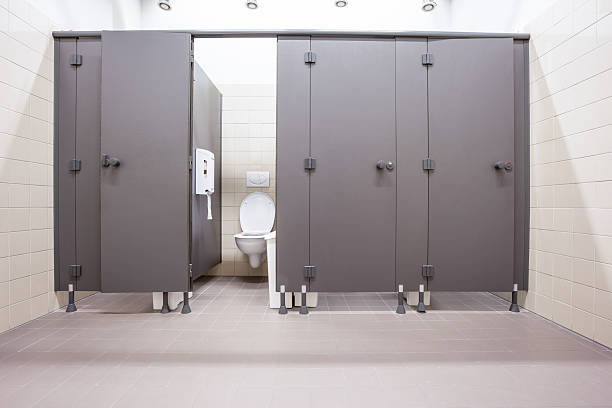
Almost everyone has wondered the same thing while using a public restroom: why do bathroom stall doors never fully close? The noticeable gaps around the doors and near the floor can feel awkward and uncomfortable, especially when privacy is expected.
As strange as the design may seem, experts say the gaps are actually intentional. Public restroom stalls are built this way for several practical reasons involving safety, cleaning, ventilation, cost, and maintenance.
Safety Is One Of The Biggest Reasons
One of the main reasons for the gaps is emergency access. If someone inside a stall faints, becomes ill, or experiences a medical emergency, other people can quickly notice there is a problem. The openings allow first responders or staff to react faster without needing to break down the entire door. Experts explain that the open space at the bottom of the stall also allows emergency personnel to crawl underneath if a lock jams or the occupant cannot open the door themselves. In crowded public spaces like airports, malls, schools, and stadiums, designers often prioritize quick emergency response over complete privacy.
Easier Cleaning And Maintenance
Another major reason is sanitation. Public bathrooms are cleaned frequently throughout the day, especially in busy locations with heavy foot traffic. The open space beneath the stalls makes it easier for cleaning staff to mop floors and clean around the partitions without constantly opening and closing every stall door. It also allows water and cleaning products to move more freely across the floor during deep cleaning. Architects and maintenance experts say this design significantly reduces cleaning time and lowers long-term maintenance costs for businesses and public facilities.
Better Airflow And Ventilation
Public restrooms are not exactly known for smelling fresh. The gaps actually help improve airflow and ventilation throughout the bathroom. Without openings, odors could become trapped inside fully enclosed stalls, making the environment far more unpleasant. The extra airflow helps circulate air more effectively and can reduce humidity and moisture buildup as well. Ventilation becomes especially important in large public restrooms where hundreds or even thousands of people may use the facilities every day.
The Design Is Cheaper
Cost is another major factor behind the design. Bathroom stalls are usually mass-produced using standardized panels rather than custom-built structures. Smaller doors and partitions require less material, making them cheaper to manufacture and install. Because many businesses view restrooms as functional spaces rather than luxury areas, lower-cost designs are often preferred. Experts also note that standardized stall systems make repairs easier because damaged parts can quickly be replaced without redesigning the entire structure.
Discouraging Illegal Or Inappropriate Behavior
The lack of full privacy can also discourage vandalism, drug use, smoking, or sexual activity inside public restrooms. Experts say people are generally less likely to misuse stalls when they know others can partially see or hear what is happening inside. While many people dislike the reduced privacy, facility managers often view the design as a way to improve security and reduce problematic behavior in public spaces.
Accessibility And Building Codes Matter Too
Some modern restroom designs are also influenced by accessibility regulations and building codes. Certain floor clearances can help wheelchair users maneuver more easily inside accessible restroom areas. Additionally, restroom floors are often slightly sloped to help water drain properly during cleaning. Doors that extend fully to the floor could scrape against uneven surfaces or become damaged over time.
Many People Still Hate The Gaps
Despite all the practical explanations, many people continue to dislike public bathroom stall gaps. Online discussions regularly feature complaints about privacy concerns and awkward accidental eye contact through door openings. In some countries, restroom stalls are designed with far more privacy, using floor-to-ceiling doors and minimal gaps. However, those systems are often more expensive to build and maintain. Recently, some newer buildings in the United States have started introducing “full privacy” restroom stalls that reduce visibility while still meeting safety requirements.
A Design Most People Never Really Notice
Although public restroom gaps may seem strange, the design is largely the result of practicality rather than poor planning. Safety, airflow, cleaning efficiency, accessibility, and cost all play major roles in why stalls continue to look the way they do today. Even if many people still find the gaps uncomfortable, experts say the design has survived for decades because it remains one of the simplest and cheapest ways to manage high-traffic public restrooms efficiently.