
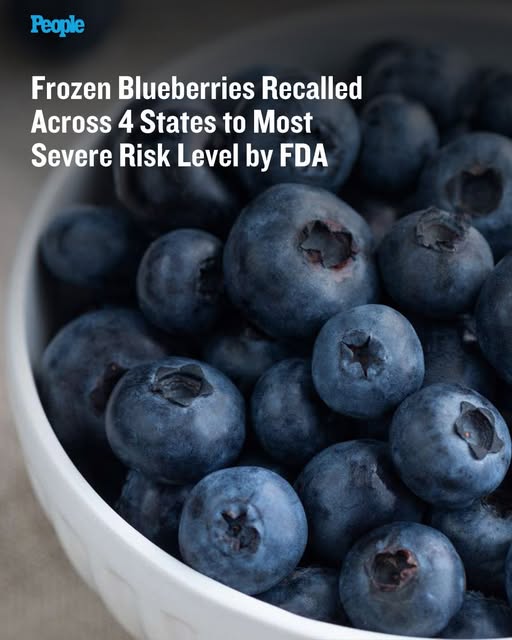
U.S. food safety officials have issued a major recall affecting nearly 60,000 pounds of frozen blueberries after concerns about possible bacterial contamination. The recall was later upgraded to the highest risk category by the U.S. Food and Drug Administration (FDA), indicating that the product could potentially cause serious health consequences. Health authorities warn that the contamination may involve Listeria monocytogenes, a dangerous bacterium that can lead to severe illness, particularly in vulnerable populations.
Why the Blueberries Were Recalled
The recall was initiated by the Oregon Potato Company, which operates under the brand Willamette Valley Fruit Company. The company voluntarily recalled approximately 55,689 pounds of individually quick-frozen blueberries after potential contamination with Listeria monocytogenes was discovered. Food regulators later classified the situation as a Class I recall, the FDA’s most serious warning level. This classification means there is a “reasonable probability” that consuming the product could cause severe health problems or even death. The blueberries were packaged in 30-pound cases and large bulk containers, which are commonly used in commercial food production.
Where the Affected Products Were Distributed
According to officials, the recalled blueberries were distributed to businesses in several locations across North America. These included:
- Michigan
- Oregon
- Washington
- Wisconsin
- Canada
Importantly, the blueberries were not sold directly to consumers in retail stores. Instead, they were shipped primarily to food manufacturers, distributors, and food service providers. Because the fruit was distributed through commercial supply chains, it may have been used as an ingredient in other food products rather than sold as packaged berries to shoppers.
The Health Risks of Listeria
The bacteria involved in the recall, Listeria monocytogenes, can cause a serious infection known as listeriosis. This illness can lead to symptoms such as:
- Fever
- Muscle aches
- Headaches
- Stiff neck
- Confusion
- Nausea or diarrhea
In severe cases, the infection can spread to the nervous system, causing convulsions or other life-threatening complications.
Certain groups face a much higher risk of severe illness, including:
- Pregnant women
- Older adults
- Newborns
- People with weakened immune systems
For pregnant women in particular, listeria infections can lead to miscarriage, premature birth, or severe illness in newborn babies.
Why Frozen Fruit Can Still Be Dangerous
Many people assume freezing kills bacteria, but that is not always the case. Experts explain that Listeria can survive freezing temperatures, meaning contaminated frozen foods may still pose a health risk when consumed. Because of this, food manufacturers and distributors are urged to carefully monitor frozen products and follow strict food safety procedures.
What Happens Next
The recall remains part of ongoing monitoring by the U.S. Food and Drug Administration. Authorities continue to track the distribution of the affected blueberries and ensure the contaminated products are removed from the supply chain. So far, no widespread illnesses connected to the recalled berries have been publicly reported. However, officials say anyone who believes they may have consumed contaminated food and is experiencing symptoms should contact a healthcare professional. The incident serves as another reminder of the importance of food safety checks and quick recalls to protect consumers from potentially dangerous contamination.