
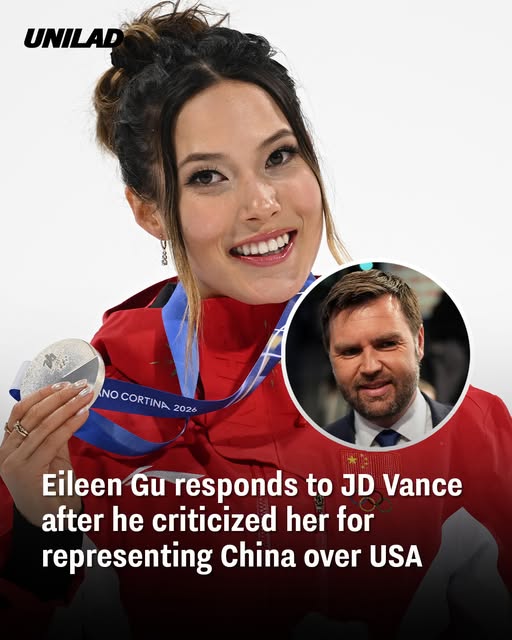
At the 2026 Milano-Cortina Winter Olympics, Eileen Gu born and raised in San Francisco continued her dominant Olympic career competing for China, the country of her mother’s birth. That decision first came in 2019 and has drawn attention ever since. At these Games she added multiple medals to her already historic tally, making her one of the most decorated women in freestyle skiing history.
Her choice to compete for China, rather than the United States — where she grew up and received her early training — remains a focal point in media and political discourse.
JD Vance’s Comments and Political Reaction
U.S. Vice President J.D. Vance publicly questioned Gu’s decision during a television interview, suggesting that someone who benefitted from the American system “would want to compete with the United States of America.” He said he planned to cheer for American athletes and those who identify themselves as Americans at the Games, implying that choosing to represent China was disappointing to some observers. Vance’s remarks quickly made headlines, sparking debate about national loyalty, identity, and what it means for athletes with multicultural backgrounds to compete internationally. Some commentators and politicians have taken Vance’s stance even further: one U.S. congressman floated a proposal to impose a 100% tax on earnings from athletes who compete for nations deemed U.S. “adversaries,” with China explicitly mentioned. This suggested broadening of the political argument into legislative action, although such measures remain controversial.
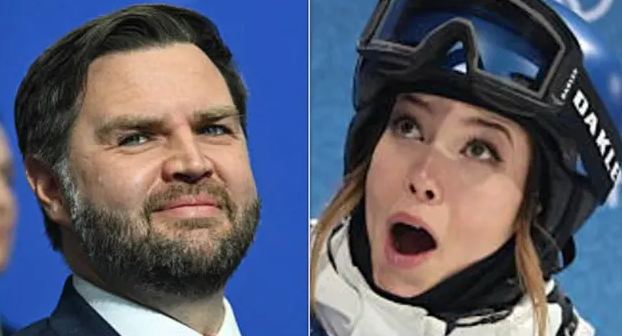
Gu’s Response: Confident and Unbothered
In response to the criticism, Gu has shown a calm yet direct attitude. She stated she wasn’t offended by Vance’s comments and described the criticism as rooted in broader dislike of China rather than her personal decision. She pointed out that many athletes represent countries other than their birthplaces and that the intense focus on her choices often overshadows the sporting achievements themselves. Gu emphasized that, for her, the decision was about where she could have the most impact, particularly in inspiring young athletes in China where the sport was still growing, rather than a rejection of her American upbringing.
She also downplayed the political dimension of her choice, saying that people often project broader geopolitical issues onto her personal decision — a factor she believes fuels much of the backlash.
Broader Public Debate and Criticism
The discussion around Gu’s national loyalty isn’t limited to political leaders:
- Some commentators have sharply criticized Gu’s public persona and comments, calling her “insufferable” or accusing her of being an unpatriotic traitor for competing for China rather than the U.S.
- Other voices, including fellow athletes like U.S. figure skater Alysa Liu, have expressed support for Gu, noting their personal connections and applauding her Olympic performance independent of nationality debates.
- Broader cultural commentary has emerged online, with debates spanning from how mixed-heritage athletes navigate identity to how political narratives shape public perception of sports figures. Some critics argue that China’s human rights record and national policies add layers of controversy to Gu’s choice, while others assert that elite sport should be separate from geopolitical judgments.
What This Reveals
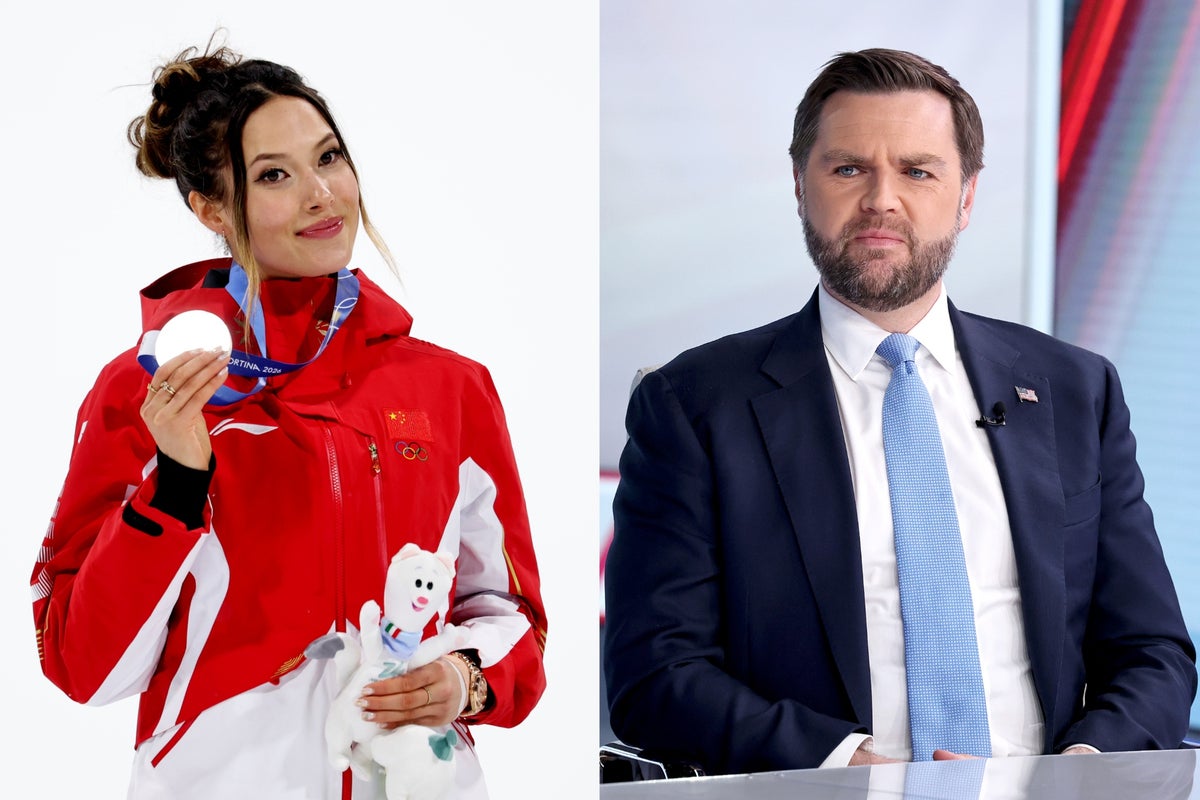
Gu’s case — succeeding at the highest level while being born in the U.S. yet competing for China — has become more than a sports story: it’s a flashpoint in broader discussions about globalization, dual citizenship, national representation, and how identity intersects with politics in the modern world. For many of her supporters, the focus remains on her athletic excellence and trailblazing role in winter sports. For critics, it raises questions about loyalty and how elite athletes navigate competing national interests and public expectations. As her Olympic journey continues to be celebrated and debated, Gu’s situation highlights how sport, politics, and identity remain deeply intertwined on the global stage.