The asteroid Bennu is a small, roughly 500-meter-wide body orbiting the Sun. It is only a fraction of the size of planets, yet scientists believe it may hold material as old as the very beginning of our solar system. In 2016, the spacecraft OSIRIS-REx (Origins, Spectral Interpretation, Resource Identification, Security-Regolith Explorer) was launched to rendezvous with Bennu. After a careful descent and sample-collection maneuver, OSIRIS-REx gathered dust and pebbles from Bennu’s surface. These precious samples were returned to Earth in 2023 — the largest pristine asteroidal sample ever delivered.
Because Bennu’s material remained largely unaltered since the solar system’s early days, scientists view it as a time capsule offering unique insight into primordial chemistry and the ingredients that may have seeded life on Earth.
What New Analyses of Bennu Reveal
Recent examinations of the returned Bennu samples have produced remarkable results. Researchers found a suite of organic molecules and minerals that, on Earth, are intimately tied to life.
Among the most significant discoveries are:
- Sugars needed for building genetic material. Scientists detected a sugar called ribose — a five-carbon sugar used in RNA — plus glucose, a six-carbon sugar central to metabolism and energy processes. These are the first detections of such sugars in pristine extraterrestrial material.
- Amino acids and nucleobases. The samples contain amino acids (the building blocks of proteins) — including many that life on Earth uses — along with all five nucleobases used in terrestrial DNA and RNA.
- Chemical traces of ancient water and salts. Some minerals in Bennu appear to have formed when salty, water-bearing fluid evaporated, indicating that its parent body once had liquid water — perhaps a primitive “brine-world.”
- Unusual organic polymers and ancient stardust. In addition to familiar life-related molecules, scientists identified a previously unknown polymer-like substance rich in nitrogen and oxygen — sometimes dubbed “space gum.” They also found dust grains that predate our Sun, remnants of ancient supernova explosions.
Implications for the Origins of Life
These findings significantly bolster the idea that the raw ingredients for life were widespread in the early solar system — not confined to Earth alone. The detection of sugars, amino acids, nucleobases, salts, water-derived minerals, and presolar dust suggests that primitive chemical conditions capable of producing life’s building blocks were present on asteroids like Bennu. Because Bennu seems to have originated from a larger carbon-rich parent body that underwent aqueous alteration — meaning water once flowed or existed within it — it may represent what an early “ocean world” looked like. That environment could have provided the perfect medium for complex chemistry to develop, perhaps even prebiotic molecules on their way toward life. Finding ribose is particularly exciting because it supports the hypothesis that early life may have relied on RNA rather than DNA — an idea known as the “RNA world.” The presence of glucose also suggests that potential energy sources for primitive life were present beyond Earth.
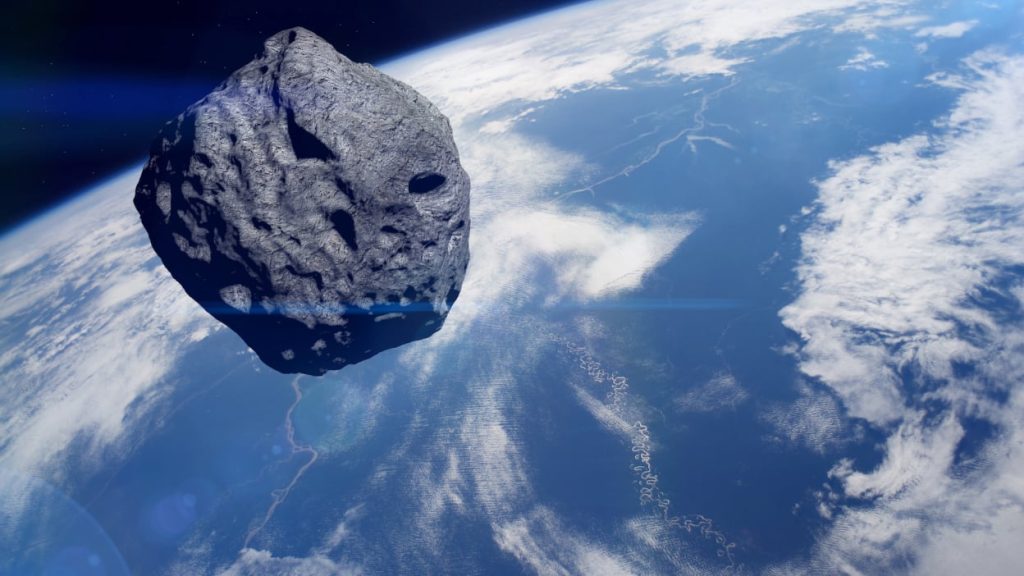
If meteoroids or comet fragments like Bennu impacted the young Earth, they could have delivered these chemical precursors, seeding our planet with the fundamental components necessary to spark life. This supports broader theories of cosmic seeding or panspermia — at least at the chemical level.
Why Bennu Still Matters — And What Questions Remain
Though Bennu carries all the chemical building blocks of life and evidence of ancient water, scientists stress that no evidence of actual life — living cells, DNA strands, or fossils — has been found. That’s an important distinction. The detection of both left- and right-handed amino acids (so-called enantiomers) in equal proportions — unlike the exclusively “left-handed” amino acids used by Earthly life — raises deep questions about how biological homochirality (one-handedness) arose. That remains unsolved. Moreover, while Bennu’s parent body shows evidence of having had water, current conditions on Bennu are inhospitable: there’s no atmosphere, temperatures fluctuate wildly, and liquid water cannot exist on its surface today. Still, the fact that such a small asteroid retains unaltered primordial material makes Bennu a precious window into the chemistry at the dawn of the solar system. Its samples may continue to yield insights for decades — into how planets formed, how water and organics spread, and how life might begin elsewhere.