
Authorities in Malaysia have confirmed that the search for the missing aircraft MH370 will restart at the end of December 2025 more than 11 years after the flight disappeared. The renewed effort is being undertaken with hopes of bringing closure to the families still waiting for answers. The deep-sea search is scheduled to begin on December 30, 2025, and will last for 55 days. It will be conducted intermittently, focusing on a targeted area deemed most likely to yield wreckage of the plane. The operation will be carried out by the marine exploration company Ocean Infinity.
Background: What Happened in 2014
On March 8, 2014, MH370—a Boeing 777—disappeared from radar screens shortly after taking off from Kuala Lumpur, Malaysia, en route to Beijing, China. The plane carried 227 passengers and 12 crew members. Less than an hour after departure and just 38 minutes into the flight, the aircraft’s transponder stopped communicating. Two minutes after the last radio contact, the plane vanished from air-traffic control monitoring and never checked in with Vietnamese radar. Military radar briefly tracked the aircraft as it deviated from its original path and flew across the Strait of Malacca. It was last detected some 230 miles northwest of Penang Island, off the west coast of peninsular Malaysia. Since then, over the years, isolated pieces of wreckage — believed to belong to MH370 — washed up on distant shores in the Indian Ocean. Though these fragments deepened the mystery, they did not provide definitive answers about what happened or where the aircraft ultimately ended up.
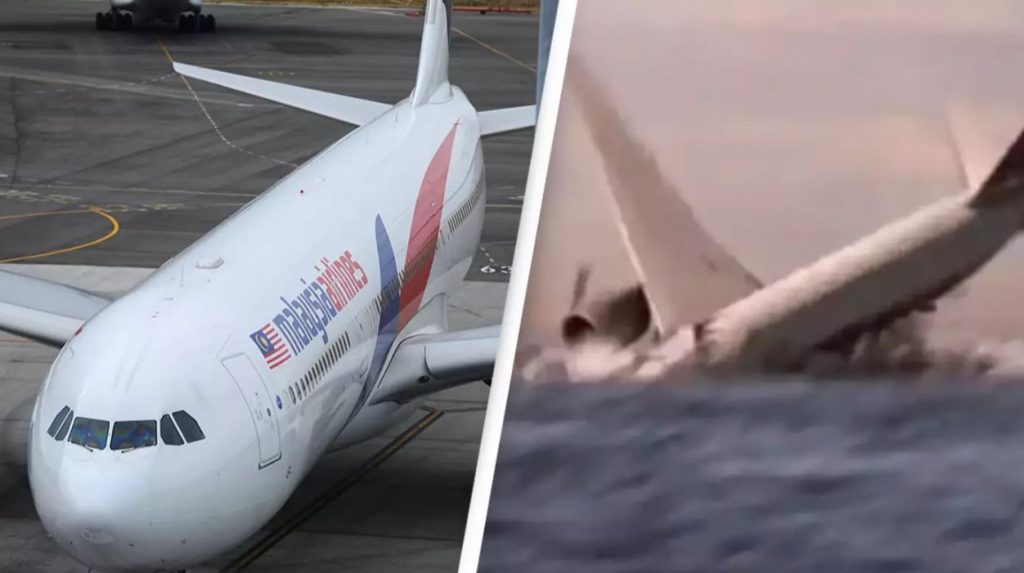
Previous Searches: The Largest in Aviation History
In the aftermath, authorities launched what became the largest underwater search in aviation history. Teams from multiple countries searched through some 120,000 square kilometres of the Indian Ocean over a span of years; yet, they found nothing conclusive apart from scattered debris. In 2018, Ocean Infinity — under a “no-find, no-fee” agreement — conducted its own search. Despite advanced sonar and robotic sub-sea technology, this expedition ended without locating substantial wreckage.
Over the years, many theories emerged, ranging from pilot action to hijacking — but investigators have never ruled out the possibility of “unlawful interference” by a third party.
Because of the massive area, great depth of the ocean (in some zones over 4 km), and complex underwater terrain, the disappearance of MH370 has remained one of the most baffling mysteries in modern aviation.
What’s New in the 2025 Search
The renewed search will take place across a new 15,000-square-kilometre zone identified by Ocean Infinity as having the highest probability of containing the wreckage.
The approach remains under the “no-find, no-fee” agreement: Ocean Infinity will be paid only if they recover “substantial” pieces of the aircraft. The Malaysian government emphasised that the decision to resume the search underscores its commitment to “providing closure to the families affected by the tragedy.” Officials expressed hope that the new underwater exploration, leveraging latest technology and refined crash-site modelling, could finally solve one of aviation’s greatest mysteries.

Why Many Families Still Hope — and What Is at Stake
For relatives of the 239 individuals aboard MH370, this renewed exploration offers a renewed sense of hope. Despite the passage of more than a decade, the pain of uncertainty remains — no bodies, no black boxes, no definitive wreck site. For them, this could be a last chance to get concrete answers. If wreckage — especially key parts like the fuselage or black boxes — is recovered, it could reveal what happened in the air, whether the aircraft went down due to mechanical failure, human intervention, or other causes. Until such evidence emerges, the disappearance remains unresolved. Moreover, a successful search could help improve aviation safety, clarify long-standing theories, and perhaps bring a measure of solace to all families impacted by the tragedy.