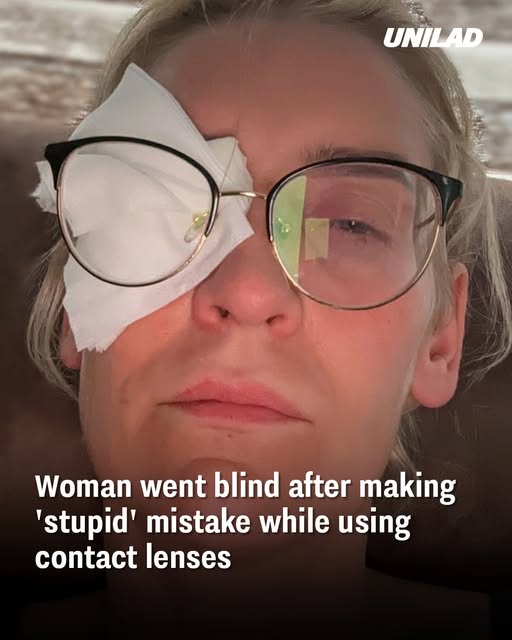
A British nurse has issued a stark health warning after a serious mistake with her contact lenses resulted in temporary blindness in one eye. The 36-year-old has shared her experience to highlight what can happen when contact lenses are not used according to guidelines, urging other wearers to understand the risks and proper practices.
How the Problem Began
The nurse, named Katie Carrington, from Essex in the United Kingdom, first needed glasses as a teenager due to poor eyesight. At age 17 she switched to daily disposable contact lenses as an alternative to glasses, appreciating the convenience they offered when active or social. However, what began as occasional convenience soon turned into a harmful habit. Katie admitted she often forgot to remove her lenses at night and eventually began wearing them for prolonged periods — in some cases for days or even weeks without changing them. This misuse went on over many years and ultimately led to serious trouble.
Pain and Seeing Nothing
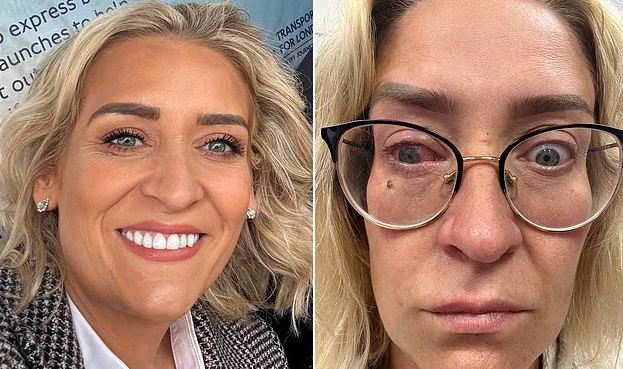
In August 2025, Katie woke up with eyes that were pounding and streaming, followed by a day of “unbearable pain” that she described as worse than giving birth. Her right eye had become completely blind, and doctors were unsure whether the vision would return. The cause was a severe infection and damage from bacterial buildup under the lenses — a risk that eye health experts warn about when lenses are worn far beyond their intended use period. Contact lenses are designed to allow oxygen to reach the cornea; when they are worn continuously, especially overnight or for extended days, they can trap bacteria and damage the delicate eye surface, leading to infections such as microbial keratitis.
Daily Challenges After Vision Loss
Katie said the temporary blindness left her feeling devastated and dependent. She described daily tasks becoming difficult and noted her emotional struggle at the thought of possibly never seeing her children grow up. “Even though it was just one eye, I felt like all my independence had been taken away,” she said. Simple actions like making a baby bottle or cutting food in the kitchen became harder, increasing her feelings of frustration and loss of autonomy.
Recovery and New Precautions
Thankfully, after about five weeks, Katie’s sight returned in her right eye following medical treatment and care. But the experience has profoundly changed her attitude toward contact lens use. She has said she will never wear contact lenses again and now relies solely on glasses to correct her vision. Katie openly called her actions “stupid” and has taken responsibility, but she also recognizes that many contact lens wearers may not fully understand the risks of improper use. “I urge contact lens wearers to read up about the risks,” she said, noting that she “thought it would never happen to me because I got away with it for so long.”
Expert Warnings About Contact Lens Risks
Medical professionals widely agree that improper contact lens hygiene and misuse are major risk factors for serious eye infections. Wearing lenses longer than advised — especially overnight — increases the likelihood of bacteria accumulating on the eye surface. Extended wear can restrict oxygen to the cornea, raising risks of irritation and infection. A report from a major vision safety group noted that over 80 % of contact lens wearers admit to at least one risky behaviour, such as sleeping in lenses or not following care instructions, which significantly increases the chance of infection.
Simple Steps to Protect Your Eyes
Eye health experts recommend:
- Always follow the wear schedule prescribed for your type of contact lenses.
- Never sleep in lenses unless they are specifically approved for overnight use.
- Maintain strict hygiene by washing hands and cleaning and storing lenses correctly.
- Replace lenses as recommended by an eye care professional and attend regular check-ups.
- Katie’s experience serves as a powerful reminder that even common and seemingly harmless practices with contact lenses can have severe consequences if proper care is not taken.