
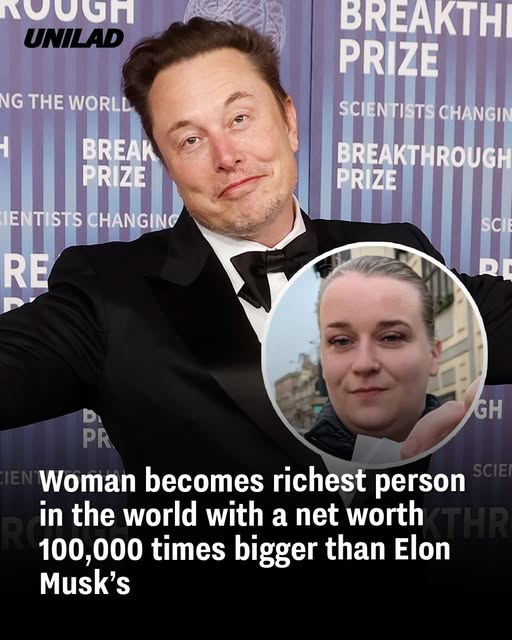
A 29-year-old entrepreneur from Nottingham, England has become an unexpected global headline after a glitch at a local coffee shop momentarily made her appear to be the richest person in human history surpassing even billionaires like Elon Musk by an extraordinary margin.
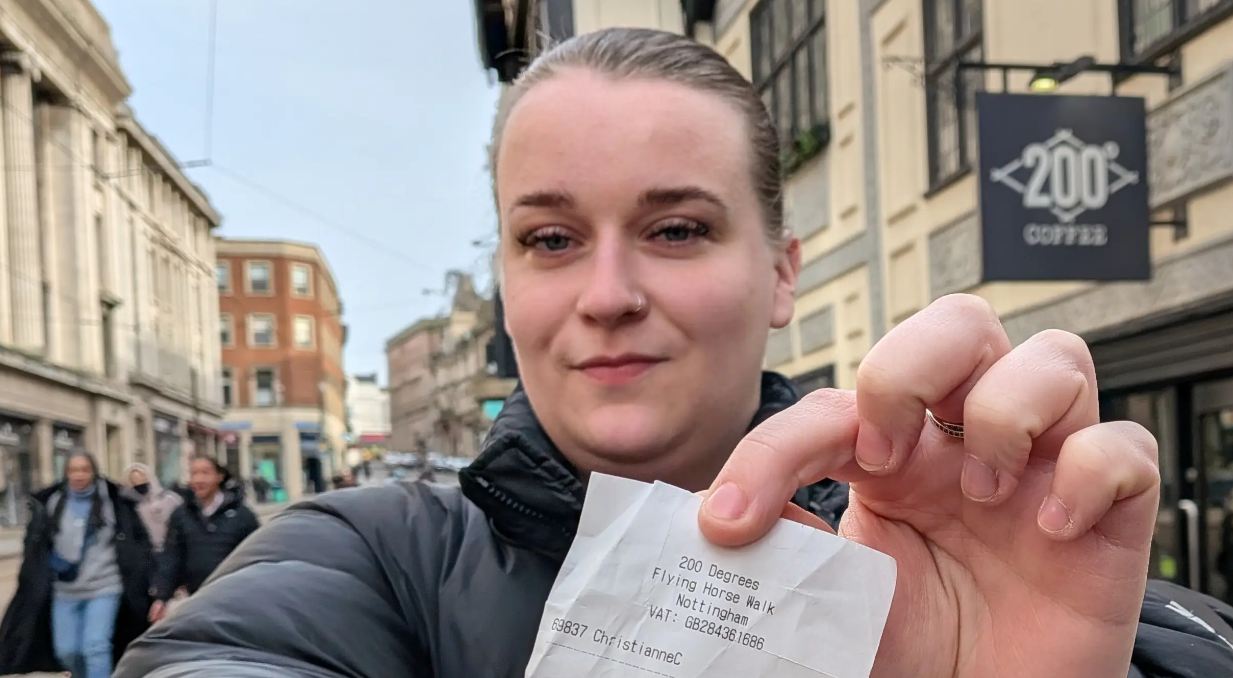
The story began when Sophie Downing, who runs a small business in Nottingham, visited a branch of the café chain 200 Degrees Coffee to buy a matcha latte. She paid with what she believed was a standard £10 (£10 sterling) gift card that she had received as a Christmas present. However, when the barista handed her the receipt, the figure printed beside the remaining balance was anything but ordinary. Instead of showing a typical balance under £10, the receipt indicated that a balance of £63 quadrillion remained on the card. In numerical terms, that reads as the number 63 followed by 15 zeros, an amount so large it would dwarf the entire wealth of the known global economy. This improbable number was roughly 100,000 times more than the personal wealth of Elon Musk, who usually tops global billionaire rankings. For comparison to global economic measures, it was also estimated to be several hundred times greater than the total economic output of Earth’s economies combined, if taken literally.
What Actually Happened
While the headline sounds like something from a surreal science fiction plot, the reality is that the astonishing balance was simply the result of a technical or administrative error. A café representative later explained that the system had mistakenly recorded the gift card’s identifying numbers as if they were its actual monetary value. So instead of showing the real £10 value, the system generated a massive numerical figure on the receipt. The glitch appeared to go unnoticed by Till staff besides their original surprise. Initially, even the barista was confused by the figure and offered the receipt back to Sophie as she left the café. The shop later reissued a corrected receipt showing the true balance.
The Internet Reacts
Once the bizarre balance was shared online, the story quickly went viral. Social media users were amused and astonished by the idea of someone being, at least on paper, the richest human being ever — even if it was only relevant inside a single coffee shop. Many joked about the coffee and pastries she could buy, while others compared it to other famous “fake wealth” glitches reported in past years. The situation also sparked broader discussions about wealth measurements and how easily numbers can be misinterpreted without context. Of course, the quadrillion-pound balance could not be converted to real wealth or spent outside the café.
Sophie’s Reaction and What She Did Next
Sophie herself found the situation funny more than life-changing. She admitted it was bizarre and humorous to see such an absurd number on her receipt, laughing that she had never encountered anything like it in her life. After realizing what was likely a scanning or input error, she chose not to exploit the glitch to buy everything in sight — partly out of practical limitations and partly out of simple good sense. Even when she revisited the café days later to buy something else, the strange balance seemed unchanged — further indicating the error lay with the electronic system rather than any meaningful financial value.
What This Means
Despite the comical headline and internet buzz, the event did not alter anyone’s understanding of global wealth rankings. Elon Musk and other global billionaires remain wealthier in real financial terms than almost anyone else alive today. What this quirky incident revealed was less about economics and more about how digital systems can sometimes produce unexpected and amusing outcomes. The story serves as a reminder that not all eye-popping numbers reflect real assets — especially when they’re attached to something as ordinary as a coffee gift card.