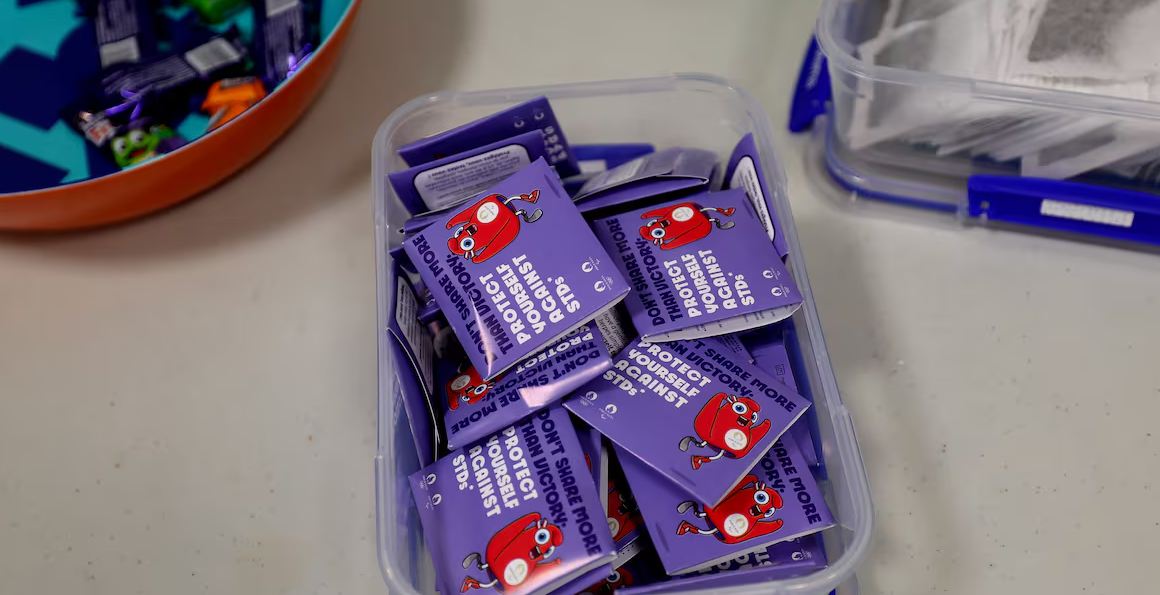
The 2026 Winter Olympics in Milano-Cortina, Italy has delivered many memorable moments and one of the most unexpectedly talked-about early developments is a condom shortage in the Olympic Village. Organisers stocked the athletes’ village with around 10,000 free condoms for competitors, a safety provision that traditionally accompanies Games to promote sexual health and prevent sexually transmitted infections. However, that supply was used up within just three days of the Games beginning, leaving officials scrambling to restock.
This rapid depletion — especially so early in the competition — has drawn intense media and public attention, partly because it contrasts sharply with recent Summer Games. At the 2024 Paris Olympics, organisers reportedly distributed around 300,000 condoms, a far larger number relative to the number of athletes.
Why the Shortage Happened So Quickly
The main reason the condoms ran out seems to be a combination of high demand from athletes and a much smaller initial allocation than at past Games. With roughly 2,800–3,000 athletes staying in the Milan-Cortina village, the initial stock amounted to roughly three condoms per competitor — far less than the typical two per athlete per day standard often used in planning for larger events. An anonymous athlete quoted in reports said the supplies “ran out in just three days” and acknowledged that organisers had promised more will arrive but that the timeline was uncertain. Athletes’ reactions have mixed humour, surprise, and a recognition that Valentine’s Day — which fell during the early days of the Games — may have contributed to higher-than-expected usage.
Tradition Meets Practical Concerns
Condom distribution at Olympic Games is not a new phenomenon. Organisers have provided free condoms at every Summer and Winter Olympics for decades as part of public health campaigns and to promote safe sex among competitors who come from widely different cultural contexts. The practice dates back to the 1988 Seoul Olympics and has since been a regular fixture, with quantities adjusted based on the size and scale of the event. Officials emphasised that the program is about safety and education, not moral commentary. The organising committee and local authorities defended the provision of free condoms and sought to reassure athletes that supplies would be replenished throughout the Games to meet needs and avoid shortages later.
Restocking and Organisers’ Response
In response to the shortage, organisers promised a Valentine’s weekend restock — noting that extra condoms were being delivered and would be distributed across all Olympic villages by a designated date, with ongoing replenishment planned up to the closing ceremony on February 22. Representatives said the initial depletion was due to “higher-than-anticipated demand,” but they stressed that athletes’ access to condoms would be maintained throughout the event. The promise of fresh supplies has been portrayed as a practical solution to a logistical snafu, rather than a crisis. However, the novelty and rapid timeline in which the original condoms disappeared have sparked extensive conversation and media coverage — from serious public health discourse to light-hearted commentary — touching on how young athletes behave when housed together in a highly social environment.
Public Reaction and Context
Reactions to the news have ranged from amusement to thoughtful discussion about how elite athletes balance intense competition with personal downtime. Social media users and commentators have noted the contrast between Milan-Cortina’s smaller allocation and previous Games’ larger distributions, with some suggesting that condoms often become a popular souvenir item because of their Olympic branding and limited availability. Others have pointed out that these figures might reflect usage not just for sexual activity but also for creative alternative uses or collection by athletes. In some online discussions, spectators noted that the shortage highlights both the tradition and the logistics of catering to competitors’ needs in a temporary community where thousands of people live, train, and socialise in close quarters.
The Big Picture
Overall, the condom shortage at the Milano-Cortina Winter Olympics has become one of the most unconventional talking points of the Games, bringing attention to both public health practices in major sporting events and the human side of Olympic life beyond competition. As organisers restock supplies and athletes continue their quests for medals, the episode offers a reminder that even the world’s biggest sporting stage must deal with everyday practicalities — and occasionally find itself making headlines for unexpected reasons.