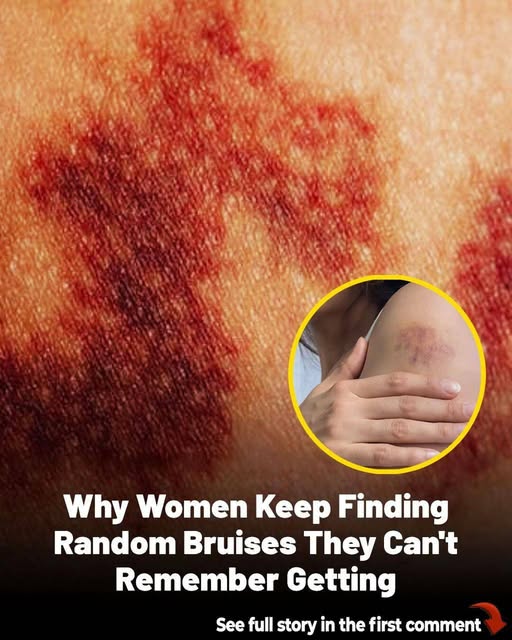
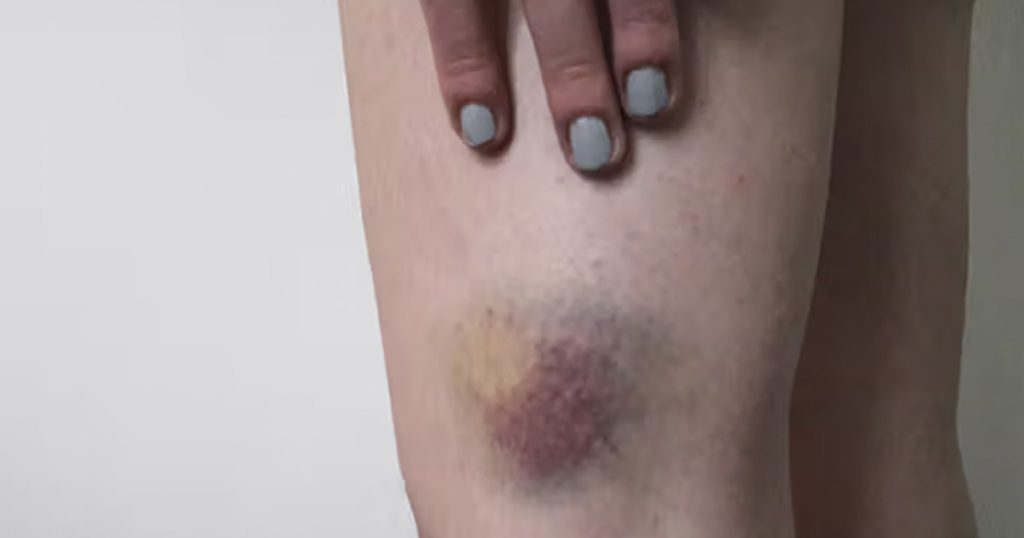
Waking up to discover a bruise you don’t remember getting is surprisingly common, especially among women. A bruise forms when small blood vessels under the skin break and leak blood into the surrounding tissue, causing a visible mark as it heals and changes color. Most of the time these marks are harmless, but it’s helpful to understand the possible reasons they appear.
Thinner or Sun-Damaged Skin
As skin ages or gets repeatedly exposed to sunlight, it loses some of its protective fat layer and elasticity. This means tiny capillaries close to the surface are less well-cushioned and can rupture even from minor pressure or bumps you don’t notice. This phenomenon is often seen on forearms and hands and is more noticeable in individuals with lighter or more fragile skin.
Minor Bumps You Didn’t Feel
One of the most common explanations is simple unnoticed trauma. During daily activity or movement while sleeping, you might lightly bump into furniture, bedding, or even your own limbs without remembering it. These small impacts can be enough to break delicate blood vessels if your skin bruises easily.
Iron Deficiency and Menstrual Blood Loss
Women of reproductive age are especially susceptible to iron deficiency due to menstrual blood loss. Low iron levels can contribute to weakness in blood vessel walls and may reduce the body’s ability to form healthy clots, making bruising more likely. If unexplained bruises appear alongside fatigue or heavier periods, iron levels are worth checking with a health provider.
Genetics and Individual Sensitivity
Some people simply bruise more easily due to genetic factors. If your family members bruise easily, you might share similar connective tissue traits that make capillaries more vulnerable. Hormonal factors — including fluctuations related to menstrual cycles — may also temporarily make blood vessels more fragile, increasing bruise risk.
Vitamin Deficiencies
Certain nutrients are crucial for healthy blood vessels and clotting:
- Vitamin C helps with collagen production, which strengthens vessel walls.
- Vitamin K is essential for proper blood clotting.
- Vitamin B12 supports healthy blood cell production.
- A lack of these vitamins can weaken blood vessels and impair clotting, leading to easy or unexplained bruising.
Medications and Supplements
Several medications can make bruising more likely by affecting the body’s clotting mechanisms or thinning the blood. These include:
- Aspirin and other blood thinners
- NSAIDs (like ibuprofen or naproxen)
- Corticosteroids
Some antidepressants
Even some herbal supplements (like ginkgo or high-dose fish oil) can have a mild blood-thinning effect and increase bruise risk.

When Bruises Might Signal Something More Serious
Most random bruises are harmless and fade within a couple of weeks. However, it’s important to seek medical advice if you notice:
- Very large bruises or many bruises appearing frequently
- Bruises that don’t heal or continue enlarging
- Additional symptoms like bleeding gums, severe fatigue, night sweats, or unexplained weight loss
- These signs could suggest an underlying condition affecting blood clotting or blood cell production, such as a clotting disorder, liver disease, or, rarely, a blood-related illness.
In Summary
Unexpected bruises upon waking can result from a combination of factors — from minor, unnoticed bumps to nutritional deficiencies, genetic sensitivity, or medication effects. Many cases are benign, but keep an eye out for patterns or additional symptoms, and don’t hesitate to talk to a healthcare provider if something feels unusual. Regular check-ups and simple blood tests can help rule out more serious causes and give you peace of mind.