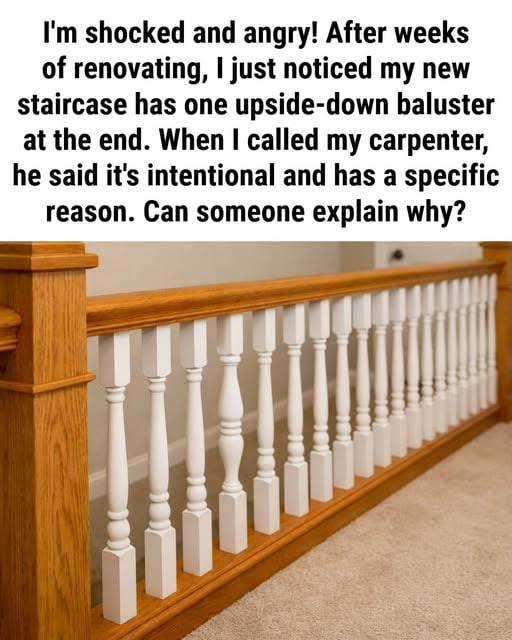
If you’ve ever looked at a staircase and noticed a single baluster installed upside down, you’re not alone and you’re not imagining things. This odd visual detail, where one vertical spindle in a railing is reversed while the rest remain uniform, has sparked centuries of stories, folklore and symbolism from builders, historians, and homeowners alike.
While it might first appear to be a construction error, in many cases it isn’t a mistake at all. Instead, this inverted baluster is a purposeful design choice rooted in tradition, superstition, and craftsmanship that reveals a surprising depth of meaning.
A Testament to Humility and Craftsmanship
One of the most well‑known explanations for an upside‑down baluster comes from the world of traditional carpentry. In periods when craftsmanship was revered and builders took immense pride in their work, some artisans purposely left one intentional imperfection in a staircase as a subtle philosophical statement. The idea was simple but symbolic: only a divine power can create something truly perfect, and by deliberately inserting a flaw, the builder acknowledged human limitation. In this way, the inverted baluster served as an unspoken tribute — a humble reminder of life’s imperfections even within beautifully crafted structures. This artistic quirk was often used as a kind of hidden signature or hallmark, allowing a craftsperson to mark their work without overtly signing their name. In older colonial and Victorian homes, discovering such a detail became almost a rite of passage for appreciative homeowners, signaling the presence of thoughtful, intentional design.
Protection from Spirits and Folklore
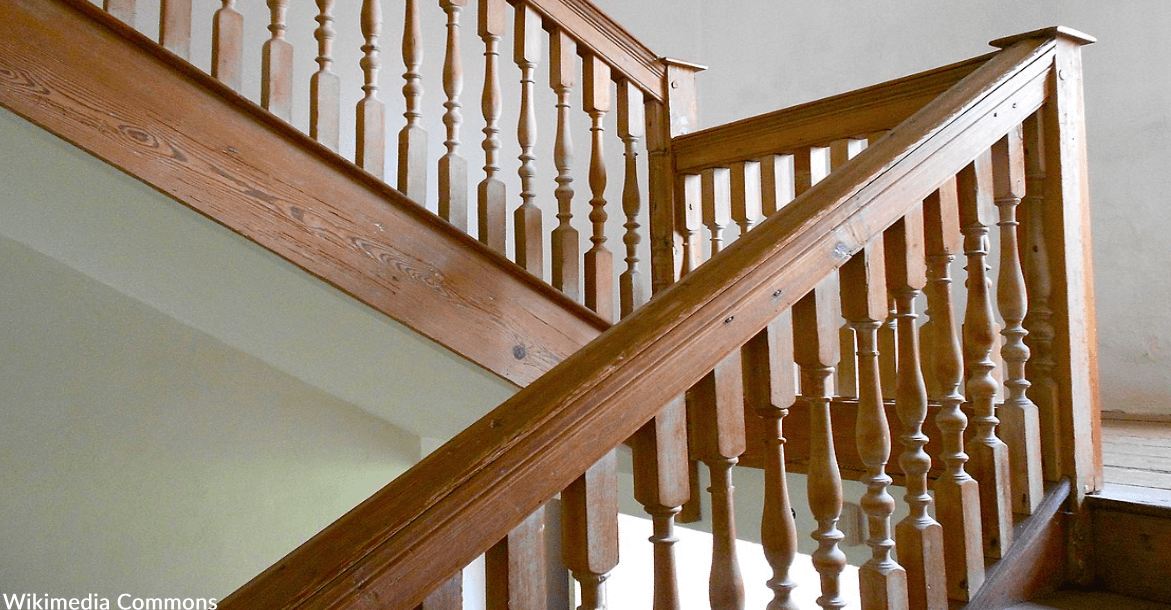
Beyond craftsmanship, superstition also played a significant role in the history of inverted balusters. In several parts of Europe and among early settlers in America, staircases were thought to be potential pathways for spirits — both good and evil — to travel through a home. According to old beliefs, malevolent spirits could follow the straight lines of a staircase up into the private spaces of a house — especially bedrooms or nurseries — unless something disrupted their path. Placing one baluster upside down created a break in the otherwise continuous pattern, which was thought to confuse or deter these wandering entities. This practice shares similarities with other protective architectural traditions such as “witch marks” or apotropaic symbols carved into beams and thresholds to keep out evil influences. In this context, the inverted baluster became more than a visual oddity — it served as a quiet charm built into the very structure of the home.
Cultural Variations and Symbolism
The meaning ascribed to upside‑down balusters varies depending on the region and era. In Scottish lore, for example, some builders reportedly used inverted balusters as a hidden sign of support for historical causes, such as covert sympathy for Bonnie Prince Charlie during the Jacobite uprisings.
In public buildings such as old state capitols in the United States, builders sometimes included an inverted spindle on purpose. One famous example is the grand staircase at the South Dakota State Capitol, where an upside‑down baluster is said to symbolize divine perfection contrasted with human imperfection. These variations show how a simple detail — one reversed spindle — can carry different narratives depending on cultural beliefs, local folklore, and architectural practices.
From Old Homes to Modern Curiosity
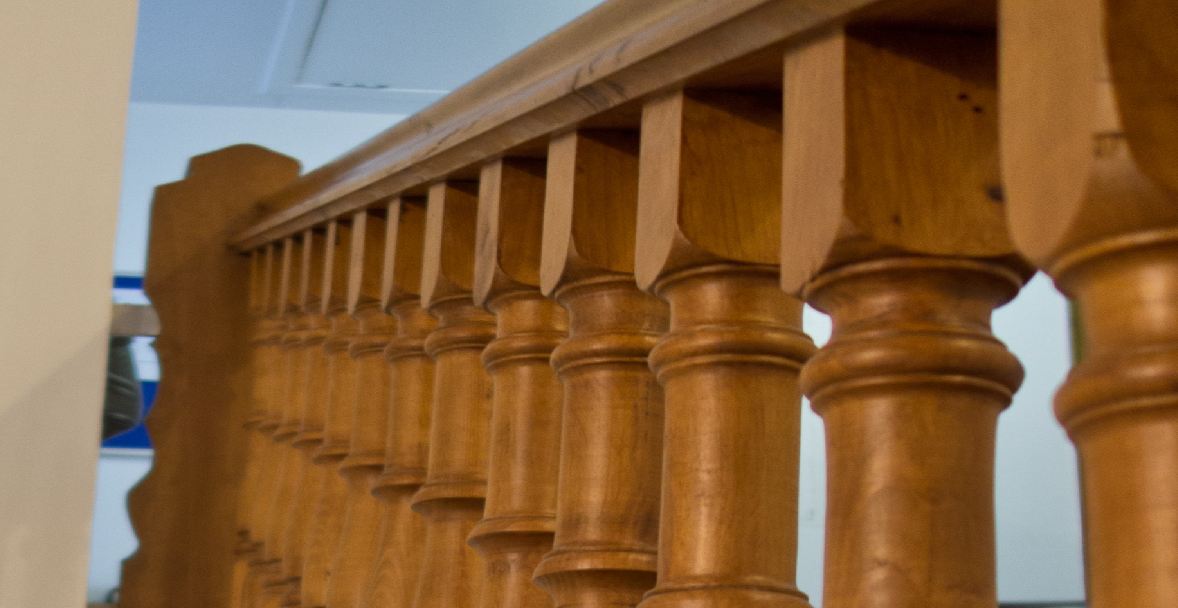
In modern construction, stair balusters are usually manufactured to strict standards, and intentional imperfections are rare. Yet the tradition persists in some custom‑built or restored historic homes, where builders or homeowners include an inverted baluster as a nod to tradition or simply to spark curiosity. Social media users today have also embraced the phenomenon as a quirky architectural Easter egg. Videos and posts about upside‑down balusters have become popular online, transforming what was once a hidden craft tradition into a viral topic of conversation — blending folklore, design history, and modern home interest in one fascinating detail.
A Staircase That Tells a Story
So the next time you ascend a staircase and spot a baluster turned the wrong way around, don’t dismiss it as sloppy work. Whether it’s rooted in age‑old superstition, artistic humility, or just a builder’s personal touch, that inverted spindle invites you to think about the stories etched into the homes around you — where even the smallest detail can carry meaning beyond its appearance.