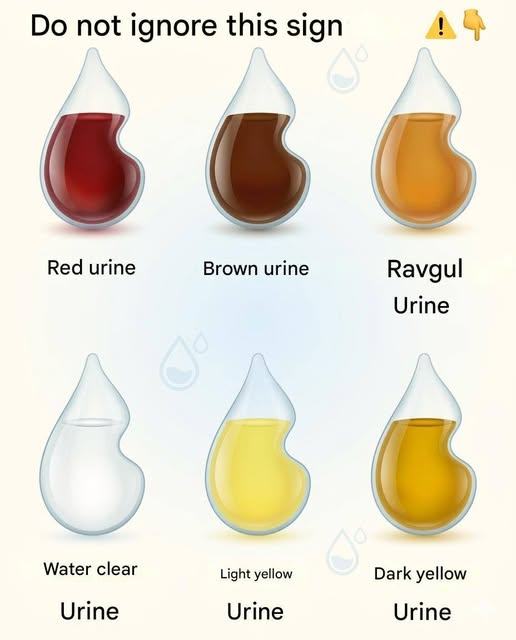
Urine color is often linked to hydration levels and can sometimes provide early clues about changes in the body. It is made up of water, waste products, and pigments filtered by the kidneys. The main pigment responsible for its yellow color is called urochrome. When the body is well hydrated, urine is lighter; when fluid intake is low, it becomes darker.
1. Clear or Very Light Yellow
This usually means you are well hydrated. However, consistently clear urine may also suggest you are drinking too much water, which can sometimes dilute important minerals in the body.

2. Pale Yellow (Normal Range)
This is considered the healthiest and most normal urine color. It shows that your body has a good balance of fluids and is properly hydrated.
3. Dark Yellow or Amber
This is one of the most common signs of mild dehydration. It means your body needs more fluids. The darker the shade, the more concentrated your urine is due to low water intake.
4. Orange Urine
Orange urine can be caused by dehydration, certain medications, or vitamin supplements. In some cases, it may also indicate liver or bile duct issues, especially if it continues for a long time.
5. Red or Pink Urine
This color can look alarming. Sometimes it is caused by foods like beets or berries. However, it may also indicate blood in the urine, which can be linked to infections, kidney stones, or other medical conditions that need checking.
6. Brown or Dark Tea-Colored Urine
This may be caused by severe dehydration, certain medications, or more serious conditions affecting the liver or kidneys. If it persists, medical attention is recommended.
7. Blue or Green Urine
These unusual colors are rare and are usually linked to food dyes, medications, or certain bacterial infections. While often harmless, unexplained changes should still be checked if they continue.
8. Cloudy or Foamy Urine
Cloudiness or persistent foam may sometimes suggest infection or excess protein in the urine, which can be an early sign of kidney issues.
When to Be Concerned
Temporary changes in urine color are often caused by diet, hydration, or medication. However, persistent or unexplained changes—especially red, brown, or cloudy urine—should be checked by a healthcare professional. A simple urine test can help detect infections, kidney problems, or other underlying conditions early.

Final Takeaway and Healthy Habit Tips
Understanding urine color can be a helpful part of paying attention to your overall health, but it should never be used as a sole diagnostic tool. The body is constantly influenced by hydration, diet, supplements, medications, and physical activity, all of which can temporarily change urine appearance. Because of this, one unusual color does not automatically mean something is wrong. A more useful approach is to observe patterns over time. If urine consistently appears very dark, unusually cloudy, or changes color without an obvious reason such as food or vitamins, it may be a sign that the body needs attention. In those cases, increasing water intake and monitoring changes is a simple first step.
Conclusion
Urine color is a simple but useful indicator of hydration and overall health. While most changes are harmless and temporary, some can signal underlying health issues. Paying attention to patterns over time is more important than reacting to a single change.