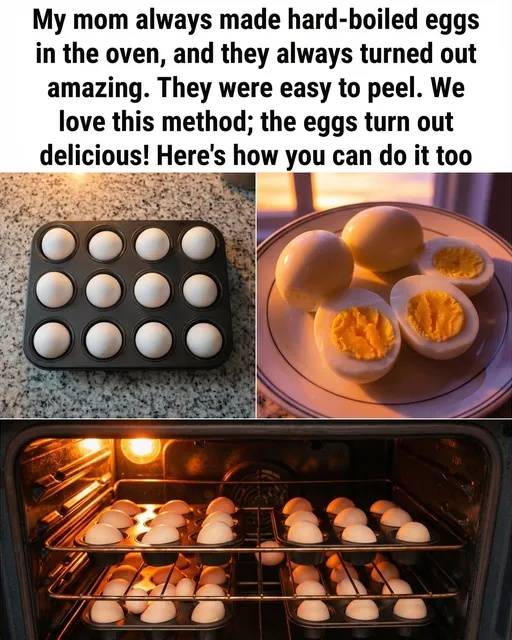
Using the oven to “hard-boil” eggs is a simple, hands-off way to cook a whole batch at once especially useful if you need a lot of eggs for salads, meal prep, or snacks. Instead of boiling them in water on the stove, the dry heat of the oven cooks them evenly and with less fuss.
This technique is great for people who want consistent results without worrying about cracked shells or watching a pot of water.
How Oven “Hard-Boiled” Eggs Work
When you bake eggs in the oven, they aren’t boiled with water — they’re cooked by hot, dry air that penetrates the shell. This is essentially like slow-steaming them in a controlled environment, and it tends to produce smooth, fully set whites and yolks with minimal cracking. Because there’s no rolling boil or violent water movement, there’s less risk of the shells breaking during cooking.
What You’ll Need
- Oven (preheated to about 325°F / 160–165°C)
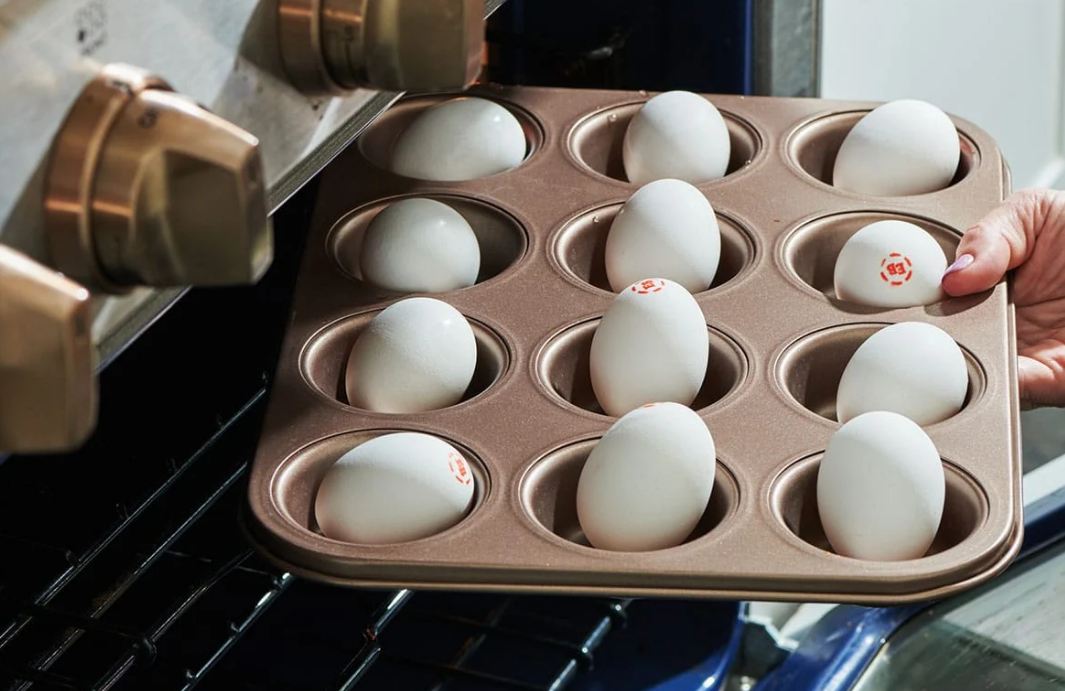
- Muffin tin or oven-safe dish
- Eggs (as many as you need — oven setups can handle dozens at once)
- Ice bath (bowl of ice and cold water) for cooling after baking.
Step-by-Step Oven Method
- Preheat the oven to around 325°F (about 160–165°C).
- Place whole, uncracked eggs in a muffin tin or other oven tray so they’re not rolling around. You can also use a rack if you want.
- Bake for about 30 minutes. The dry heat cooks the egg inside the shell evenly.
- Prepare an ice bath while the eggs bake. This is a bowl filled with ice and cold water.
- Remove the eggs from the oven once done and immediately plunge them into the ice bath to stop the cooking. Let them cool for at least 10 minutes before peeling.
This causes the egg surface to contract, which often makes it easier to peel and helps prevent the green-gray ring around the yolk that overcooking can cause.
Tips for Best Results
✔ Use a Muffin Tin
Placing each egg in a muffin cup keeps them stationary so they don’t roll into each other or crack during cooking.
✔ Cool Immediately
Putting the eggs in iced water right after baking stops the cooking process quickly and improves texture and peelability.
✔ Bake Multiple Eggs Easily
Unlike boiling, the oven method doesn’t get crowded if you’re making a dozen or more — the space is uniform and heat distribution is consistent.
✔ Patience Over Speed
The total bake time is longer than traditional stovetop boiling, but it’s largely set-and-forget, with fewer steps and no water to manage.
Comparing Oven to Stovetop
Feature Oven Method Stovetop Boiling
Hands-Off 👍 Yes 👎 Requires watching
Consistency 👍 Very good ⚖️ Depends on boil and timing
Cracking Risk 👍 Lower 🌊 Higher due to water agitation
Batch Size 👍 Great 👎 Depends on pot size
Time ⏱ Longer (about 30 min) ⏱ Shorter (~12–15 min)
The oven method is especially popular when you want to make a large number of eggs with consistent results and minimal hands-on work.

Serving Ideas
Once your oven-baked eggs are cool and peeled, they can be used for:
- Egg salad sandwiches
- Deviled eggs
- Snack packs with veggies
- Protein-rich breakfast bowls
They’re versatile, healthy, and quick to prepare ahead of time for the week.