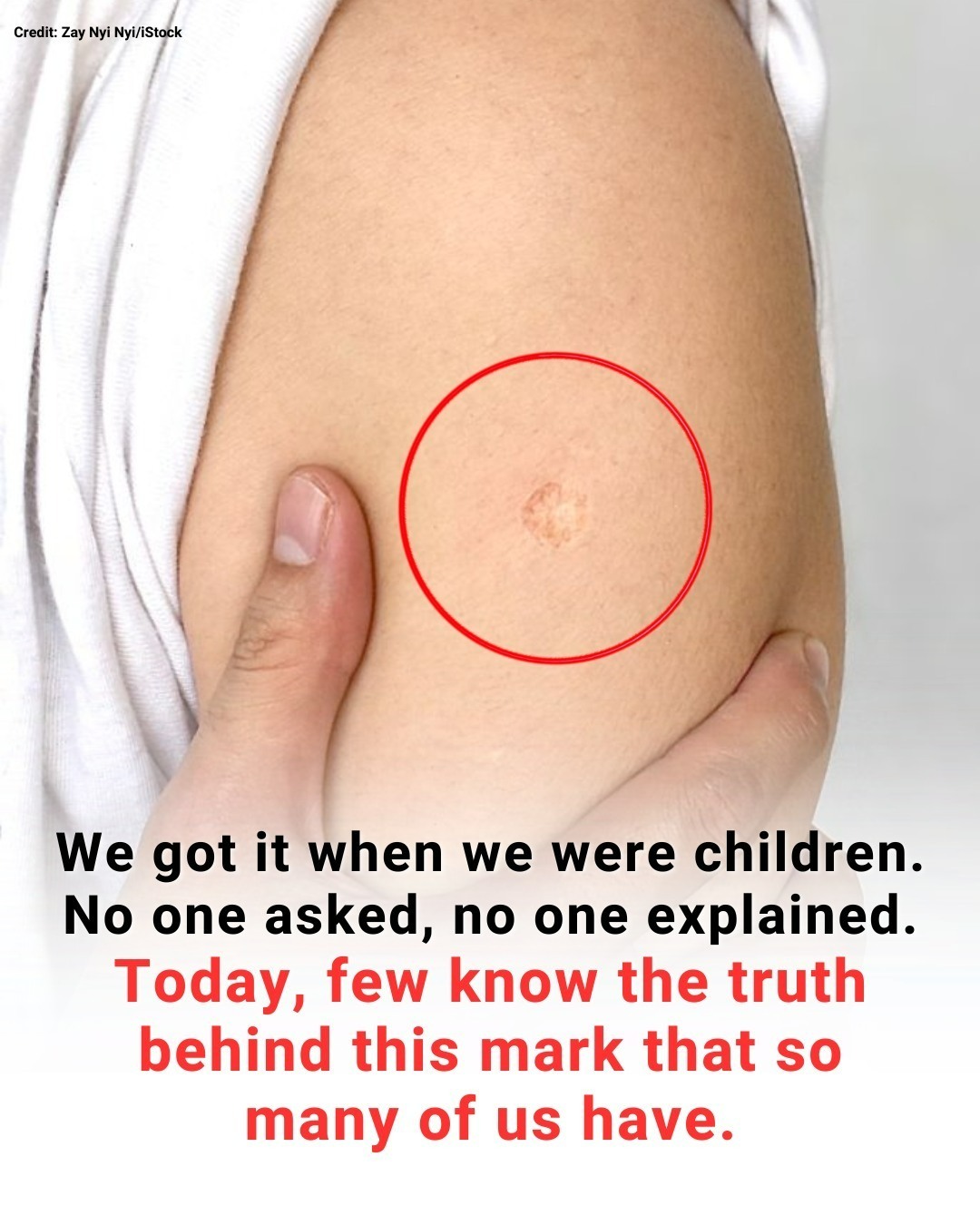
For many people around the world, especially those who grew up in certain countries, there is one small mark that has sparked years of curiosity: a round scar on the upper arm. It is usually small, slightly indented, and often lighter than the surrounding skin. Some people assume it came from a childhood accident, while others think it might be from a burn or a strange skin condition. But in most cases, the explanation is much simpler and much more meaningful. That little scar is often linked to a vaccine that played an important role in protecting millions of people from serious illness.
In Many Cases, It’s a BCG Vaccine Scar
The most common explanation for a round scar on the upper arm is the BCG vaccine — short for Bacille Calmette-Guérin. This vaccine is used in many parts of the world to help protect against severe forms of tuberculosis (TB), especially in infants and young children. It has been routinely given in many countries across Asia, Africa, Latin America, and parts of Eastern Europe, which is why so many adults from those regions still carry the mark today. A 2022 article from the UCSF Institute for Global Health Sciences specifically notes that many people assume the scar is from smallpox, but for many immigrants and people vaccinated outside the U.S., it is more likely to be from BCG.
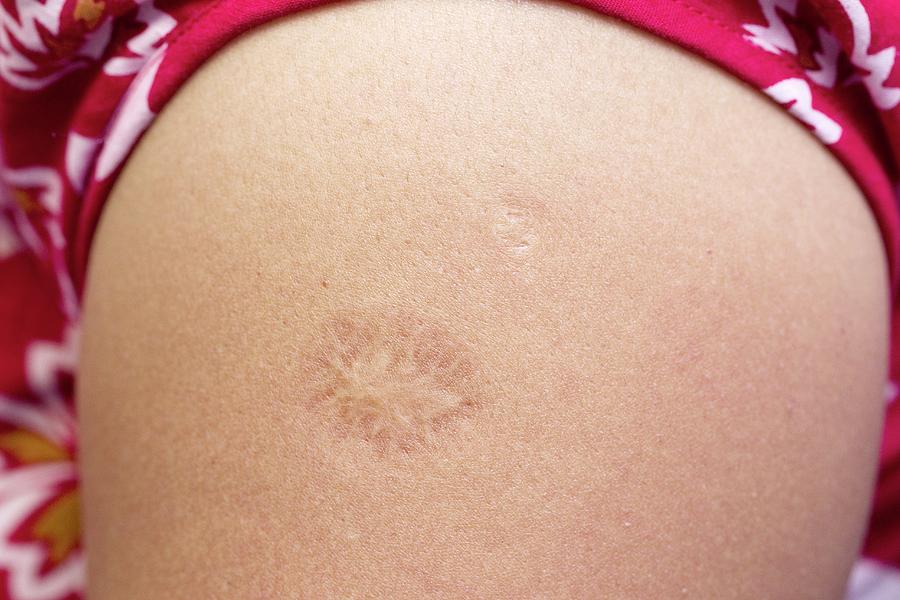
Why This Vaccine Leaves a Visible Scar
Unlike most routine vaccines that are injected into muscle and leave little to no visible mark, the BCG vaccine is usually given intradermally, which means it is injected just under the surface of the skin. This method causes a small local reaction. Over time, the area may form a small bump, then a sore or tiny ulcer, and eventually heal into a scar. Research published in PubMed Central explains that scar formation after BCG is expected and is commonly discussed as part of the normal injection-site reaction. That visible scar is not dangerous — it is simply part of the skin’s healing process after the vaccine response.
Why Some People Think It’s a Smallpox Scar
There is another reason the scar causes confusion: smallpox vaccination can also leave a scar on the upper arm. Older generations in many countries may have a smallpox vaccine scar, especially people vaccinated before smallpox was declared eradicated in 1980. However, the timing matters. If someone was born after routine smallpox vaccination programs ended, the mark is far more likely to be from BCG instead. WebMD notes that people in their 40s or older are more likely to have a smallpox scar, while younger adults from countries with routine TB vaccination often have BCG scars instead. That is why age and country of birth often help explain which vaccine likely caused the mark.
Not Everyone Develops the Same Scar
One important detail is that not everyone’s scar looks identical. Some people have a clear round mark, while others have a tiny dot, a raised spot, or almost no visible scar at all. The appearance can depend on how the vaccine was administered, how the skin healed, and individual differences in the body’s immune and scarring response. Studies on BCG scar formation show that some people may have less noticeable scars, and in rare cases, a scar may barely form at all. So if your scar looks different from someone else’s, that does not necessarily mean anything is wrong.
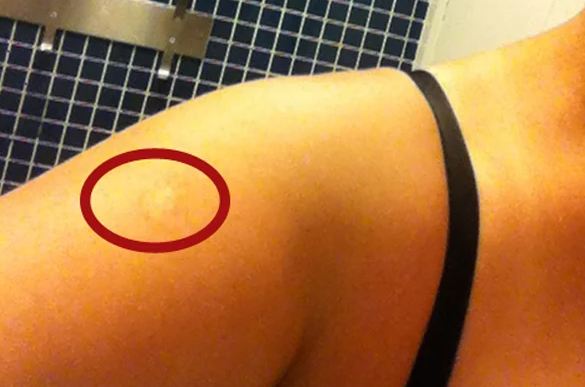
A Small Mark With a Big Meaning
What makes this little scar so interesting is that it is more than just a mark on the skin — it is a reminder of global public health history. For millions of people, it represents protection against a disease that has affected families and communities for generations. Instead of seeing it as something strange or embarrassing, many now view it as a symbol of prevention and resilience. In the end, that mysterious round scar is not a random flaw at all. For many people, it is a quiet sign that their body once received protection against one of the world’s most serious infectious diseases.