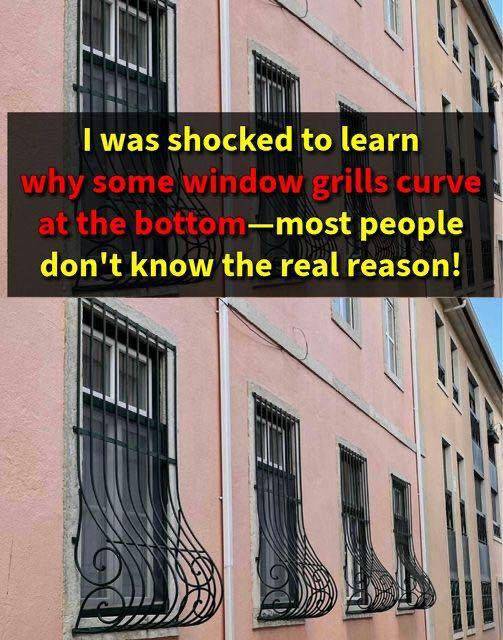
For homeowners who value safety, window grills are a familiar feature. Traditionally installed to deter break-ins and physically block unauthorized entry, these metal structures have been protecting homes for centuries. But among the many variations of window grills, one design continues to confuse people: the style with an outward curve near the bottom. At first glance, this bulge looks decorative or unusually shaped, but its purpose goes far beyond aesthetics.
A Functional Curve Disguised as Decoration
Although curved grills may appear ornamental, their design stems from practical needs rather than styling alone. The outward bend—often called a “potbelly”—is an intentional solution to everyday challenges in homes and apartment buildings.
Space for Window Air Conditioners
In many older or densely populated cities, window-mounted air conditioners are essential. Flat, tightly aligned grills would press directly against the unit, making installation nearly impossible or forcing residents to mount the AC dangerously outside the bars.
The curved section solves this conflict. By protruding outward, it creates extra depth, allowing an air conditioning unit to sit safely inside the protected space. This prevents tampering from the outside while ensuring the appliance has enough ventilation and stability.
Built-In Support for Flower Boxes
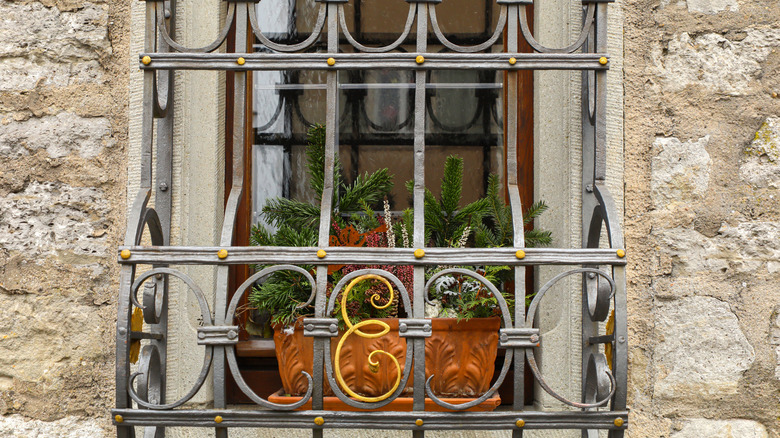
Another unexpected advantage of the curved structure is the natural shelf it forms. Residents often use this widened area to support flower boxes or planters, turning a purely defensive feature into a decorative opportunity. The rounded design provides both the space and the structural reinforcement needed to hold heavy planters securely, adding charm and personality to apartments, especially in urban settings where outdoor gardening is limited.
From Fortresses to Family Homes: A Long History of Window Bars
To understand how this design evolved, it helps to look at the origins of window security. In medieval and early urban architecture, windows were the weakest point in a building. Simple shutters or fragile glass offered little resistance to intruders, so iron bars became the preferred method of defense. Over time, these harsh, prisonlike constructs softened as they were adapted for homes rather than castles. As building designs modernized, homeowners sought a balance between protection and appearance. Flat bars served their purpose but often made residences appear cold or institutional. Curved grills offered a solution—they maintained strength while appearing friendlier and more refined.
Safety Still Requires More Than Metal Bars
Even the strongest grill is only part of a full security system. Experts recommend combining them with strong locks, alarms, motion lights, and surveillance to create multiple layers of protection.
It is also essential to ensure grills do not create safety hazards. In an emergency such as a fire, windows may be needed as an escape route. For this reason, many jurisdictions require quick-release mechanisms on grills installed in bedrooms to prevent residents from becoming trapped inside.
Choosing the Right Design for Your Home
For those considering curved grills, several factors matter:
- Material quality: Solid steel or wrought iron offers the best durability.
- Coating: Weather-resistant finishes reduce rust and maintenance.
- Visual fit: The style should complement the building’s architecture.
- Installation: Proper mounting into strong framing is essential for effectiveness.
- When installed correctly, curved window grills blend practicality with visual appeal. They protect your home, support modern conveniences, and allow for personal touches like flowers and plants.

A Smart, Subtle Blend of Security and Comfort
That small outward curve you may have seen on window grills is far from random. It is a clever design that brings together function, safety, and charm. The next time you spot a potbelly-shaped window grill, you’ll know it represents a thoughtful combination of engineering and everyday living.