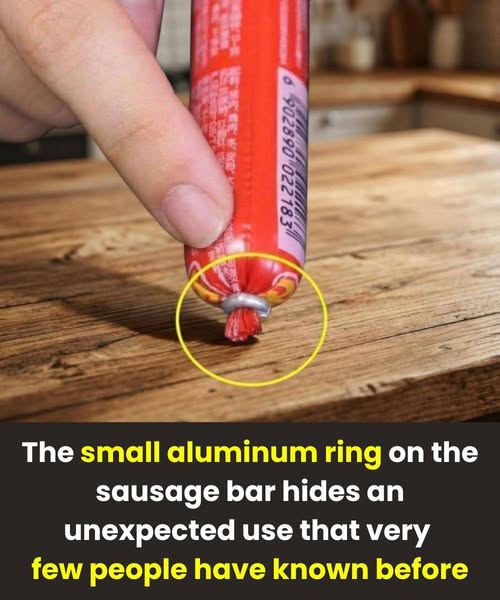
Have you ever noticed the tiny aluminum ring or clip at the end of a packaged sausage, salami, or similar cured meat? At first glance, it might seem like a leftover decoration or meaningless part of the wrapping but it actually has a very practical, essential role in how these foods are sealed and preserved.
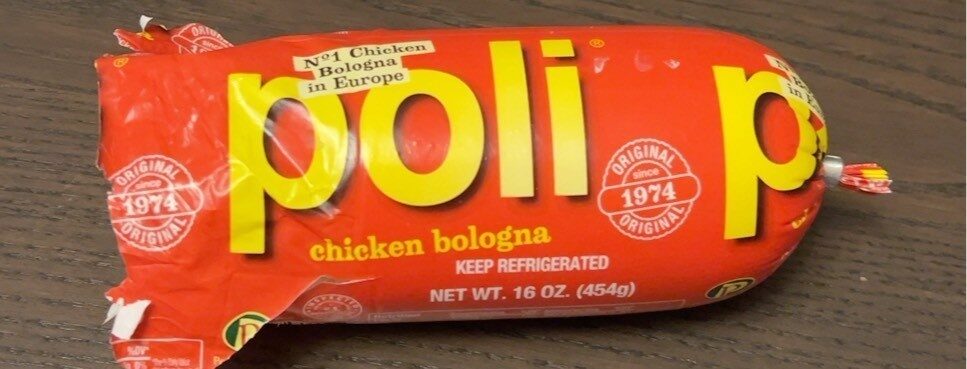
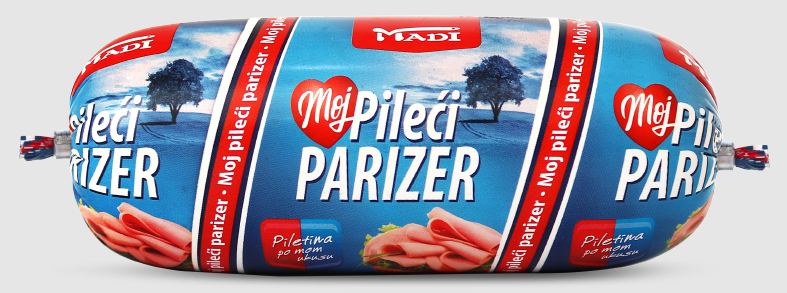
In most commercial sausage products, the casing — whether natural or synthetic — needs to be tightly sealed after the meat mixture is stuffed inside. That’s where these little aluminum rings come in: they’re clips or fasteners used to crimp and secure the casing, creating an airtight closure that protects the sausage’s quality, shape, and flavor.
Why Manufacturers Use Aluminum Clips
1. Airtight Seal for Freshness and Safety
The primary function of the metal ring is to seal the end of the sausage casing firmly, keeping air, bacteria, moisture, and contaminants out. An airtight closure extends shelf life, helps prevent spoilage, and preserves the flavor and texture of the meat inside. This is especially important for products that are smoked, cured, or stored for some time before consumption.
2. Stable Shape and Consistent Quality
When a sausage is cooked, smoked, or transported, the casing needs to maintain its intended form without slipping or leaking. The aluminum clip keeps the ends secure so the sausage retains a consistent shape and size through handling and cooking, ensuring every piece looks and feels like it should.
3. Food-Safe and Durable Material
Aluminum is widely used in food packaging because it is non-toxic and resistant to corrosion. It forms a protective oxide layer that prevents reactions with food, making it safe for contact during food processing and storage. The metal also won’t rust like steel, even in moist or refrigerated environments — an important quality for preserving processed meats.
4. Lightweight and Efficient
Because aluminum is light and easy to handle, it doesn’t add much extra weight to the product or burden the sealing machines used in meat processing. It’s also recyclable, which helps manufacturers meet environmental and sustainability goals compared with plastic or heavier metal alternatives.
Hidden or Unexpected Uses of the Ring
While the main purpose of these clips is packaging and sealing, people have discovered a few practical tricks for everyday use once the sausage is opened:
- Easier Wrapping and Storage: Some producers and home cooks twist the casing around the sausage using the ring as an anchor. This allows the meat to be neatly coiled or rolled up as you slice it, keeping excess casing out of the way and helping you cut thinner, more consistent slices.
- Hanging for Storage or Smoking: In traditional butchering and curing, these clips can be used to hang sausages on hooks or racks for air drying, smoking, or storage — a practical benefit during production and at home.
- Craft and Organization Uses: Because they’re small, strong, and recyclable, creative individuals sometimes repurpose leftover clips for lightweight hanging or organization — for example, as tiny hooks or fasteners in DIY projects.
How to Deal With It at Home
If you’re wondering how to remove or open the clip once you unpackage a sausage, it’s usually simple. Many people use clean hands or simple kitchen tools to slide or bend the clip off gently. On some types of sausages, the metal ring can be pulled down the casing to release it without tearing the surrounding wrap. If you ever struggle, you can also snip it carefully with kitchen scissors or pliers.
Final Takeaway
The small aluminum ring on sausage packaging isn’t just decorative — it’s a functional clip used to seal the casing, protect the food, and support quality and safety during processing and storage. Beyond that, it can be used creatively for slicing, hanging, or organizing once the sausage is opened.