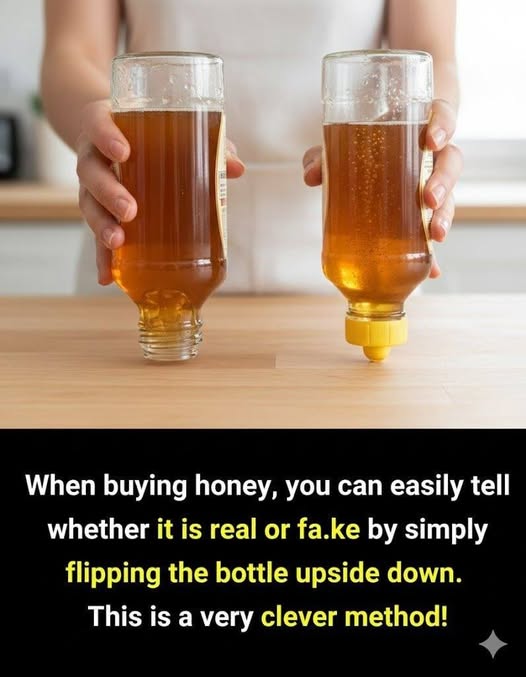
Many internet tips suggest you can tell if honey is real by shaking and flipping the bottle to watch how air bubbles behave. The idea behind this “shake and flip” method is that natural honey’s thick, viscous structure will form slow-moving bubbles, whereas fake honey won’t. But in reality, this test is not reliable for confirming authenticity. The way bubbles behave depends a lot on viscosity and temperature, and a honey product can have similar texture even if it’s diluted or adulterated with syrup added. That means a bottle might “look authentic” in the glass and still be blended with cheap sugars or additives.
Scientists and honey experts agree that no single at-home test — including the bottle flip — can definitively prove honey is real. Many amateur tests only detect extreme adulteration and can’t distinguish between genuine honey and more sophisticated blends that mimic honey’s thickness.
What Real Honey Should Be Like
Real honey comes straight from bees and contains natural sugars, enzymes, trace minerals, and pollen. Its water content is usually low (about 17–20 %), which gives it a thicker consistency. Genuine honey often has a complex flavour and aroma that varies with the flowers the bees visited, not just one overly sweet taste like simple sugar syrup. Authentic honey may also crystallize naturally over time — a process where glucose forms tiny crystals. While this isn’t a guaranteed sign of authenticity (crystallization speed varies by honey type), honey that never crystallizes despite proper storage can be suspicious, especially if it’s always perfectly liquid and very clear.
Better Home Checks You Can Do
Even though the bottle flip test isn’t dependable, several simple at-home checks are far more informative when used together:
1. Water Test
Drop a spoonful of honey into a glass of room-temperature water. Real honey, because of its high density and low moisture, will sink to the bottom and stay clumped for a while before it slowly dissolves. In contrast, fake honey with added syrups or water often dissolves quickly and mixes with the water.
2. Paper / Blot Test
Place a drop of honey on a piece of paper towel or plain paper. Authentic honey tends to remain thick and stay on the surface, whereas diluted or low-quality honey can seep into the paper and leave a wet mark.
3. Bread Test (Optional)
Spread honey on a dry piece of bread and let it sit for a minute. Pure honey typically doesn’t soak the bread quickly. Fake honey often makes the bread soggy due to its higher water content.
4. Crystallization Observation
Real honey stored at cool temperatures will often crystallize over weeks or months. If a honey product never changes consistency after long storage, it may have been processed or blended to prevent crystallization.
5. Label and Origin
A clear, specific label provides clues. Labels should list only honey as the ingredient and ideally specify floral source (e.g., clover, acacia) and harvest origin. Words like “blend,” “honey product,” or missing floral origin can suggest adulteration. Certifications from trusted bodies also help.
Why Lab Testing Still Trumps Home Tricks
Even good home tests are only initial hints. To truly confirm authenticity, laboratory methods like chemical profiling or specialized scans are needed. Advanced lab testing (for example, analyzing sugar types or mineral content) can detect sophisticated adulteration that simple household tests can miss. Such techniques are far more accurate but are usually done by producers or certification bodies rather than at home.
Final Takeaway
The bottle flip test might be fun to try, but it doesn’t reliably tell you whether honey is real. Instead, rely on multiple simple checks like the water test, blot test, crystallization behaviour, and careful label reading. When combined, these methods give a much better sense of whether your honey is genuine or overly diluted with syrups and additives. For absolute certainty, laboratory analysis remains the gold standard — but for everyday shoppers, smart observation and common sense go a long way in avoiding fake honey.