

Visitors to Washington, D.C., recently encountered an unexpected and controversial sight on the National Mall: a large golden statue depicting Donald Trump and Jeffrey Epstein in a pose inspired by the famous scene from the movie Titanic. The installation quickly attracted attention from tourists, residents, and political observers, many of whom stopped to photograph the unusual artwork and discuss its meaning.
Standing roughly 12 feet tall, the sculpture recreates the iconic moment in the film where the characters Jack and Rose stand together at the bow of a ship with their arms stretched wide. In this version, however, the two well-known figures replace the movie’s romantic leads, turning the cinematic moment into a piece of political commentary. The statue appeared suddenly, surprising passersby and immediately becoming a topic of conversation across social media and news outlets. For many people walking along the Mall, the dramatic and somewhat shocking imagery made it impossible to ignore.
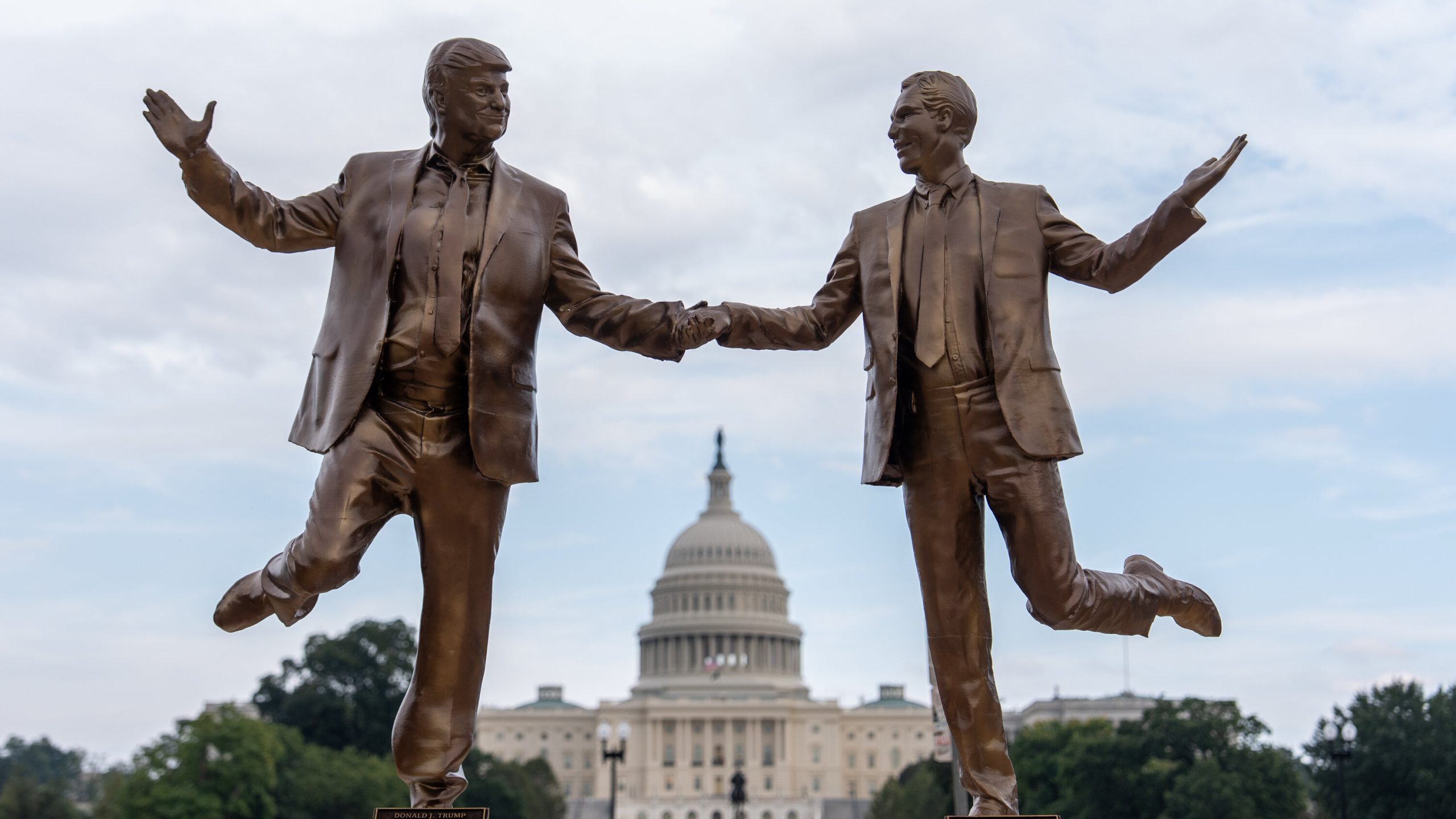
A Satirical Work of Protest Art
The sculpture is titled “King of the World,” referencing the famous line shouted during the scene it imitates. Its creators intended the piece as satire, using humor and exaggeration to highlight past associations between the two men. At the base of the statue is a plaque that describes the work as honoring a “tragic love story,” borrowing language from the film’s fictional romance. The text also refers to themes such as luxury travel, extravagant parties, and secretive behavior, which are meant to evoke the world of wealth and influence often associated with powerful public figures. The group responsible for the installation is an anonymous collective known for producing provocative public artworks. Their projects typically appear in high-profile locations and use striking imagery to spark political discussion. By blending pop culture references with real-world controversies, the artists aim to create pieces that are both memorable and thought-provoking.
Public Reactions Range from Laughter to Anger
As soon as the statue appeared, reactions from the public varied widely. Some viewers found the artwork humorous and praised it as a bold example of political satire. Others considered it offensive or inappropriate for such a prominent national location. Tourists strolling through the area often paused to take pictures or read the plaque attached to the sculpture. Conversations broke out among strangers who debated whether the installation represented free artistic expression or crossed a line into disrespectful territory. Political supporters and critics also interpreted the statue differently depending on their viewpoints. For some, the artwork symbolized accountability and criticism of powerful figures. For others, it felt like a partisan stunt designed to provoke outrage.
Part of a Series of Controversial Installations
The group behind the statue has created similar installations in the past. Earlier pieces also focused on the relationship between Trump and Epstein and were placed in public spaces to generate debate. Those artworks were eventually removed, but they succeeded in drawing national attention and sparking conversations about politics, influence, and accountability. Like those earlier projects, the new sculpture appears to be temporary. Installations of this type are often taken down within days, either because permits expire or authorities decide the display cannot remain. Even so, the short lifespan rarely prevents them from reaching a wide audience once images spread online.

Art, Politics, and Public Space
The sudden appearance of the statue highlights how public art can be used as a powerful form of political commentary. By combining recognizable cultural imagery with controversial real-world figures, artists can create pieces that immediately capture attention and encourage debate. Whether people view the sculpture as clever satire or offensive provocation, it has undeniably achieved its main goal: getting people to talk. In a city where politics shapes everyday life, the installation has once again demonstrated how art can become part of the national conversation.