The human brain is often described as the most complex organ in the body, capable of extraordinary feats such as memory, reasoning, creativity, and learning. One fascinating question that scientists and enthusiasts alike ask is: how much information can the brain actually store? Some experts estimate that the brain’s storage capacity is around 2.5 petabytes but what does this really mean, and how is this estimate derived?
What Is a Petabyte?
To understand the brain’s capacity, it helps to grasp what a petabyte is. A petabyte (PB) is a unit of digital information storage that equals approximately 1 million gigabytes (GB) or 1,000 terabytes (TB). To put it simply, a petabyte can store an enormous amount of data — enough to hold:
- About 13.3 years of high-definition video streaming nonstop
- Over 500 billion pages of standard printed text
- Roughly 4,000 digital libraries worth of books
- So, saying the brain can store 2.5 petabytes means it has the potential to hold an incredible volume of information.
How Scientists Estimate Brain Storage Capacity
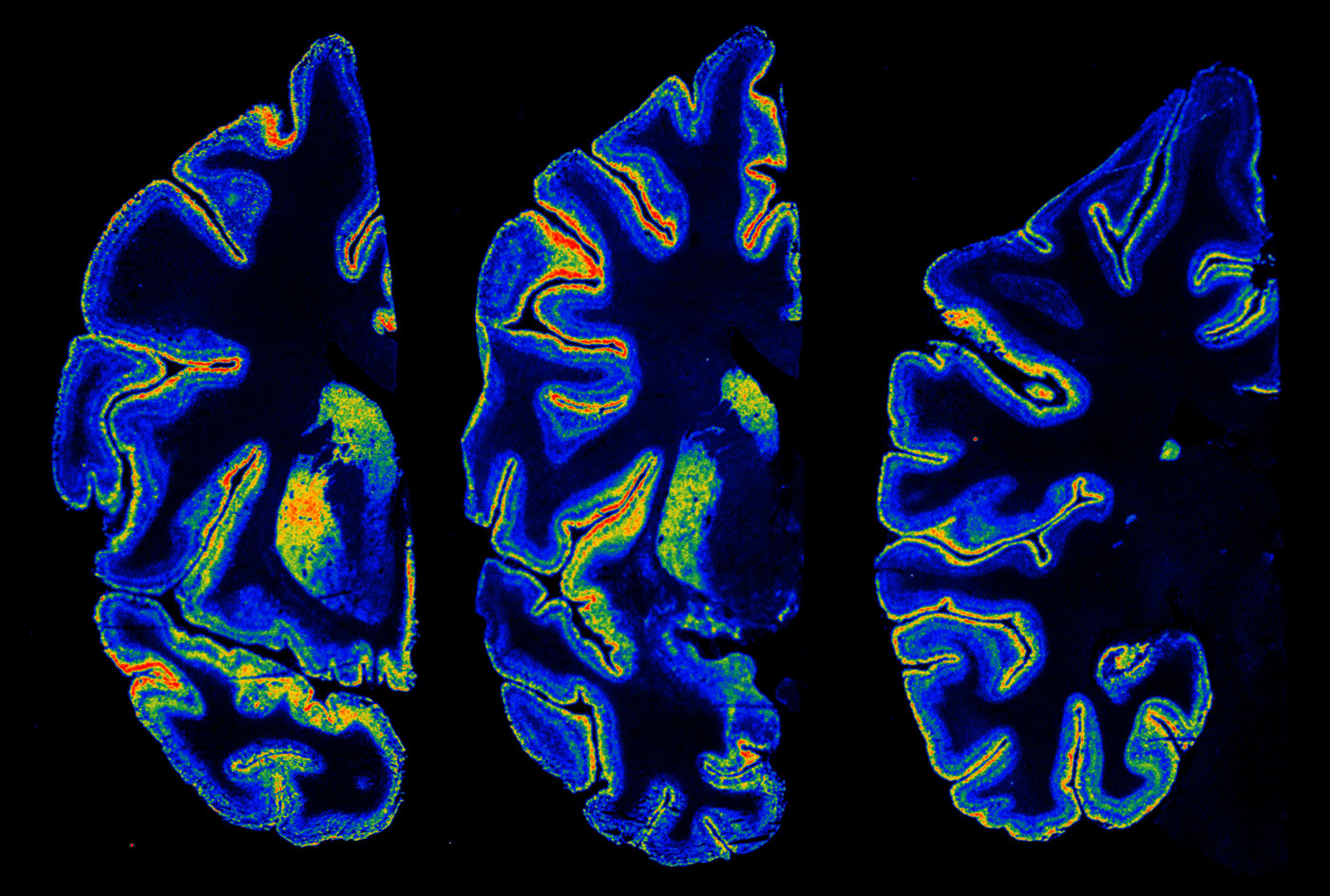
Estimating the brain’s storage capacity isn’t straightforward. Unlike a computer, the brain doesn’t store data in bytes or files but rather in the form of neural connections and synaptic patterns. Here’s how experts make rough estimates:
- The brain contains roughly 86 billion neurons.
- Each neuron can connect to thousands of other neurons through synapses, totaling around 100 trillion synapses.
- Each synapse can store multiple bits of information based on its strength and state.
- If each synapse can store about 1 to 4.7 bits of information, multiplying this by the number of synapses gives an estimate for total storage. These calculations suggest the brain’s memory storage capacity could range between 1 and 2.5 petabytes.
What Does Brain Storage Actually Mean?
It’s important to note that the brain’s data storage differs fundamentally from computer storage:
- The brain is highly efficient and dynamic, continuously reorganizing and pruning connections based on experience and learning.
- Memories are not stored as exact files but are encoded in patterns of neural activity.
- The brain stores different types of memories — sensory, emotional, procedural, semantic — which all contribute to its storage complexity.
- This means the brain’s “storage” is more than just raw data; it’s a constantly changing network shaped by interactions, emotions, and environment.
Can We Compare the Brain to Computers?
While it’s tempting to compare brain storage to digital storage, the two systems operate very differently:
- Computers store precise, static data that can be copied and moved easily.
- The brain stores information probabilistically and is better at associating, generalizing, and pattern recognition.
- Thus, while 2.5 petabytes is a useful estimate to appreciate the brain’s immense capacity, it doesn’t mean the brain works like a hard drive or a cloud server.
What Does This Mean for Human Potential?
The vast storage potential of the brain explains why humans can learn complex languages, remember thousands of faces, solve difficult problems, and create art. It also highlights the brain’s adaptability and plasticity. Although we only use a fraction of this potential at any given time, understanding the brain’s storage capacity can inspire new ways to enhance memory, learning, and artificial intelligence.
Conclusion
The estimate that the human brain can hold around 2.5 petabytes of information reveals the astonishing complexity and power of our minds. While this comparison to digital data storage is an approximation, it helps us appreciate the brain’s extraordinary ability to encode, store, and recall vast amounts of information throughout our lives. Understanding this helps fuel ongoing research into neuroscience, cognitive science, and even computer technologies inspired by the brain’s architecture.