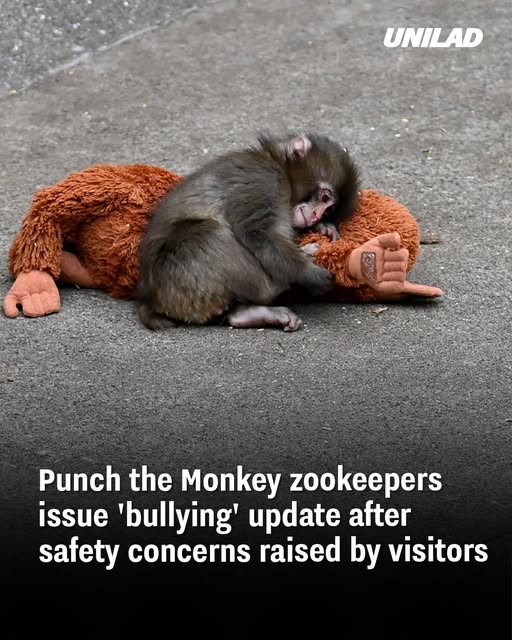
Punch, a young Japanese macaque at Ichikawa City Zoo, has captured hearts across the world with his emotional journey from abandonment to gradual social acceptance. The macaque first went viral in early February after videos showed him clutching a large orangutan plush toy, given to him by zookeepers as a comfort after his mother rejected him shortly after birth in July 2025.
The story resonated widely online, with millions of viewers moved by his attachment to the plush toy — which fans quickly dubbed “Oran-Mama” — as he navigated life without maternal care while trying to integrate with other members of the macaque troop.
Zookeeper Update: “Integration, Not Aggression”
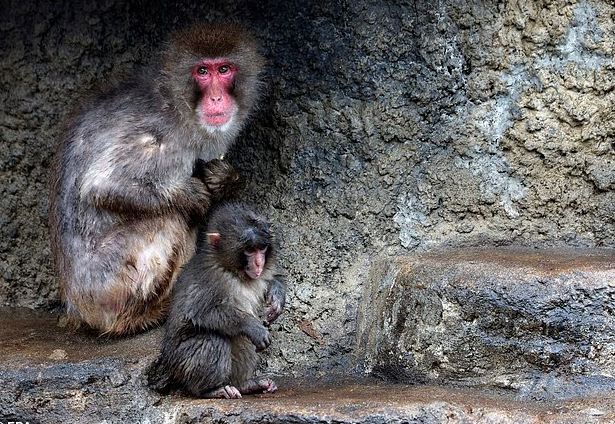
In response to the viral attention and growing concern for Punch’s welfare, the zoo issued a detailed update explaining his status and recent behaviour. They acknowledged that Punch had faced some rough moments after being introduced to the larger troop, including instances where other monkeys “scolded” him during social interactions. Officials stressed these actions are a form of normal macaque communication rather than true aggression.
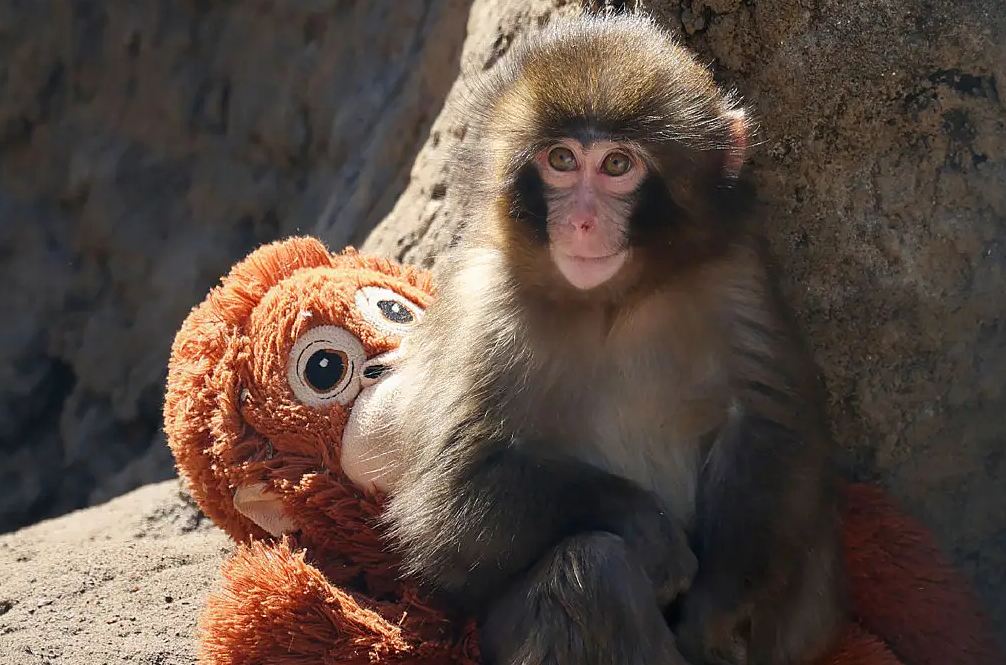
“This is part of Punch becoming a member of the troop safely,” the zoo’s statement said, emphasizing that although some monkeys have shown alopecia (hair thinning) due to excessive grooming habits, there were no signs of severe illness and his overall health remains appropriate for his age.
To ensure his wellbeing, keepers noted that they maintain access to quiet spaces where Punch can retreat if needed, and have been enhancing environmental enrichment with climbing structures and more natural features. This helps young macaques explore, play, and learn social behaviours without undue stress.
Signs of Social Progress
Recent footage and zoo posts suggest Punch is slowly finding his place within the troop. In several videos shared by the zoo and reporters, older macaques have been seen interacting with him more positively — including grooming sessions, close contact play, and even gentle embraces. Such interactions are crucial in macaque societies, where play and grooming are key ways juvenile monkeys learn about hierarchy, trust and social cues. In many clips, Punch appears more confident: approaching other monkeys voluntarily, eating independently during feeding times, and exploring parts of the enclosure on longer excursions. This progress has given fans around the globe hope that, despite his challenging start to life, Punch may gradually become fully integrated into the group.
Global Reaction and Ongoing Support
Punch’s story continues to generate emotion far beyond Japan. The hashtag #HangInTherePunch has been used across social media platforms by people expressing both sympathy and admiration for the baby macaque’s resilience. The interest has also brought unexpected cultural moments: Google’s search page briefly featured heart-shaped animations honoring Punch’s viral moment, and even international organisations have referenced him in campaigns aimed at promoting public causes, such as the emergency services hotline campaign by Mumbai Police in India. At the zoo itself, visitor numbers have surged dramatically, with reports suggesting that over 6,000 people per day are now showing up to see Punch and the troop. This influx has required crowd control and careful planning to ensure the welfare of the animals and minimise stress on the enclosure inhabitants.
A Symbol of Resilience and Care
While Punch’s journey began with heartbreak, his story has become one of resilience and gradual hope. The Ichikawa City Zoo’s efforts to balance social integration with animal welfare — combined with the global empathy his viral image inspired — reflect a broader conversation about how humans view and support animals in human care. As Punch continues to grow and learn within his troop, his experiences remind audiences worldwide of the complex emotional lives of primates, the importance of thoughtful animal care, and how even a small, vulnerable creature can become a powerful symbol of connection.