The U.S. Department of Justice (DOJ) announced that **“all” documents related to convicted sex offender Jeffrey Epstein have now been publicly released under the Epstein Files Transparency Act. Attorney General Pam Bondi confirmed in a formal letter to Congress that the DOJ fulfilled its legal obligation to open up the files, which include records, communications, and investigative materials tied to the Epstein and Ghislaine Maxwell cases.
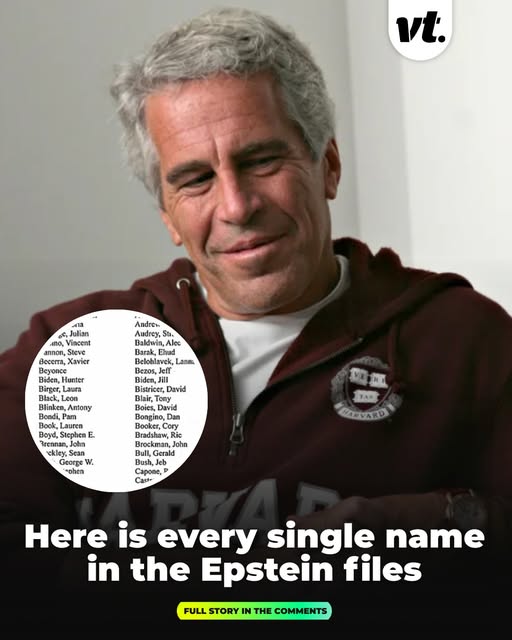
Bondi said the release includes more than 300 high-profile names from various sectors — politics, business, entertainment, and global public life — that appear in the documents at least once. However, she and the DOJ emphasised repeatedly that being named in the files does not imply guilt, wrongdoing, or direct involvement with Epstein’s crimes.
Who Appears in the Files?
The DOJ’s list of individuals includes elected officials, former leaders, technology executives, entertainers, and other “politically exposed persons” whose names appeared in at least one of the released documents. Examples cited by multiple reports include former U.S. presidents, leading lawmakers, high-profile business figures, and major public figures from around the world.
The way names are included varies: in some cases individuals had actual direct communications or documented contact, while in others their names merely appeared as referenced or mentioned within broader material — such as press reports embedded in files or unrelated correspondence. The DOJ letter noted that some names were included because they met statutory criteria, not necessarily because of evidence of misconduct.
Redactions, Legal Issues, and Criticism
Despite the release, the process has attracted significant controversy. Lawmakers from both parties have accused Bondi and the DOJ of either mishandling the redaction process or obscuring meaningful context around the names. Critics argue that releasing a list of names without clear explanation of why they appear in the files can be misleading or irresponsible. Republican and Democratic lawmakers alike—from Representatives Thomas Massie to others—have publicly questioned why certain names were redacted in some parts of the documents, or why some powerful individuals appeared without clear context linking them to Epstein’s known criminal activities. In some cases, even historical figures who died long before Epstein’s crimes (such as Elvis Presley or Marilyn Monroe) ended up on lists, apparently due to incidental mention in unrelated parts of the files. Those inclusions have spurred additional criticism that the process lacked careful editorial judgment.
Survivor and Victim Advocates React
Epstein survivors and advocacy groups have also weighed in. A group of more than two dozen survivors issued a joint letter saying that the release was incomplete and retraumatising, accusing officials of failing to fully protect victims’ privacy and of releasing material without adequate explanation of what remains missing. They called the current state of disclosure “staggering and indefensible” until victims’ identities are fully shielded from public exposure.
Congressional Pressure and Public Scrutiny
The release of the files came amid intense scrutiny on Capitol Hill. During hearings before the House Judiciary Committee, Bondi faced sharp questioning about the timing, handling, and redaction choices made by the DOJ. Several lawmakers expressed frustration that the volume of material released still leaves key questions unanswered, and that crucial context for many names is absent.
What Comes Next?
While the full set of documents has been published, experts and legislators stress that additional litigation, redaction reviews, and contextual analysis will continue. Some materials remain withheld for law-enforcement reasons; a small number of files are still under court scrutiny. This means historians, journalists, watchdog groups, and lawmakers will likely keep pressing to provide clearer explanations about the role of each name and the extent of any genuine connections to Epstein’s criminal network.