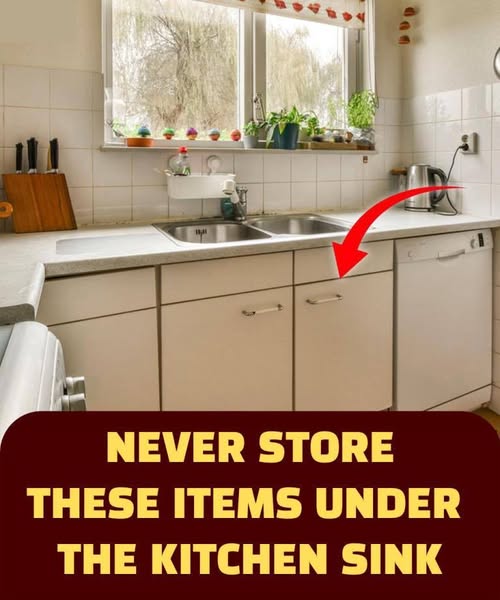
Most kitchens have that one cabinet beneath the sink where everything gets shoved — cleaning sprays, old boxes, bags, sponges, and more. But what looks like convenient storage space may actually be unsafe. Certain items should never be kept under the kitchen sink because of heat, humidity, chemical reactions, mold growth, pest access, or risk of dangerous fumes. Knowing what not to store there helps keep your home safer, cleaner, and more organised.
Dangerous Chemicals and Cleaners
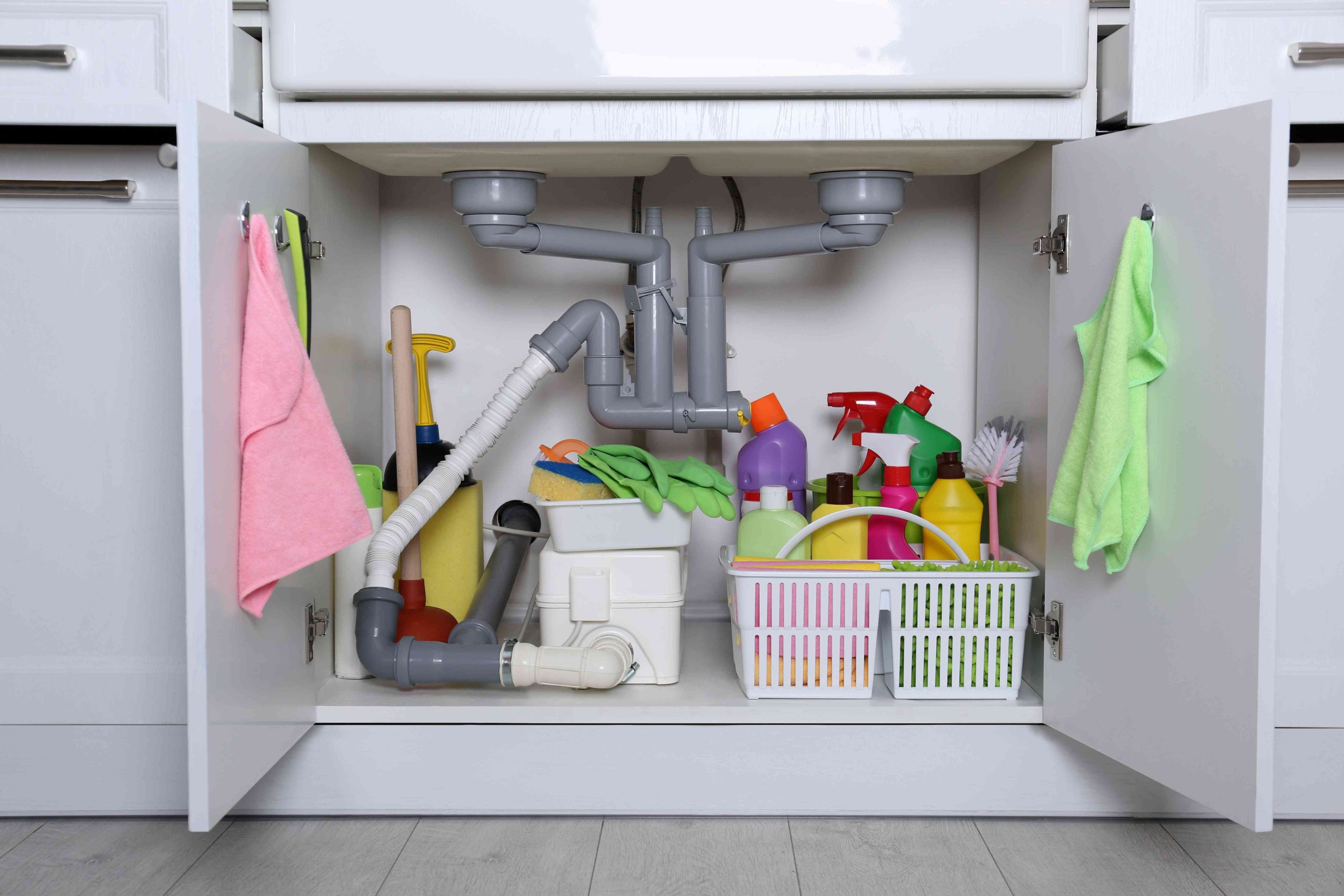
One of the biggest risks under the sink is the presence of strong cleaning chemicals. Products like drain cleaners, oven cleaners, bleach, and concentrated detergents can emit fumes — especially in a warm, enclosed space like under the sink. These fumes can:
- irritate eyes and lungs,
- react with other chemical residues, or
- create toxic gases if mixed accidentally with other products.
- For example, mixing bleach with an ammonia-based cleaner can produce chloramine gas, which can be dangerous if inhaled.
🛑 Safer alternative: Store these on high shelves in a well-ventilated closet or locked cupboard out of reach of children and pets.
Powders, Powders, and More Powders
Items like baking soda, powdered detergents, powdered cleaners, or drain-unclogging powders may seem harmless, but the moist environment under a sink can turn them into hardened clumps or even slow-release dust that becomes airborne when disturbed. Dust inhalation can cause irritation, and clumping reduces effectiveness. Moisture can also cause chemical reactions that degrade cleaning products, making them less effective when you need them.
Batteries and Fire Risks
Old or loose batteries should never be stored under a kitchen sink. When batteries leak or corrode — which happens easily in damp conditions — they can release harmful chemicals and even heat up or short-circuit. This is especially true of lithium batteries and rechargeable types, which can pose fire hazards if dirty or physically damaged.
📌 Tip: Keep spare batteries in a dry, cool drawer, and dispose of old ones at a recycling facility.
Paper Products and Cardboard
Storing paper towels, cardboard boxes, paper bags, or manuals under the sink might seem practical, but these materials attract moisture, which leads to:
- mold and mildew growth,
- musty odours,
- pest nesting, and
- structural damage to the cabinet base.
- Even if the sink isn’t currently leaking, humidity from pipes can cause issues over time.
Food or Food-Related Items
Even sealed food containers should not go under the sink. The enclosed space attracts rodents and insects, and any tiny crack in packaging means food becomes contaminated quickly. Spices, pet food, grains, or baking ingredients may seem safe, but moisture, pests, and temperature fluctuations make this location unsuitable for any edible items.
Medicine and Personal Care Products
Keeping medications, vitamins, or personal care products in the cabinet beneath your sink is risky due to humidity and temperature changes. Some medications can degrade or become ineffective if stored incorrectly. Additionally, children or pets can easily access this space unless it’s child-proofed, so medicine should be stored in a secure, dry place outside of reach.
Sharp Objects and Tools
Tools like scissors, utility knives, metal scrapers, or box cutters might end up under the sink “for convenience,” but that’s exactly the wrong place. Hidden areas like this can easily injure someone reaching in without looking — especially children or cleaners cleaning the area.
Better Storage Alternatives
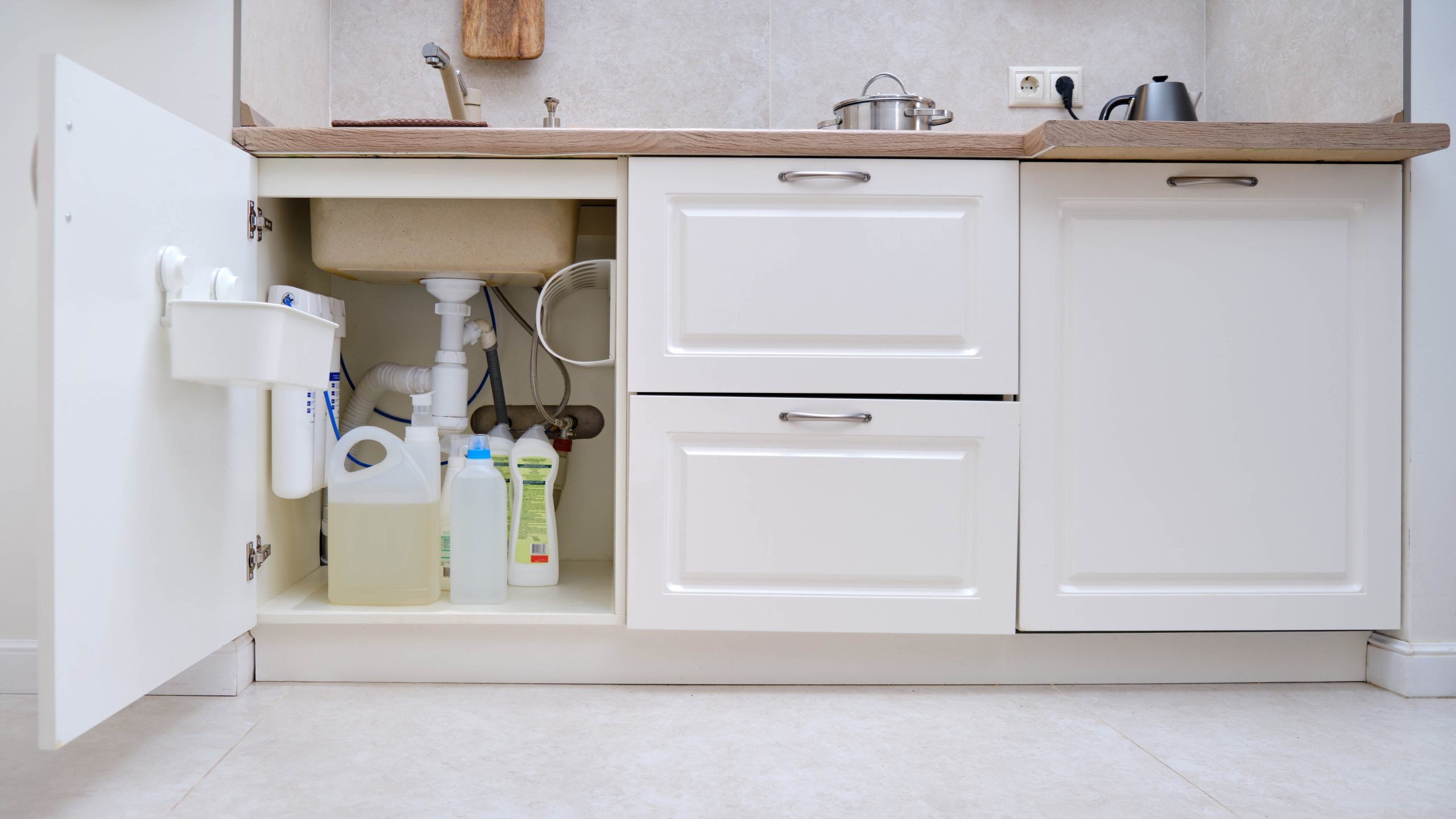
Instead of piling everything under the sink, consider:
- ✔ Wall or Door Organisers
- Attach racks or small baskets to the inside of cabinet doors for sprays and brushes.
- ✔ Designated Cleaning Station
- Use a tall, ventilated closet for all chemical products.
- ✔ Clear Bins and Labels
- Keep items sorted and easy to access in labelled containers in a pantry or utility room.
Final Tip: Keep It Dry and Easy to See
The biggest hazards under a sink come from moisture and hidden clutter. If you must store something there, make sure it’s:
- in a waterproof container,
- clearly labelled, and
- not a chemical that could react with others.
- Keeping your kitchen cabinets organised not only protects your health and safety, but also prolongs the life of your storage space.