

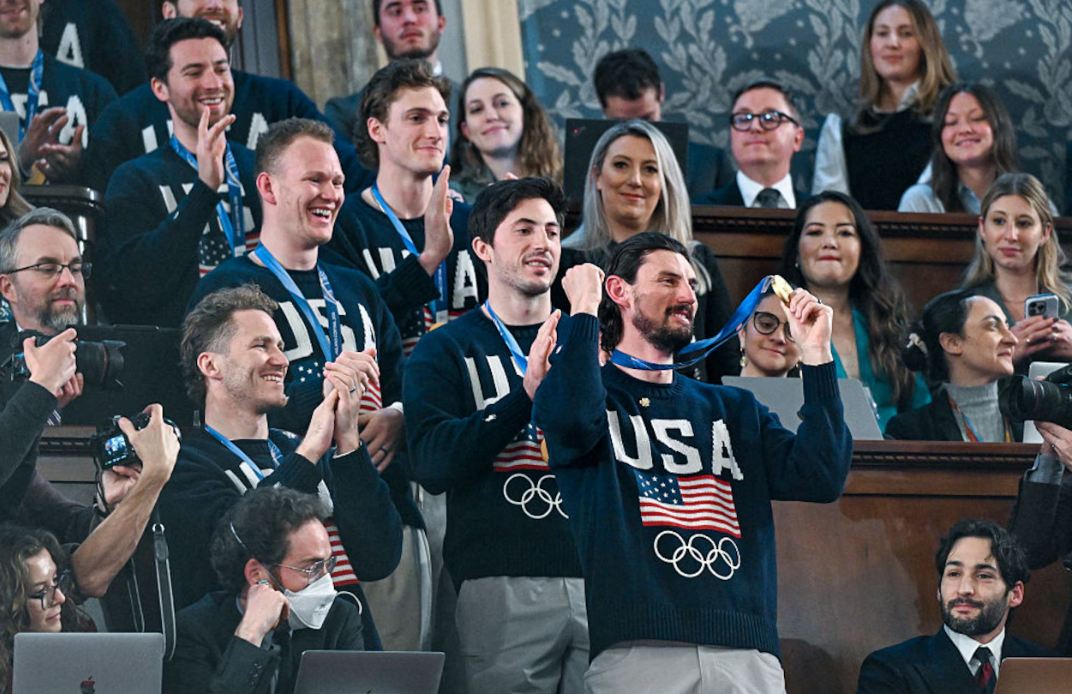
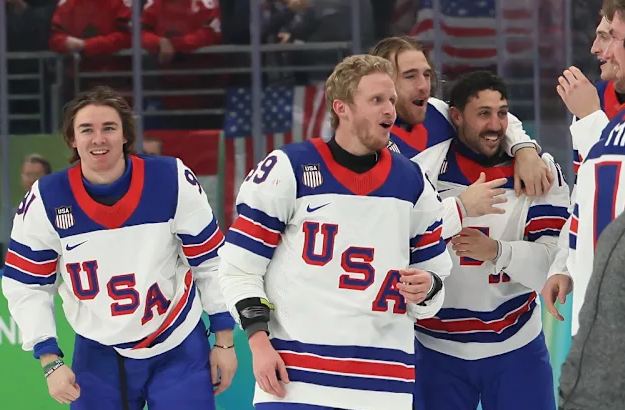
The United States men’s Olympic hockey team made history at the 2026 Winter Olympics by winning the gold medal with a dramatic 2-1 overtime win against Canada its first since the iconic “Miracle on Ice” in 1980. As part of the traditional celebration for Olympic champions, the team was invited to the White House by President Donald Trump and later attended his State of the Union address. During the address, Trump praised the team and announced that goaltender Connor Hellebuyck would receive the Presidential Medal of Freedom, one of the highest civilian honors in the U.S.
Attendance and Participation Choices
Most of the men’s team accepted the White House invitation and traveled to Washington, D.C., where they met with Trump and participated in the State of the Union ceremony. However, several players chose not to attend the White House event or the SOTU address due to personal priorities or hockey commitments, including preparations for upcoming NHL games. This split in attendance highlighted differing views within the team, with some athletes focusing on their professional schedules while others embraced the opportunity to be recognized on a national stage.
Women’s Team and Invitation Controversy
While the U.S. women’s hockey team also won gold at the Winter Olympics, they did not attend the White House event alongside the men. Officials cited academic and professional commitments following the Games as the reason for declining the State of the Union invitation, though the relationship between the athletes and the invitation was widely discussed. President Trump later reiterated that the women’s team would be welcomed to the White House in the near future to celebrate their Olympic success, suggesting a separate event could be arranged once scheduling permitted.
Political Overtones and Public Reactions
The visit and associated invitations were laden with political overtones. A video from a locker room call with Trump inviting the teams to the State of the Union — during which he jokingly said he would be “impeached” if the women weren’t invited — sparked criticism. Many observers, including prominent women’s team captain Hilary Knight, described the remark as euphemistic and detracting from the athletic achievements of both teams. Some media personalities and commentators framed the invitation dynamics as part of larger issues around how athletes are recognized in political contexts. Reactions varied broadly, with some voices defending the celebration as a nonpolitical recognition of American sporting success, while others argued that the event took on a political character because of the president’s involvement and how the invitation saga unfolded.
Broader Significance
The White House visit follows a long tradition of U.S. Olympic champions being honored in Washington, but this particular celebration has drawn attention for its intersection with national politics, gender dynamics in sport, and how athletes navigate recognition by political figures. Regardless of the differing opinions surrounding the visit itself, the men’s and women’s hockey teams’ achievements at the Olympics stand as major accomplishments in U.S. hockey history.
Conclusion
The visit of the U.S. men’s hockey team to the White House following their gold-medal victory at the 2026 Winter Olympics was meant to be a celebration of athletic excellence and national pride. Instead, it evolved into a broader conversation about recognition, timing, and the intersection of sports and politics. While many players embraced the opportunity to be honored in Washington, others chose not to attend, reflecting the personal and professional considerations athletes must balance even at the height of success. At the same time, the absence of the women’s team from the same event — despite their own gold-medal triumph — fueled debate about fairness and optics, particularly after remarks made by Donald Trump during the invitation process. Ultimately, the situation underscores how moments intended as unifying celebrations can quickly become politically charged in today’s climate. Yet beyond the controversy, both the men’s and women’s teams achieved extraordinary milestones on the ice. Their Olympic victories remain historic accomplishments that stand apart from the debate surrounding ceremonial visits. In the end, the athletes’ performance and dedication — not the political discussion — define their legacy.