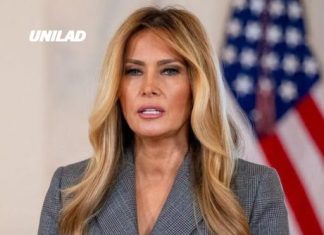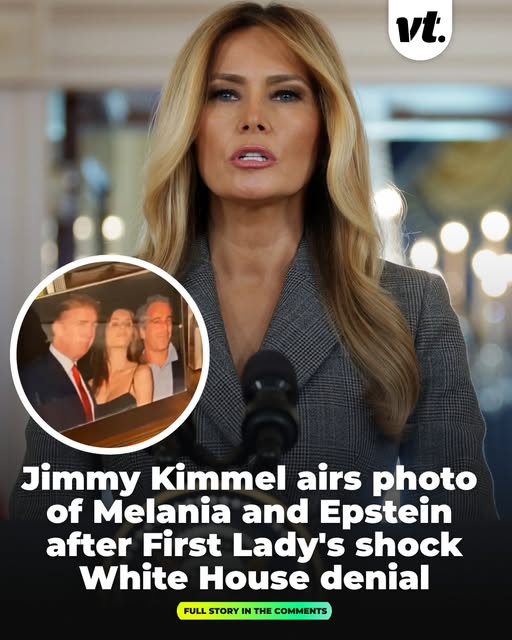
Recent reports highlight a controversial moment from Jimmy Kimmel Live! in which host Jimmy Kimmel displayed a photograph of Melania Trump alongside financier Jeffrey Epstein during a comedic monologue. The segment immediately drew attention online, especially because it followed renewed public discussion involving Melania Trump’s comments about her past associations and public image.
Background to the Discussion
The segment was connected to recent remarks made by Melania Trump during a public appearance at the White House, where she addressed speculation about her relationship with Jeffrey Epstein. She strongly denied any meaningful connection, stating that she was not involved in any of the allegations or narratives often linked to Epstein’s social circle. Her comments were widely reported and quickly became a topic of political and media debate. This renewed focus on Epstein-related associations led journalists, commentators, and television hosts to revisit older photographs and public appearances involving various high-profile figures. Among these was a widely circulated image showing Donald Trump and Melania Trump in the presence of Jeffrey Epstein at a social event in earlier years.
What Happened on Jimmy Kimmel Live!
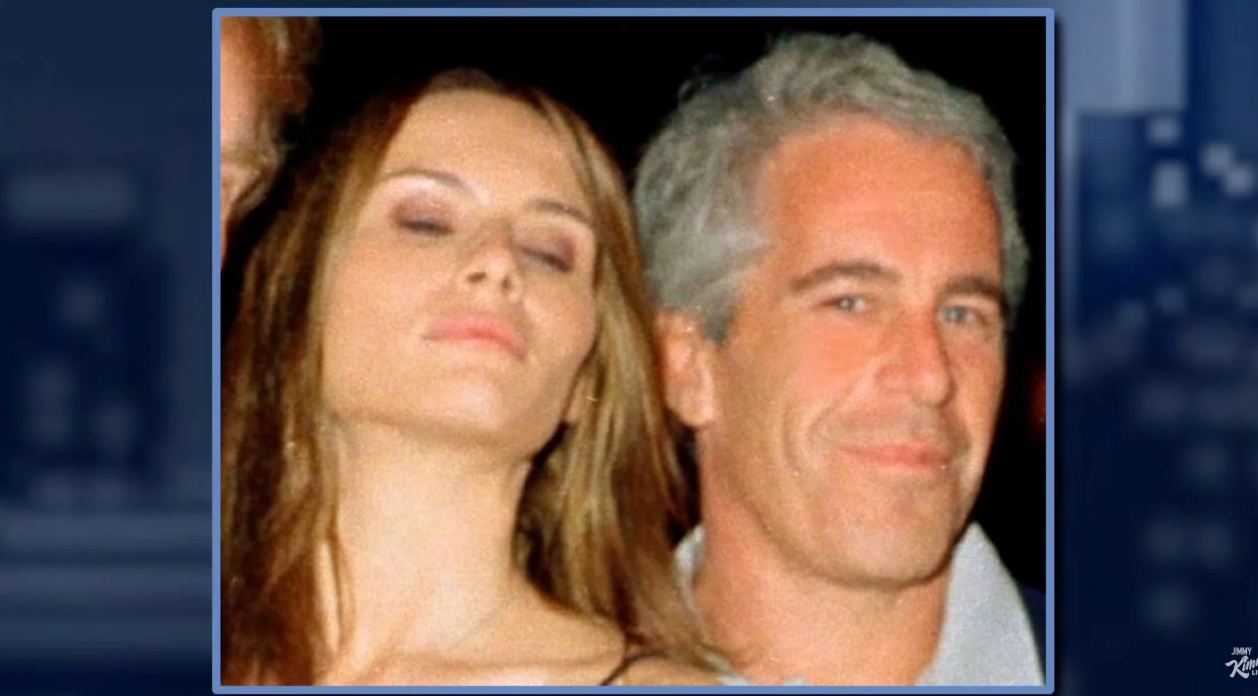
During his late-night monologue, Jimmy Kimmel referenced the public discussion surrounding Melania Trump’s statements. As part of his comedic commentary, he showed the photograph featuring Melania Trump, Donald Trump, and Jeffrey Epstein. The segment was framed in a satirical tone, consistent with Kimmel’s usual approach to political humor. Rather than presenting new information, the photo was used to highlight perceived contradictions between public statements and historical imagery that has circulated online for years. Kimmel’s commentary focused on the broader idea of political image management and how public figures respond when old associations resurface in modern debates. The use of humor was intended to critique media narratives and public perception rather than introduce new allegations.
Public Reaction and Online Debate
As expected, the moment quickly spread across social media platforms, where reactions were sharply divided. Many viewers saw the segment as typical political satire, arguing that late-night shows frequently use humor to comment on public figures and controversial topics. Supporters of Kimmel emphasized that the segment was not meant as an accusation, but as commentary on media attention and political narratives. Others, however, criticized the segment for potentially reinforcing assumptions or implying connections without context. Some viewers argued that displaying such images in a comedic setting risks blurring the line between satire and suggestion, especially when dealing with sensitive subjects involving serious allegations tied to Epstein. The discussion became part of a larger online debate about the responsibilities of comedians and broadcasters when referencing real-world controversies. In today’s media environment, even brief comedic moments can quickly become viral talking points, often detached from the full context of the original broadcast.
The Ongoing Epstein Context
The broader backdrop to this incident is the continued public interest in Jeffrey Epstein and his connections to influential individuals. Although Epstein died in 2019, his name continues to surface in political discussions, documentaries, and online discourse. Any mention of his social interactions tends to attract significant attention, especially when linked to well-known public figures. In many cases, these discussions rely on historical photographs or previously reported social encounters that do not necessarily indicate wrongdoing. However, due to the sensitivity surrounding Epstein’s criminal case, even routine references can generate strong public reactions.
Media, Satire, and Public Perception
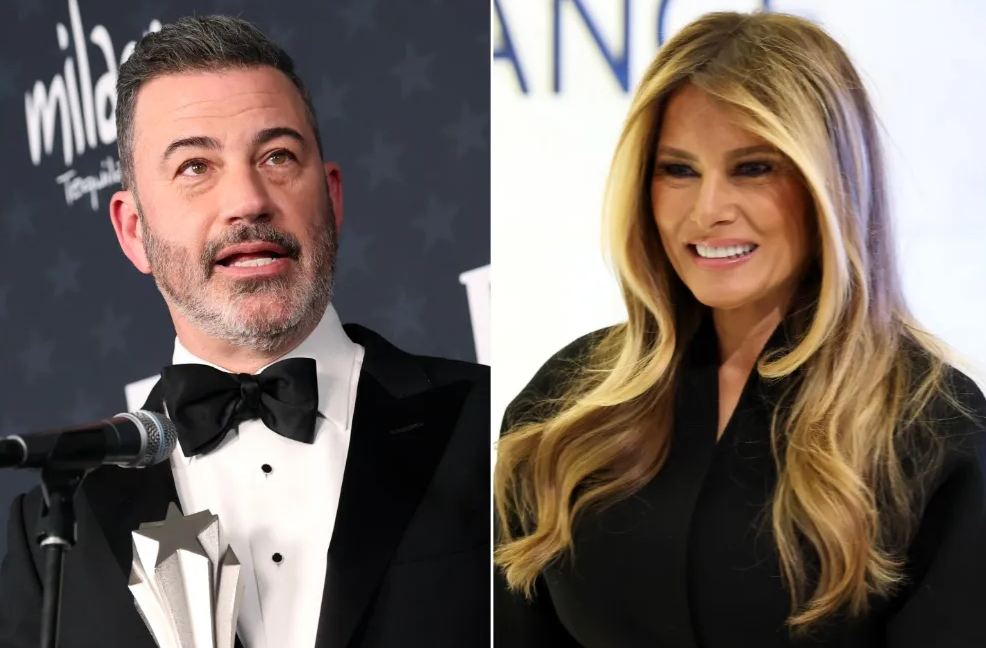
The incident also highlights the role of satire in modern media. Late-night television often blends humor with political commentary, using exaggeration and irony to engage audiences. While this style is widely accepted as entertainment, it can also lead to disagreements about interpretation, particularly when sensitive topics are involved. As clips circulate online, they are often removed from their original context, which can amplify misunderstandings or intensify debate. This makes it increasingly difficult for audiences to separate comedic framing from perceived commentary.
Conclusion
The moment involving Jimmy Kimmel and the image of Melania Trump and Jeffrey Epstein illustrates how quickly political satire can become a subject of wider controversy. While the segment was presented in a humorous and critical context, it sparked significant debate about media responsibility, public perception, and the lasting impact of historical associations. Ultimately, the incident reflects the modern media landscape, where entertainment, politics, and viral discussion often overlap, ensuring that even brief comedic references can become part of larger cultural conversations.