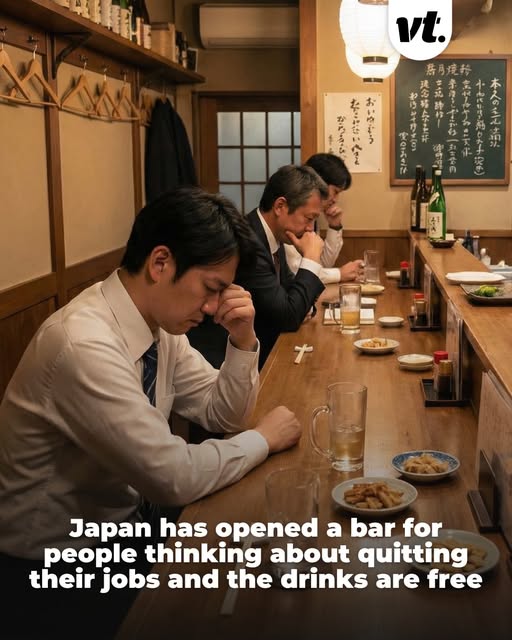
In Japan, where long working hours and unwavering loyalty to employers have long been part of the national identity, a newly opened bar is quietly challenging traditional ideas about work. Located in Tokyo, the bar is designed specifically for people who are thinking about quitting their jobs or at least questioning whether their current career path is sustainable.
Rather than offering escapism through loud music or heavy drinking, the bar provides something far more unusual: a calm, supportive space for honest conversations about work, burnout, and life choices.
A Safe Space to Talk About Work Doubts
The bar welcomes office workers, freelancers, and professionals from all industries who feel exhausted, unfulfilled, or stuck. Guests are encouraged to talk openly about their jobs, including frustrations they may feel unable to express elsewhere. There is no pressure to make a decision, and no one is told they should quit. Instead, the focus is on listening and reflection. Many visitors say this is the first place where they feel comfortable admitting they are unhappy at work. In Japanese corporate culture, expressing dissatisfaction can be seen as a lack of commitment. As a result, many people suppress their feelings until stress and anxiety become overwhelming.

Inspired by Personal Experience
The founder of the bar is a former corporate employee who experienced severe burnout after years in a high-pressure office environment. They noticed that many colleagues felt the same way but only shared their true emotions in private, often after work and over drinks. The idea for the bar was born from those conversations. The founder wanted to create a space where people could discuss career doubts openly, without shame or fear of judgment. By turning those late-night confessions into the core concept of the bar, they hoped to normalize conversations about mental health and career uncertainty.
Japan’s Ongoing Struggle With Overwork
Japan has a well-documented history of overwork, including the phenomenon known as karoshi, or death caused by excessive working hours. Although workplace reforms and mental health awareness have improved in recent years, many employees still feel trapped by social expectations and financial responsibilities. For some, quitting feels like failure. For others, it feels impossible. The bar does not present quitting as the only solution but instead encourages people to explore all options—such as changing roles, taking extended leave, or redefining personal priorities.
Who Visits the Bar
Visitors range from young professionals in their twenties to middle-aged workers who have spent decades at the same company. Some arrive alone, while others come with friends who feel the same pressure. Bartenders are trained to listen rather than give advice, creating an atmosphere that feels more like a group discussion than a typical night out. Regular patrons describe the experience as comforting. Even those who decide to stay in their jobs say the conversations help them feel less isolated and more in control of their choices.

A Sign of Changing Attitudes
The bar has attracted attention online, with many praising the idea as a thoughtful response to workplace stress. Critics argue it could encourage people to quit impulsively, but the organizers emphasize that the goal is clarity, not resignation. As attitudes toward work continue to evolve—especially among younger generations—the bar reflects a broader shift in Japanese society. More people are questioning whether success should come at the cost of health and happiness. In a culture where endurance has long been celebrated, this small bar offers something quietly radical: permission to stop, talk, and rethink what work should really mean.