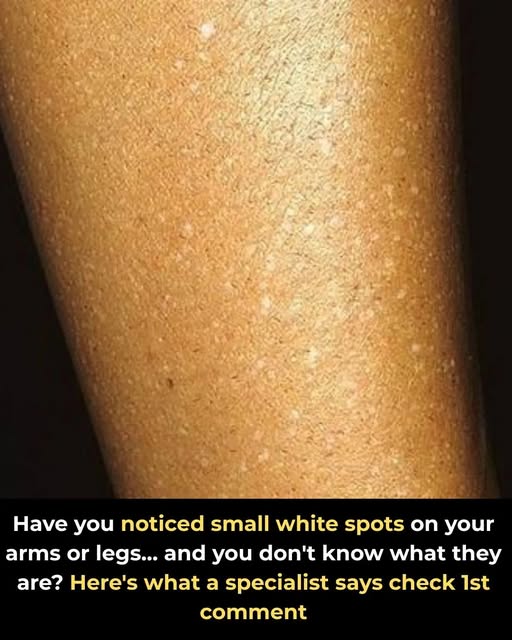
Noticing tiny white spots on your skin can be surprising, but in many cases they’re harmless and common. The appearance, distribution, and whether they itch or not can help point to the likely cause.
1. Sun‑Related Spots (Idiopathic Guttate Hypomelanosis)
One of the most frequent explanations for small, flat, pale spots on the arms or legs — especially on sun‑exposed skin — is a condition called idiopathic guttate hypomelanosis (IGH). These spots are typically:
- Very small (about 2–5 mm in diameter)
- Round or oval in shape
- Smooth and lighter than surrounding skin
- Most noticeable on the forearms and shins
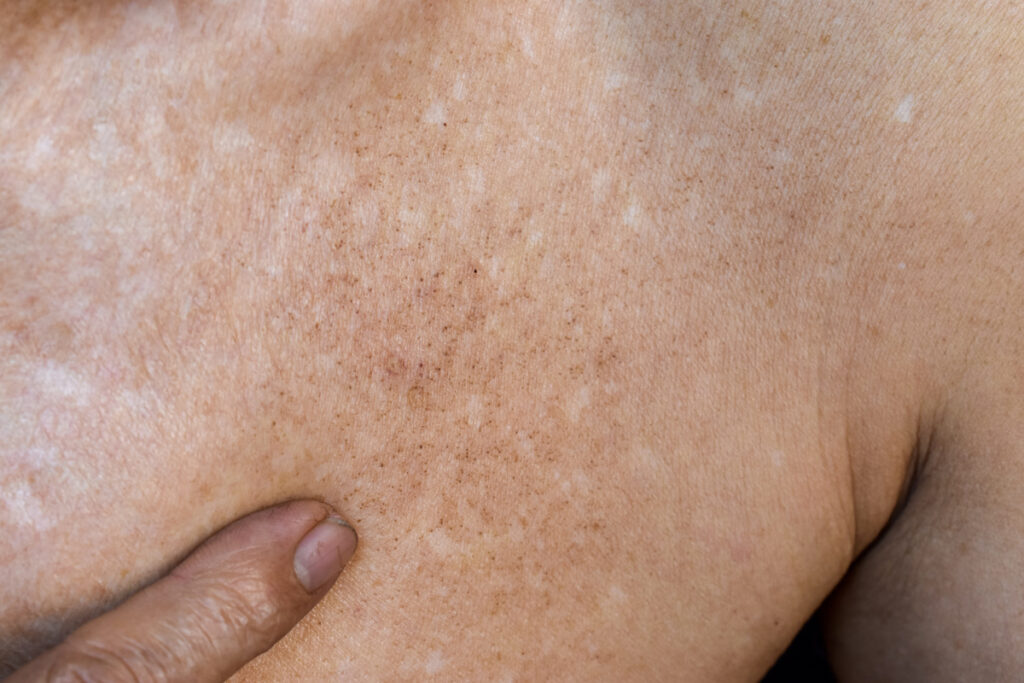
IGH appears to result from loss of pigment (melanin) in tiny areas of skin, and it becomes more common with age and cumulative sun exposure over many years. It’s harmless and does not pose a health risk, although it may be noticeable visually.
What causes it?
Although the exact reason is unclear, cumulative exposure to ultraviolet (UV) light likely damages pigment‑producing melanocytes over time. Genetics may also play a role, and people with fair skin tend to notice these spots more.
What to do
No treatment is medically required unless you want to improve the cosmetic appearance. Sun protection (like sunscreen and covering skin outdoors) helps prevent new spots forming.
2. Fungal Skin Condition (Tinea Versicolor)
Some white patches on the skin are caused by a common yeast overgrowth called tinea versicolor. This tends to appear as:
- White or light patches, sometimes with fine scaling
- Spots that may become more obvious after sun exposure
- More common on the trunk, shoulders, and upper arms, but can show up elsewhere too
- This is not serious or contagious, but it can be itchy for some people. Antifungal creams or shampoos usually clear it up over time.
3. Milia (Tiny Keratin Cysts)
Milia are small, raised white bumps caused by dead skin cells becoming trapped just below the surface. They are most common on the face but can appear on arms or legs too. Milia are:
- Painless
- Often grouped in clusters
- Harmless
- They don’t require treatment, but a dermatologist can remove persistent milia if they bother you.
4. Less Common Causes
Other skin changes involving lighter or white spots may occur and are worth knowing about, especially if spots change, spread, or are accompanied by other symptoms:
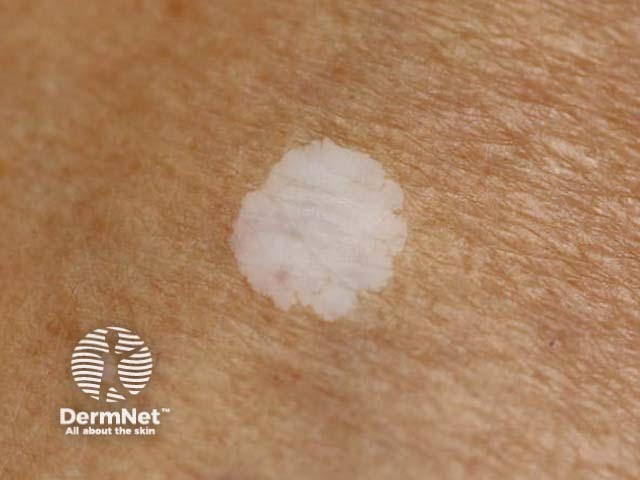
- Vitiligo — an autoimmune condition where skin loses pigment; patches can grow over time and often appear on hands, face, arms and legs. It’s not dangerous but can be noticeable and sometimes linked to other autoimmune conditions.
- Post‑inflammatory hypopigmentation — light spots left behind after injury, rash, eczema or insect bites heal.
- Other rare conditions — certain infections, chronic skin issues, or unusual vascular patterns may cause white spots, but these are much less common.
When to See a Doctor
In most instances, small white spots are benign and don’t require treatment. However, you should consider consulting a healthcare provider if:
- Spots are rapidly spreading or changing
- They are itchy, painful, scaly or bleeding
- Spots first appeared suddenly or after illness
- You’re uncertain about their cause and they concern you
- A medical professional — typically a dermatologist — can evaluate your skin visually and may use tools like a skin scraping or light examination to determine the exact cause.
Bottom Line
Small white spots on the arms or legs are usually harmless and common, especially if they are flat and not bothering you. Common causes include sun‑related pigment loss (idiopathic guttate hypomelanosis), mild fungal changes (tinea versicolor), or trapped skin cysts (milia). Most don’t require treatment, but if you notice changes, discomfort, or rapid growth, professional evaluation can help rule out less common conditions.