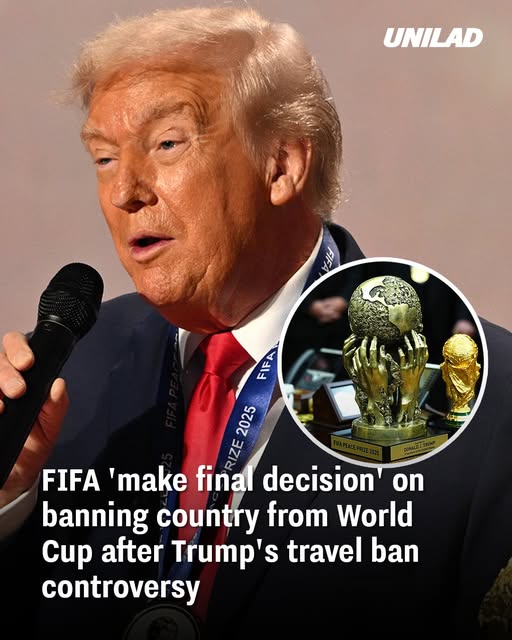
FIFA has reportedly reached a decision on whether the Senegal national team will take part in the 2026 World Cup, despite mounting global controversy. The debate has been sparked by recent actions by the United States government, which have raised questions over travel restrictions for certain nations and how these policies could impact international sporting events.
The 2026 FIFA World Cup is scheduled to be co-hosted by the United States, Mexico, and Canada. However, recent executive orders that suspend or limit visa applications from several countries have created uncertainty about fan and team participation. Supporters and officials from numerous footballing nations expressed fears that travel regulations might prevent them from entering the U.S. to attend or work at the tournament this summer.
Travel Ban Raises Concerns
Under current U.S. policy changes, visitors from Haiti and Iran face total entry bans. Senegal and Ivory Coast are subject to partial restrictions, meaning some individuals might struggle to obtain visas for travel. Fans and football federations expressed frustration over the developments, arguing that hosting an event of this scale requires guaranteed access for qualified teams and their supporters. Many believe that restrictive immigration policies undermine the spirit of the World Cup and complicate logistics for millions of fans. Amid these political tensions, speculation grew that Senegal — a team that qualified for the 2026 World Cup — could be banned from the tournament entirely. This claim was linked not only to travel issues but also to a recent sporting controversy at the Africa Cup of Nations (AFCON).
AFCON Final Sparks Controversy
Senegal’s victory in the 2025 AFCON final was overshadowed by dramatic scenes that drew international scrutiny. During the closing moments of the match against Morocco, a penalty decision awarded to the host nation provoked a strong protest from Senegal’s players and coaching staff. At one point, most of the Senegal squad walked off the pitch in disagreement with the officials. Though they later returned, play was delayed and tense scenes unfolded both on and off the field. Senegal went on to win 1-0 in extra time. FIFA President Gianni Infantino publicly condemned the behaviour, describing the incident as “unacceptable” and warning that such conduct cannot be tolerated in professional football. He emphasized that teams must respect match officials and abide by the Laws of the Game, in order to preserve the sport’s integrity. In parallel, the Confederation of African Football (CAF) initiated disciplinary proceedings against Senegal, its head coach, and several players. Senegal’s Football Federation confirmed that it appeared before CAF’s disciplinary panel to present its case, and that a decision on potential sanctions is expected soon. Possible outcomes range from fines to suspensions for those involved.
World Cup Participation Not in Jeopardy
Despite the controversies off the pitch, reports indicate that Senegal’s participation in the 2026 FIFA World Cup is not at risk. World Cup fixtures are already set, with the West African nation slated to compete against prominent footballing countries in the group stage. Senegal will face France and Norway, with a fourth team — yet to be determined between Iraq, Suriname or Bolivia — rounding out the group. This will mark Senegal’s fourth appearance at World Cup finals, following memorable tournaments in 2002, 2018, and 2022. Football fans around the world are watching closely, as political decisions and disciplinary actions intersect with sporting qualification and competition.
Football Amid Political Strain
The unfolding situation highlights the complex interaction between politics and sport. With travel policy debates continuing alongside disciplinary reviews from CAF and FIFA, Senegal’s experience may set precedents for how international football navigates political challenges in future tournaments. For now, the team remains on course for World Cup action this summer, even as discussions over governance, fan access, and sportsmanship persist.