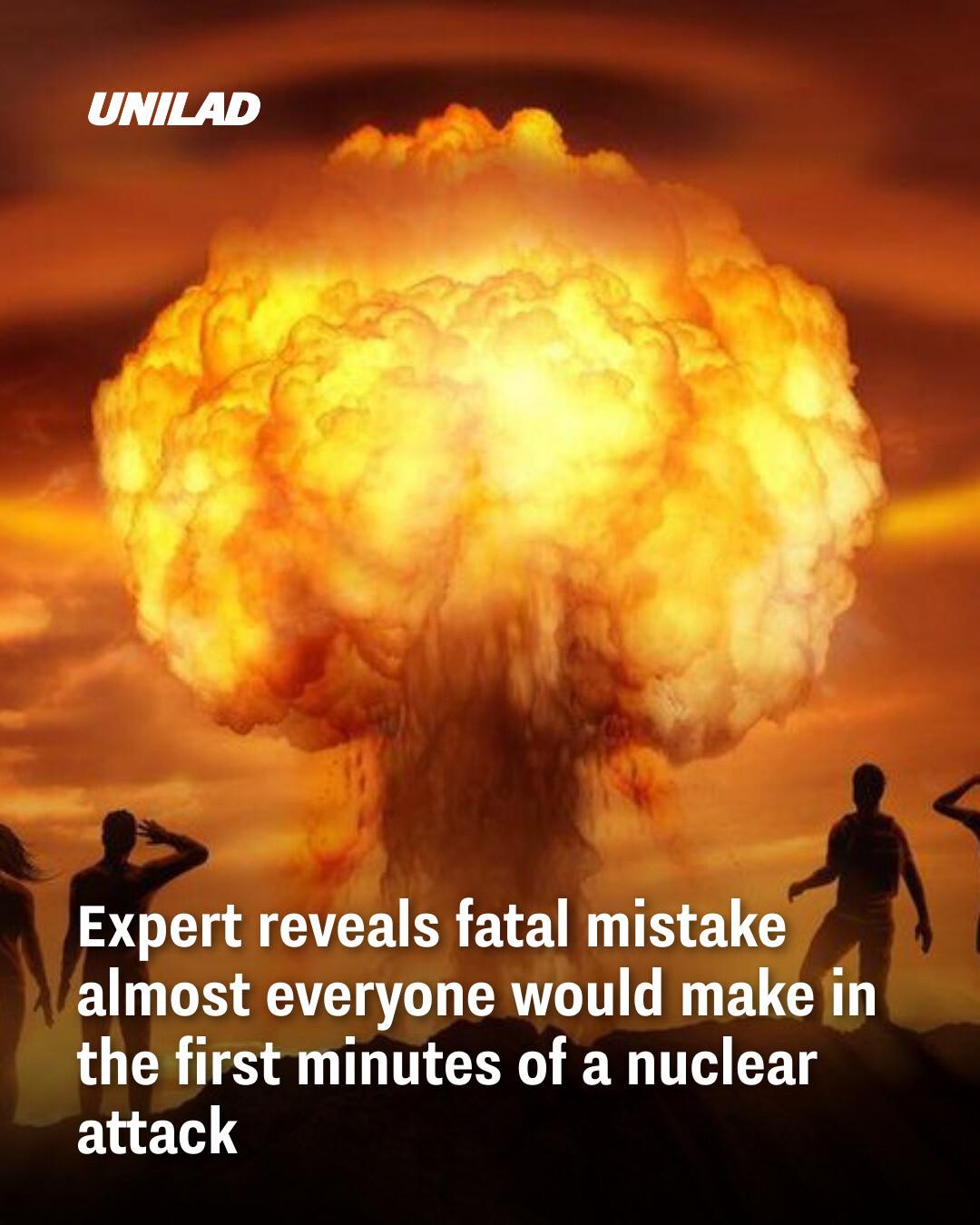
A nuclear attack is one of the most terrifying scenarios imaginable, and experts say the first few moments after a detonation are absolutely critical. While most people would instinctively try to flee the area as quickly as possible, one radiation expert warns that this natural reaction could actually be the deadliest mistake of all.
The warning comes as public anxiety over global conflict continues to rise, prompting renewed interest in survival guidance for worst-case emergencies. According to experts, the wrong decision in the opening seconds after a nuclear blast could leave people exposed not only to the initial explosion, but also to long-term radiation fallout and devastating injuries. The key message is simple: acting on instinct could cost you your life.
Why Getting in Your Car Could Be Fatal
For many people, the first instinct after seeing a mushroom cloud or blinding flash would be to get in the car and drive away. But experts say that is exactly what you should not do. The problem begins almost immediately after detonation. A nuclear explosion can produce an electromagnetic pulse, or EMP, which may disable electronics and affect vehicles. UNILAD’s report cites an EMP Commission finding that many cars could experience faults, with some stalling entirely. That means roads could quickly turn into chaos, with drivers blinded, panicked, or stranded in traffic. Even worse, a car offers almost no real protection from the blast itself. Radiation expert Brooke Buddemeier, a health physicist at Lawrence Livermore National Laboratory, warned that the glass and metal of a vehicle will not shield people from the thermal radiation, blast wave, or radioactive fallout. In short, a car may feel like an escape route, but in reality it can become a trap.

The Immediate Dangers After the Flash
Experts say the first thing many people would notice outside the initial blast radius is an intense flash of light. According to the report, anyone looking toward the blast from several miles away could suffer temporary blindness, and in some cases lasting eye damage. That alone could make driving nearly impossible. Then comes the blast wave. Depending on how far you are from the detonation, it could arrive in seconds or within a couple of minutes. This wave is powerful enough to shatter glass, flatten structures, and throw debris at deadly speed. People caught outside may also suffer severe burns from the thermal radiation. Vehicles do little to protect against any of this, especially when windows can shatter and leave occupants exposed.
What Experts Say You Should Do Instead
Rather than fleeing by car, the advice is to find shelter immediately. Buddemeier recommends following a simple rule: “go in, stay in, tune in.” That means getting inside the nearest sturdy building as fast as possible, preferably one with a basement or underground space. The center of a large building, away from windows, offers better protection from blast effects and radioactive particles. Experts say you may have only seconds before the blast wave arrives, but there can still be a short window to reach meaningful shelter before the most dangerous fallout begins to settle. Once inside, staying there for at least 24 to 48 hours can dramatically reduce radiation exposure. If possible, close off ventilation, gather water and food, and use a battery-powered radio or emergency communication device for official updates.
Survival Depends on Preparation, Not Panic
The grim reality is that survival in a nuclear emergency depends less on speed and more on smart decisions. The most dangerous choice may be the one that feels most natural: trying to outrun the disaster. Experts stress that panic can be deadly, while immediate shelter can make all the difference. In a crisis like this, preparation and clear thinking are your best defense. If the unthinkable ever happens, the safest move may not be to run — but to get inside, stay protected, and wait.