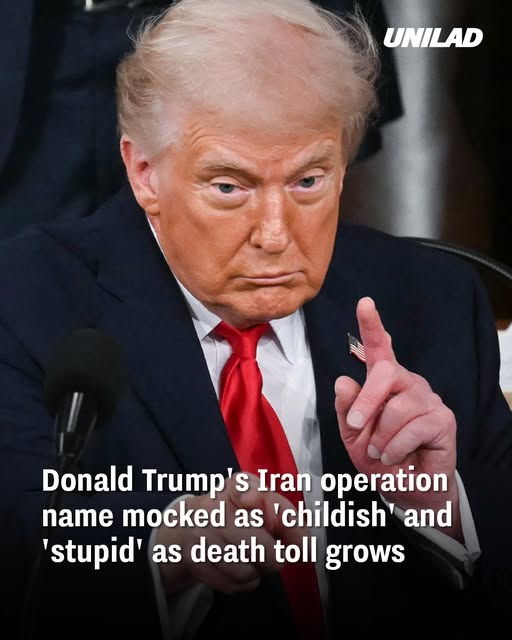
The recent US-led military campaign against Iran has sparked not only diplomatic tensions but also surprising online ridicule over the name chosen for the operation. The offensive, launched on February 28, 2026, has been widely discussed across social media platforms as critics call the title of the military effort “childish” and “stupid.”
At the centre of the criticism is the operation’s official name: “Operation Epic Fury.” While presidents often give dramatic names to strategic campaigns, many users on platforms like X, Reddit, Facebook and Instagram have openly mocked this one for sounding more like the title of a video game or superhero movie than a serious military endeavour.
What Is “Operation Epic Fury”?
“Operation Epic Fury” refers to a large-scale military offensive launched jointly by the United States and Israel against targets within Iran. The action was ordered by US President Donald Trump following months of rising tensions over Tehran’s nuclear ambitions, missile programs and alleged support for militant groups. Officials said that the campaign aimed to strike a range of Iranian military and strategic sites — including ballistic missile infrastructure and naval capabilities — and to disrupt what the US government described as “intolerable threats.” In initial phases of the conflict, Iran’s Supreme Leader Ayatollah Ali Khamenei was reportedly killed in a strike on Tehran, triggering broader regional retaliation. Trump himself stated that the operation might last four to five weeks, though he did not rule out a longer engagement if necessary. He framed the mission as an effort to protect American interests and prevent nuclear proliferation, while urging Iranians to rise up and seize control from their leadership once violence subsided.
Online Reaction: “Childish” and “Stupid”
Despite the administration’s strategic framing, many people online are focusing less on geopolitics and more on the name “Operation Epic Fury.” Critics argue that the phrase sounds like it belongs in a video game or action movie rather than a real-world military campaign with serious consequences. Comments on social media ranged from light-hearted mockery to harsh disapproval. One commenter compared the name to something a child might choose during a game of “GI Joe,” while another joked that it sounded like the subtitle for “the sixth sequel in a mediocre slasher franchise.” Others expressed deeper dismay, saying they found it inappropriate to use a flamboyant name for an operation that involves real loss of life. Some users also suggested that the name undermines the gravity of the situation by making it appear cartoonish or trivial, especially as reports indicate hundreds of casualties and significant destruction in the region.
Broader Debate Over the Conflict
Beyond the online jokes, serious political discussions have emerged about the operation itself. Media outlets and commentators from various countries have raised concerns about the legality of the action, whether proper congressional authorization was obtained, and the long-term implications of a sustained military campaign in the Middle East. Many critics argue that the offensive represents a sharp turn from previous foreign-policy norms. Supporters, by contrast, frame it as decisive leadership aimed at neutralising a longstanding threat. They argue that force was justified to protect US allies and prevent the spread of nuclear weapons. Regardless of perspective, it’s clear that both the operation and the response to its name have become major talking points in global political discourse.
What’s Next?
As the conflict continues and diplomatic efforts remain strained, reactions — both serious and satirical — show how modern warfare can be debated on multiple levels, from strategic objectives to public perception. Whether “Epic Fury” becomes a historical footnote, a point of ridicule, or a symbol of a pivotal moment in 21st-century geopolitics is still unfolding.