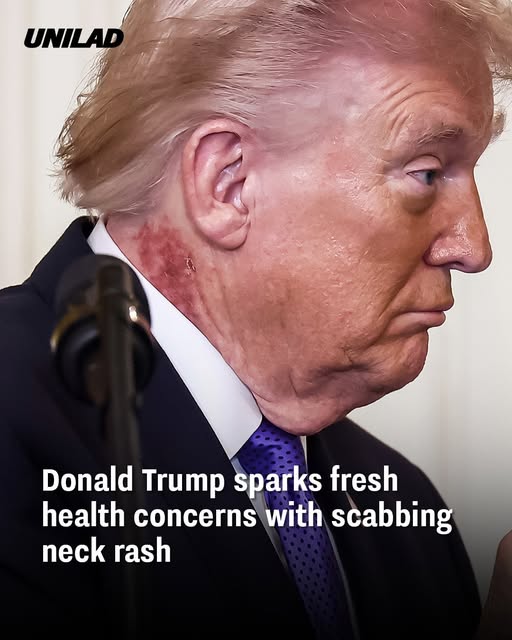
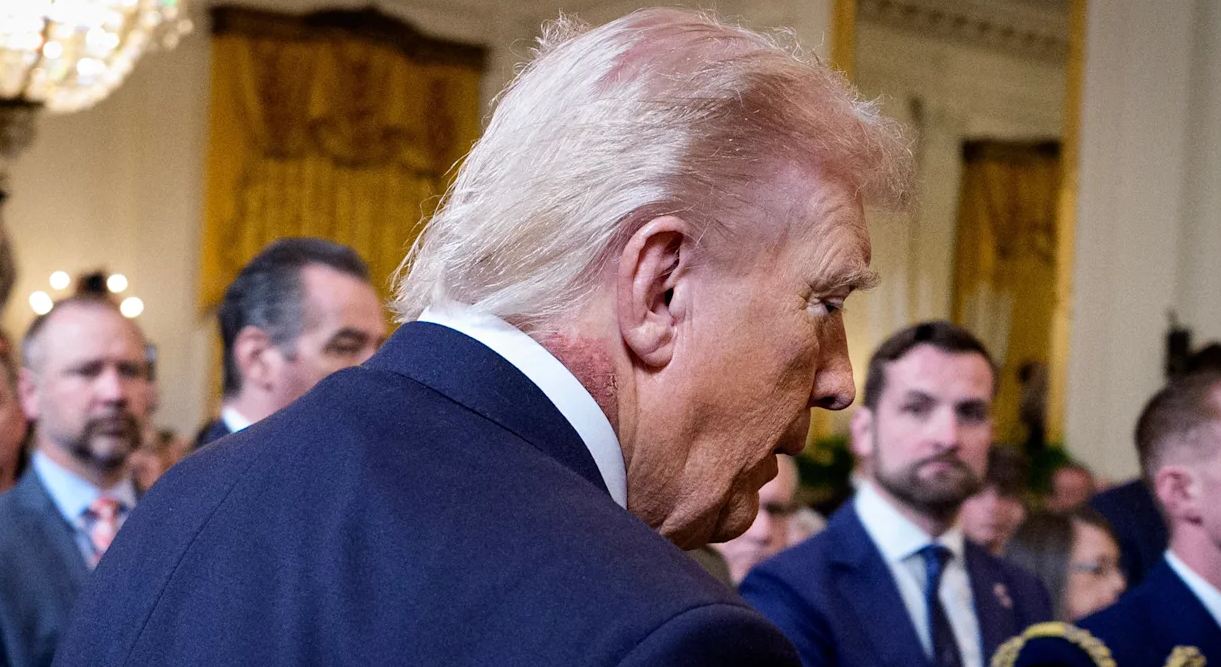
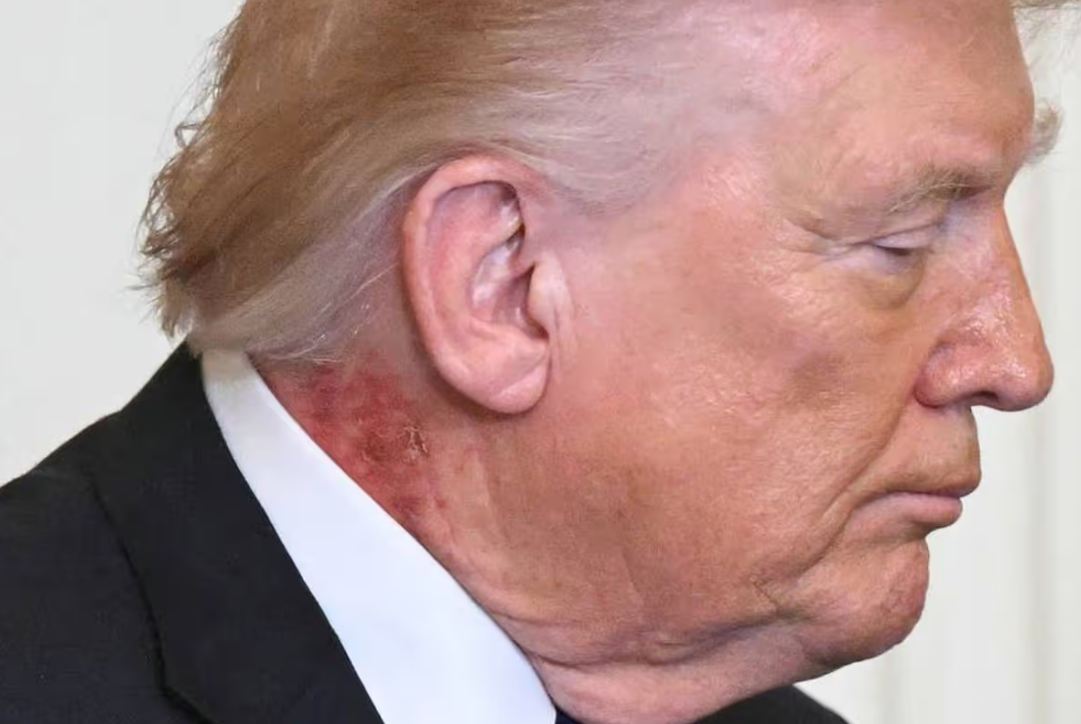
President Trump drew widespread attention during a Medal of Honor ceremony at the White House on March 2, 2026, when photographs showed a large red rash and possible scabbing on the right side of his neck, extending from just behind his ear toward his hairline. Other visible marks, such as bruising on his hand, also raised questions among observers.
The rash was noticeable even when the president was speaking publicly, prompting online speculation about what it could mean for his health and sparking fresh coverage in national and international media.
White House Response: Treatment, Not Illness
In response to the speculation, Trump’s personal physician, Dr. Sean Barbabella, issued a statement addressing the rash:
- The redness is the result of a “very common cream” that the president is using as a preventative skin treatment.
- The cream is being applied for a one-week course, and the doctor said the redness is expected to last a few weeks before subsiding.
- Officials did not disclose the name of the cream or specify what condition it is meant to prevent.
- This explanation is similar to recent clarifications from multiple news agencies quoting the White House physician, who has repeatedly insisted that the mark is not a sign of serious illness.
Public Already Discussing Past Health Indicators
The neck rash isn’t the only aspect of Trump’s health that has drawn attention recently:
- Observers have previously noted bruising on Trump’s hands at different events.
- The White House has tied these bruises to frequent handshakes and Trump’s high daily dose of aspirin, which can make bruises more pronounced.
- The president’s age — 79 years old — also makes his physical appearance a highly scrutinized factor in public discourse.
- While the White House medical team has stated that Trump remains in good overall health, past visible marks have fueled debate among journalists, political commentators, and some health observers.
Reactions and Speculation
Public and social media reactions have been highly varied:
- Some members of the public and online commentators have questioned the explanation, suggesting it might reflect an underlying health issue.
- Others have pleaded for caution, emphasizing that skin reactions to creams are common and that redness alone isn’t unusual.
- A number of users have posted theories ranging from mild dermatological reactions to more serious conditions, though they remain unverified.
- Health specialists not directly involved in Trump’s care have noted that any topical cream — even common ones — can sometimes cause irritation, redness, or rash depending on skin sensitivity. However, no official medical bulletin has confirmed any serious disease.
Historical Context of Health Scrutiny
Trump’s health has been a topic of public interest throughout — and even before — his presidency:
- At 79, he is the oldest person to serve as U.S. president, a point often raised in discussions about his stamina and physical condition.
- Previous annual physicals and imaging exams, including cardiovascular screening, were reported to show no major concerns according to statements from his medical team.
- Given this background, the latest rash coverage fits into a broader pattern of heightened media focus on presidential health, particularly among critics and political observers alike.
What We Know Now
Trump was seen with noticeable redness and rash-like markings on his neck during a high-profile event. The White House attributes the markings to a prescribed cream and says they are temporary. No official indication has been provided that a serious or new health condition is at play. Media and public speculation continues, reflecting broader interest in the wellbeing of the sitting president.