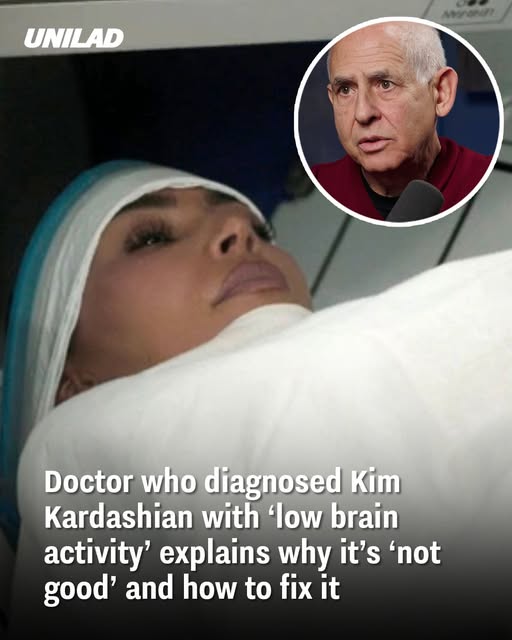
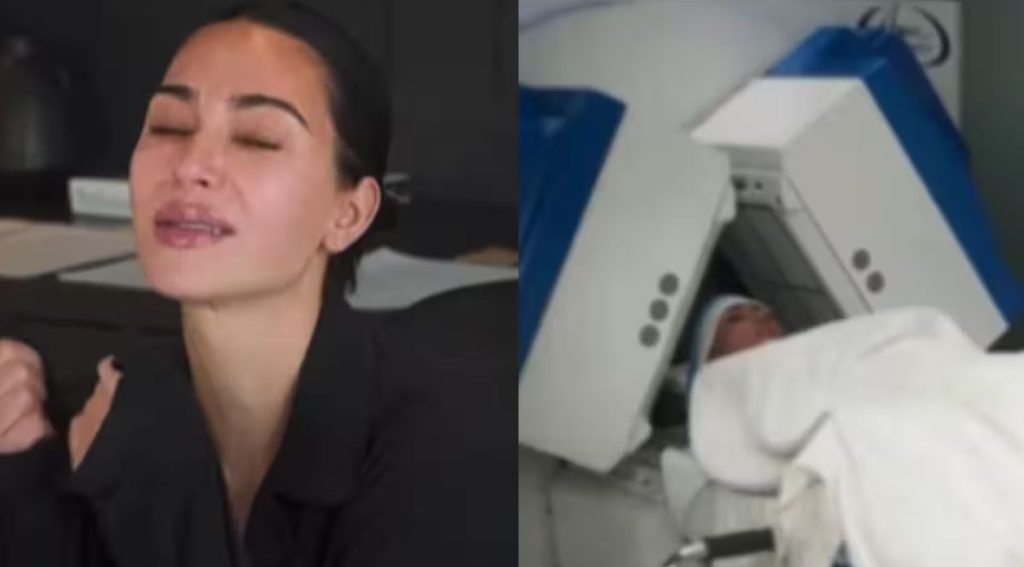
Kim Kardashian underwent a comprehensive brain scan after previously revealing that she had been diagnosed with a brain aneurysm, a potentially serious condition involving a blood vessel in the brain. During this evaluation, the doctor identified areas interpreted as low activity in certain parts of her brain, especially in the frontal lobes the regions involved in decision-making, planning, and stress management.
The physician conducting the scan described “holes” or zones with reduced activity on imaging, explaining that these areas are less active than expected for her age and lifestyle.
What the Doctor Explained
According to the specialist, the areas of low activity could make it harder for Kardashian to manage stress, particularly given her intense study schedule and other life pressures. The doctor clarified that the scan did not indicate Alzheimer’s disease, and she does not have signs of severe neurological disorders, but the reduced activity was notable enough to warrant attention. Kardashian reportedly struggled with accepting the initial interpretation, reacting with disbelief when told that her frontal brain regions were functioning at lower levels than expected.

How Experts Interpret These Findings
Medical experts outside the show emphasize that terms like “holes” on a brain scan don’t literally refer to missing tissue. Instead, they describe regions with lower blood flow and metabolic activity. Such patterns can appear in middle-aged adults for a variety of reasons — including stress, normal ageing, or temporary fluctuations in blood flow — and do not necessarily signal irreversible damage or cognitive decline. In other words, detection of reduced activity on certain types of scans (like SPECT scans) may reflect functional differences rather than structural loss. True “holes” due to stroke or disease look very different and usually come with clear medical symptoms.
The Context Around the Scan
This revelation came as Kardashian continues a very public journey in both law studies — including preparation for the California bar exam — and personal life events. The combination of intense academic effort, public scrutiny, and ongoing health management likely contributed to her getting more detailed imaging than many people receive.
What It Means (and What It Doesn’t)
Not an Alzheimer’s diagnosis: The doctor explicitly reassured that there’s no indication she’s at elevated risk for Alzheimer’s or similar degenerative disease. Low activity isn’t the same as no activity: Experts stress that “low brain activity” on imaging doesn’t mean cognitive incapacity — it can simply reflect temporary or regional differences in blood flow that don’t necessarily translate to functional impairment. Stress may play a role: Chronic stress — such as preparing for a notoriously tough professional exam — is one of several possible contributors to reduced activity patterns on scans.
Public Reaction and Ongoing Coverage
The news generated widespread discussion, with many observers debating both the medical interpretation and its portrayal on television. Some highlight the importance of contextualising brain imaging results properly, while others focus on the celebrity angle. Regardless, it has sparked broader interest in how brain health is measured and communicated in media.
Conclusion
The discussion surrounding Kim Kardashian’s brain scan highlights how medical findings can easily be misunderstood when presented outside a clinical setting. While the term “low brain activity” may sound alarming, doctors have clarified that it does not indicate brain damage, Alzheimer’s disease, or a loss of intelligence. Instead, it reflects areas of reduced activity that can be influenced by factors such as stress, fatigue, lifestyle demands, or temporary changes in blood flow. The case serves as a reminder that brain scans require careful interpretation and context, and that results seen on imaging do not always translate into serious health problems. Ultimately, the situation underscores the importance of balanced medical explanations and cautions against drawing dramatic conclusions from isolated diagnostic terms.