
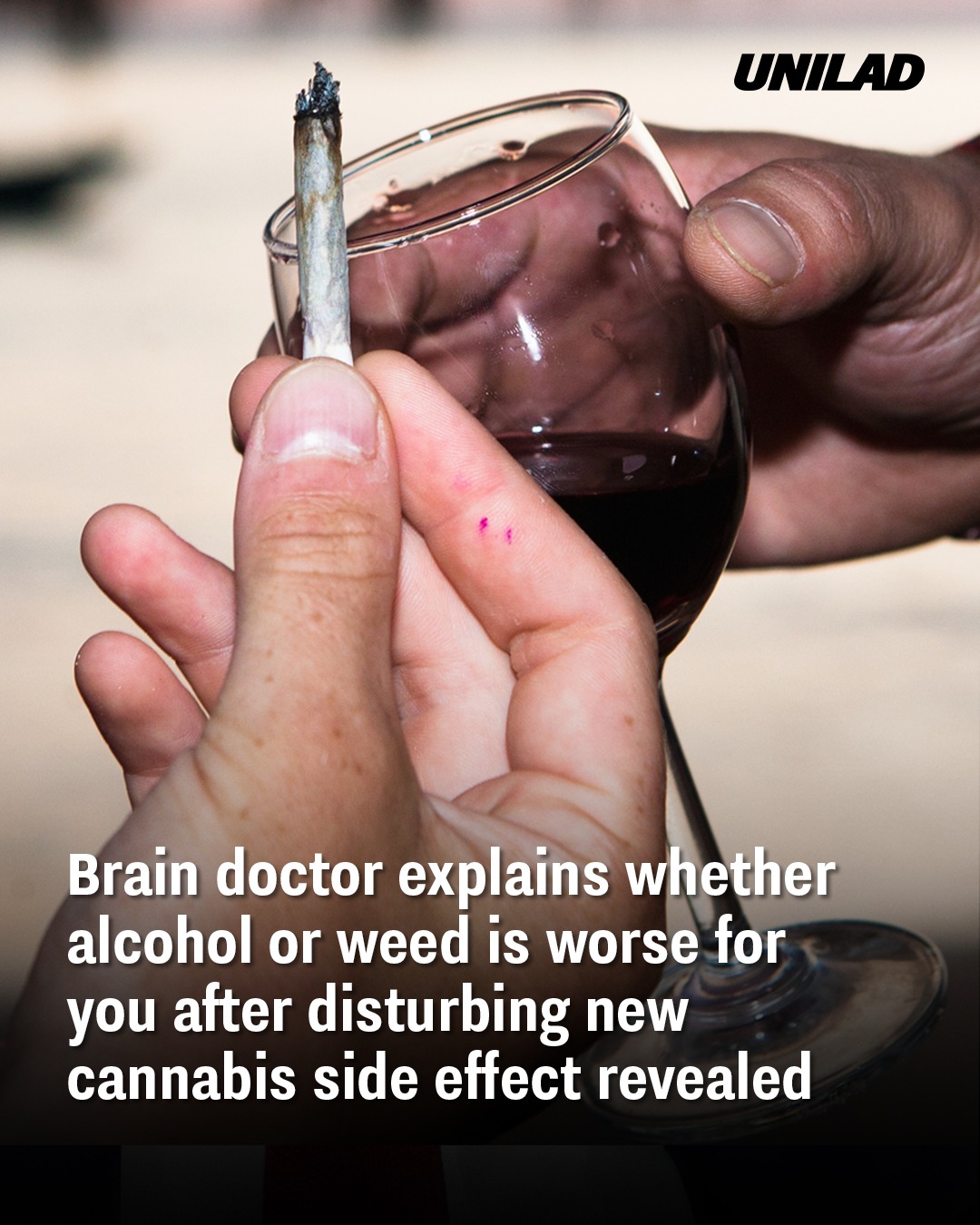
A prominent brain doctor argues that when it comes to long-term harm, alcohol is more damaging than cannabis. While both substances can impair mental functions and carry health risks, the evidence suggests alcohol poses the greater danger especially with frequent or heavy use.
The Effects of Alcohol on the Brain
Drinking alcohol — even at levels often considered moderate — has been linked to significant changes in brain structure and function. Studies show that alcohol consumption can reduce both grey matter (the brain tissue made of nerve cell bodies) and the integrity of white matter (the nerve fibers that connect different brain regions). This brain shrinkage is especially concerning because it affects regions key to memory, learning, judgment, and decision-making. Over time, alcohol can damage areas like the hippocampus (involved in memory) and parts of the prefrontal cortex (responsible for reasoning and impulse control). Chronic, heavy alcohol use is also associated with increased risk of dementia and other serious cognitive disorders. Some research suggests that even moderate drinking may accelerate brain aging — causing structural decline long before other organs show damage. Beyond structural damage, alcohol affects brain function in more immediate ways: impaired coordination, poor judgement, slower reflexes, decreased impulse control — all of which can contribute to risky behavior, accidents, or poor decision-making in day-to-day life.

What We Know About Cannabis (Weed)
Cannabis — often viewed as “less harmful” — is not harmless. Short-term use can impair memory, attention, coordination, and reaction time. It can also lead to altered judgment, hallucinations, paranoia, or even psychotic-like symptoms in some users.
With repeated or heavy use — especially beginning in teenage years — cannabis can impact long-term cognitive functions. Some studies have found declines in memory, attention span, and general cognitive performance among frequent, long-term users. Moreover, early and frequent cannabis use has been associated with increased likelihood of mental health issues: higher risk of depression, anxiety, and in certain cases, psychosis — particularly when high-THC products are used intensively. However, when it comes to major structural brain damage, the data on cannabis is less clear. Some imaging studies have failed to find consistent long-term effects on the volume or integrity of grey/white matter for regular cannabis users — findings that contrast sharply with what is known about alcohol’s impact. Because of variability in research methods, dose, frequency, age of first use, and cannabis potency — conclusions about long-term brain damage are still uncertain. But most experts agree: cannabis is not harmless, especially if used heavily or started early.
Comparing the Risks: Why Alcohol Often Comes Out on Top
When comparing alcohol and cannabis, experts point out several trends:
- Alcohol is widely used and socially accepted — which means more people are exposed, more frequently, over many years. That increases the population-level impact.
- The neurotoxic effects of alcohol — affecting brain volume, microstructure, and function — are better documented and more consistent than for cannabis.
- Chronic alcohol use carries greater risk for serious, long-term consequences: dementia, brain shrinkage, cognitive decline, impaired decision-making — outcomes backed by decades of research.
- Cannabis does pose meaningful cognitive and mental-health risks, especially when used heavily or started early. But many studies haven’t found the same degree of structural brain harm as seen with alcohol.
- Thus — at least based on current evidence — alcohol appears “worse” for long-term brain health overall.
The Bottom Line: Neither Is Safe — But Alcohol Is Riskier
It’s misleading to think of cannabis as “safe just because it’s natural,” or of alcohol as “just a casual drink.” Both substances carry real risks — especially for brain health, memory, judgment, and long-term mental-wellness. If forced to choose, many researchers would say alcohol poses the greater danger: its neurotoxic effects, frequency of use, and long-term harms (shrinkage, dementia risk, cognitive decline) make it more damaging than weed — especially when consumption is regular or heavy. However, that doesn’t mean cannabis is harmless. Heavy or long-term cannabis use — especially starting during adolescence — can impair memory, attention, susceptible mental health, and carry its own long-term concerns. Ultimately, the safest choice for protecting brain health is to limit—or ideally avoid—regular use of either substance.