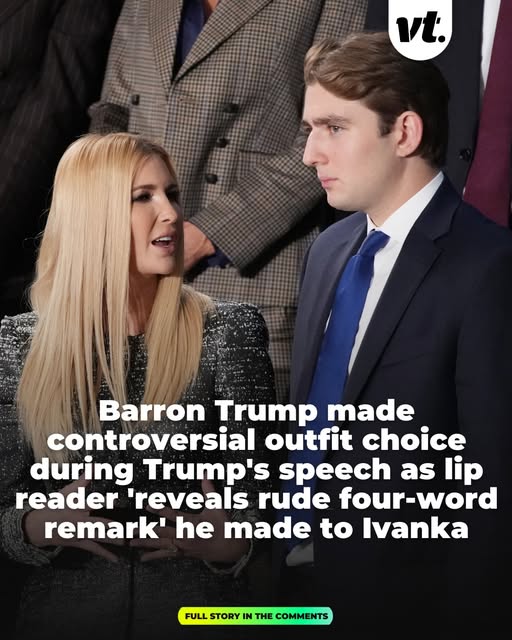
For many viewers, the most talked-about moments of the 2026 State of the Union address weren’t just the policy proclamations or political volleys they were the unexpected moments in the audience. One of these moments centered on Barron Trump, the 19-year-old son of President Donald Trump and First Lady Melania Trump. Barron’s attendance at the nearly two-hour address was notable in itself. Although he has largely avoided the public spotlight in past years, he appeared in the House Chamber alongside his mother and several of his half-siblings, including Ivanka, Tiffany, and Donald Trump Jr.
But it wasn’t just his presence that captured public interest. Shortly after cameras panned to the family, observers online began dissecting Barron’s fashion choice — particularly the blue tie he chose to wear to the event. While most of the president’s advisers and party loyalists were seen sporting Republican red, Barron opted for a tie in a markedly different hue.
A Tie That Stood Out
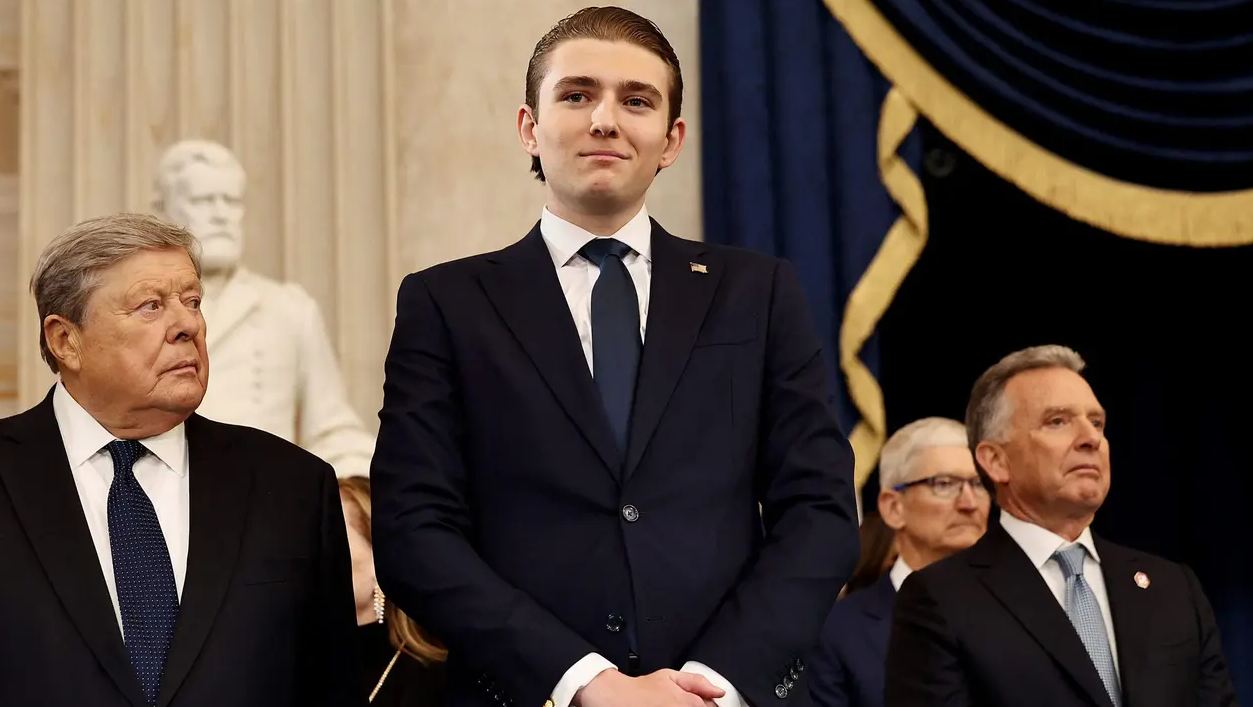
The blue tie immediately sparked discussion on social platforms. For many watching from home, it seemed unusual to see Barron diverge from the expected color palette. Some viewers interpreted the choice as a simple personal preference, while others speculated that wearing blue — a color often associated with the opposing political party — might have been an intentional way to stand out or even send a subtle message. Barron’s height, at around 6 ft 9 inches, also drew notice as he towered over his siblings and even some adults nearby, reinforcing his growing maturity and independent presence. Despite the chatter, there’s no confirmation that the tie choice had any political significance: wardrobe decisions at formal events can be driven by aesthetics as much as symbolism.
Lip-Reading Sparks Viral Debate
Barron’s tie wasn’t the only element of his appearance that garnered attention. During the long address, television cameras briefly captured a quiet exchange between Barron and Ivanka, which quickly became fodder for amateur lip-readers online. According to one of these analysts, Ivanka appeared to ask Barron a question during a lull in the speech, and he responded with a four-word phrase beginning, “I’m not sure, I couldn’t be a——d.” Lip-reader Jeremy Freeman told media outlets that while he couldn’t make out Ivanka’s full question, Barron’s retort was unmistakably blunt — a remark that many users described as representative of typical teen impatience. Social media users were quick to clip and share the moment, prompting widespread reaction. Some commenters found humour in the exchange, arguing it was classic sibling banter; others saw it as a rare peek behind the scenes at how the high-profile family interacts when the cameras are rolling.
Family Dynamics and Public Interest
The moment also highlighted how much public interest still surrounds Barron, despite his deliberate efforts to keep a low profile. His presence at such a divisive political event — and the contrast between his attire and the broader Republican pageantry — made him one of the most discussed people on social media the night of the address. Meanwhile, Ivanka, who sat beside him, also drew attention for her fashion choice — a chic black-and-white skirt suit by a luxury designer — and later took to Instagram to share photos from the night, seemingly brushing off the lip-reading discussion. Observers pointed out that the fleeting conversation between the siblings, whether humorous or candid, offered a rare human moment amid a polished, formal event — reminding audiences that even at highly orchestrated political ceremonies, unscripted interactions often steal the show.
Why It Resonated
Overall, Barron’s appearance stood out not because of an official role or policy pronouncement, but because it melded style, family dynamics and unexpected levity in a moment that was otherwise dominated by serious political discourse. The blue tie and the brief exchange with his sister became talking points precisely because they were unplanned, human touches in an event otherwise marked by formality and political theatre.