
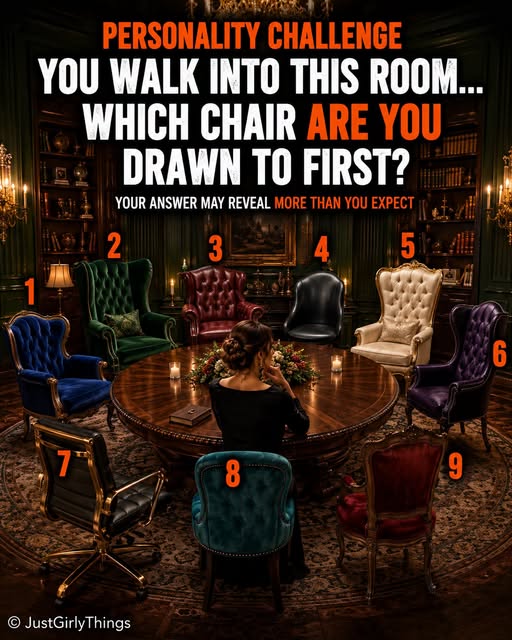
Have you ever noticed that you tend to choose the same seat whenever you gather with family, friends, or coworkers? While most people assume it’s simply a matter of habit or convenience, psychologists suggest that seating preferences can sometimes reflect aspects of personality, communication style, and social comfort.
Although no seating choice can fully define a person, where we choose to sit may offer interesting clues about how we connect with others and navigate social situations.
Why Seating Choices Matter
Humans constantly communicate through nonverbal behavior. Body language, personal space, eye contact, and even where we position ourselves can reveal subconscious preferences and feelings. When entering a room, many people instinctively select a seat that makes them feel comfortable, secure, or socially connected. These choices are often made within seconds, without much conscious thought. Researchers in social psychology have found that physical positioning can influence interactions, group dynamics, and even perceptions of leadership.
The Head of the Table
People who naturally choose the head of the table are often perceived as confident and authoritative. This position provides a clear view of everyone present and is traditionally associated with leadership. Individuals who prefer this seat may enjoy organizing discussions, taking initiative, and guiding group decisions. Others may simply choose it because it offers the best visibility and accessibility. However, sitting at the head of the table does not automatically mean someone seeks power. In many cases, it simply reflects comfort with being at the center of attention.
Sitting Near the Center
Those who select seats near the middle of the table often value connection and communication. This location allows easy interaction with multiple people and can make participation in conversations more natural. People who prefer central positions may enjoy collaboration and social engagement. They often act as mediators, helping conversations flow smoothly between different members of a group. Because they are physically surrounded by others, these individuals may prioritize inclusion and group harmony.
Choosing a Corner or End Seat
Some people gravitate toward corner seats or positions slightly removed from the center of activity. Contrary to common assumptions, this does not necessarily indicate shyness. A corner seat often provides a balance between participation and personal space. Individuals who choose these spots may enjoy observing group dynamics before fully engaging in discussions.
They often appreciate having a sense of control over their environment while still remaining involved in social interactions. Many individuals instinctively sit beside close friends, family members, or trusted colleagues. This behavior reflects a desire for familiarity and emotional comfort. Proximity to trusted people can reduce social anxiety and create a sense of security, especially in unfamiliar environments. It can also strengthen cooperation and encourage more open communication. This preference highlights the importance of relationships in shaping our social experiences.
Across from Others
People who choose seats directly opposite someone often enjoy face-to-face interaction. This position encourages eye contact and can lead to more focused conversations. In professional settings, sitting across from another person may signal confidence, engagement, or a desire to establish a direct connection. In casual gatherings, it often reflects interest in meaningful discussion. This seating arrangement can promote active listening and stronger interpersonal exchanges.

Personality Is More Complex Than a Seat
While seating choices can offer intriguing insights, they should never be viewed as definitive personality tests. Factors such as room layout, available seating, cultural norms, and existing relationships often influence where people sit. Personality is shaped by countless experiences, behaviors, and preferences that extend far beyond a single social habit. Still, observing seating patterns can be a fun and thought-provoking way to better understand human behavior.
The Takeaway
The next time you join a family dinner, business meeting, or social gathering, pay attention to where you choose to sit. Your preferred spot may reveal subtle clues about how you communicate, interact, and feel most comfortable around others. Whether you prefer the head of the table, the center of the action, or a quiet corner, your choice is part of the unique way you navigate the social world. While it may not tell the whole story of who you are, it can provide an interesting glimpse into the habits and preferences that shape everyday interactions.