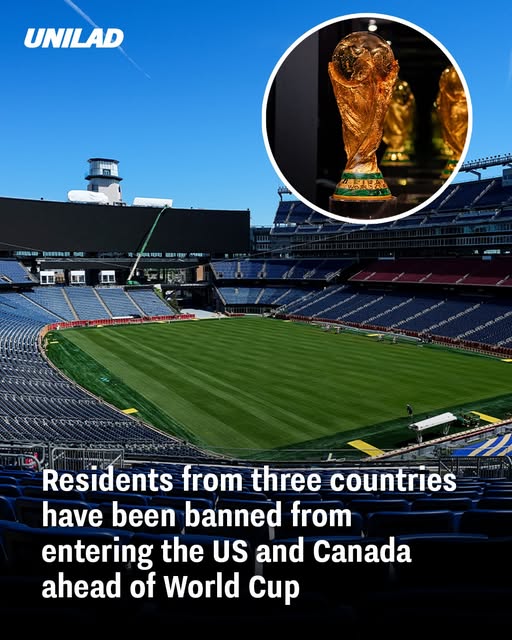
With millions of fans expected to travel across North America for the 2026 FIFA World Cup, the United States, Canada, and Mexico have announced coordinated public health measures in response to an Ebola outbreak in Central Africa. The three host nations say the restrictions are designed to protect residents, athletes, and visitors while allowing the tournament to proceed safely.
The action follows the World Health Organization’s declaration of an Ebola outbreak in the Democratic Republic of the Congo (DRC) as a Public Health Emergency of International Concern. Health officials warned that the risk of spread to neighboring countries was high, prompting governments to strengthen border and health screening procedures.
Which Countries Are Affected?
The measures primarily target travelers connected to three countries: the Democratic Republic of the Congo, Uganda, and South Sudan. These nations have been identified as the areas facing the greatest Ebola-related concerns during the current outbreak. While the three World Cup hosts announced a shared approach, each country has implemented its own specific rules and restrictions. The policies vary in scope, ranging from entry bans to health screenings and quarantine requirements.

United States Tightens Entry Rules
The United States was among the first countries to introduce stricter travel controls. Under current measures, non-citizens who have recently traveled to the DRC, Uganda, or South Sudan are not permitted to enter the country. Additional restrictions have also been applied to certain categories of travelers who have been in those countries within the previous 21 days. American health authorities have also expanded airport screening procedures for eligible travelers arriving from affected regions. Officials emphasize that the measures are precautionary and are intended to reduce the likelihood of imported cases.
Canada Introduces the Toughest Measures
Canada has adopted some of the strictest policies among the three host nations. Authorities have implemented a 90-day ban affecting residents of the DRC, Uganda, and South Sudan. The restrictions took effect in late May and are expected to remain in place throughout much of the summer. In addition, Canadian citizens, permanent residents, and certain other travelers arriving from affected regions must complete a 21-day isolation period if they are symptom-free. Anyone who develops symptoms may be referred for further medical evaluation and treatment.
Mexico Focuses on Screening and Quarantine
Mexico has chosen a slightly different strategy. Rather than implementing the same broad restrictions as Canada, Mexican authorities have increased Ebola screening procedures at airports and other points of entry. Officials have also advised against non-essential travel to affected areas. Travelers arriving from regions linked to the outbreak may be required to undergo a 21-day quarantine period. The government says these measures are intended to identify potential cases quickly and prevent further transmission.
How Serious Is the Risk?
Health experts stress that Ebola is very different from airborne viruses such as COVID-19. The disease spreads through direct contact with the bodily fluids of an infected person rather than through casual contact in public spaces. Because of this, officials believe the risk to the general public remains relatively low when proper precautions are followed. Public health authorities in several World Cup host cities have reassured residents that monitoring systems, screening programs, and medical preparedness plans are already in place.

Balancing Safety and Global Travel
The 2026 World Cup is expected to attract millions of spectators from around the world, making it one of the largest sporting events ever hosted in North America. Government officials say the coordinated travel measures are designed to balance public health protection with international travel and commerce. While some travelers may face additional requirements or restrictions, organizers remain confident that the tournament can proceed safely. For now, health agencies continue to monitor the Ebola outbreak closely and may adjust policies if conditions change in the coming weeks.