

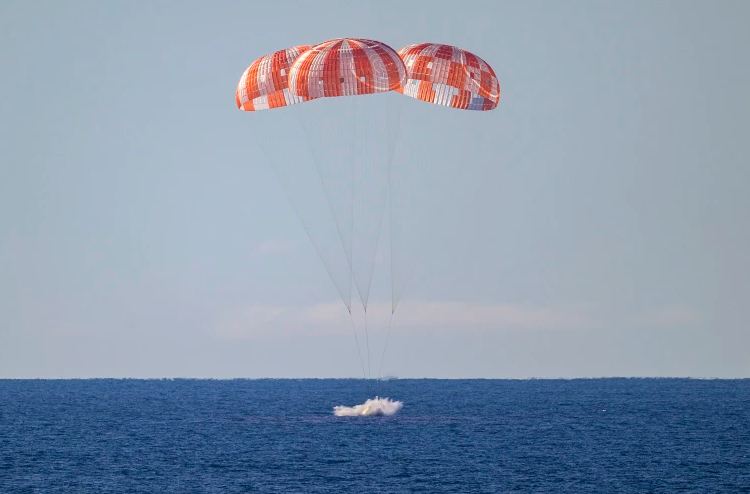
NASA’s Artemis II mission has successfully come to an end, with the crew safely returning to Earth after a groundbreaking journey around the Moon. The Orion spacecraft splashed down in the Pacific Ocean off the coast of California, marking a precise and carefully planned landing. Recovery teams were already in position and quickly secured the capsule, ensuring the astronauts were safely brought aboard recovery vessels.
First Crewed Lunar Journey in Decades
This mission is historic because it marks the first time in more than 50 years that humans have traveled to the Moon and returned safely. The last time astronauts made a similar journey was during the Apollo era in the 1970s. Artemis II represents a major step forward in modern space exploration, proving that humans can once again venture beyond low Earth orbit and return home safely.
Meet the Crew
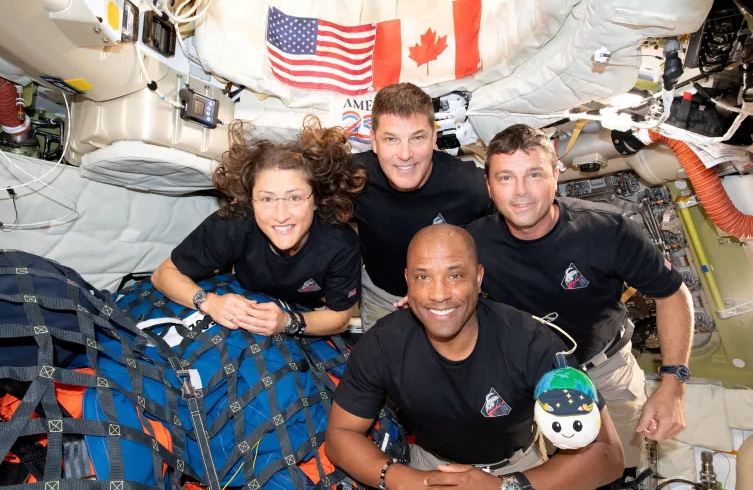
The four astronauts aboard the mission were Reid Wiseman, Victor Glover, Christina Koch, and Jeremy Hansen. Each brought unique experience and also made history during the mission. Koch became the first woman to travel to the Moon, Glover the first person of color, and Hansen the first non-American to take part in a lunar mission. Their journey symbolizes a new era of diversity and international cooperation in space exploration.
A Journey Full of Milestones
The mission lasted about 10 days and covered nearly 700,000 miles. During that time, the crew flew around the Moon, reaching a record-breaking distance of over 250,000 miles from Earth—the farthest humans have ever traveled. The astronauts also captured stunning images of the Moon and Earth, including views of the far side of the Moon rarely seen before.
The Challenges of Re-Entry
Returning to Earth is one of the most dangerous parts of any space mission. The Orion capsule re-entered the atmosphere at speeds close to 25,000 miles per hour, enduring extreme temperatures caused by friction. A brief communication blackout occurred during this phase, which is normal during high-speed re-entry. Despite these challenges, the spacecraft performed exactly as planned, deploying parachutes and landing safely in the ocean.
Preparing for Future Moon Missions
Artemis II was not designed to land on the Moon but to test systems needed for future missions. The success of this mission is a crucial step toward Artemis III, which aims to land astronauts on the lunar surface later this decade. NASA also hopes to use these missions as a foundation for even more ambitious goals, including sending humans to Mars.
Conclusion
The successful return of the Artemis II crew marks a turning point in space exploration. It demonstrates that human missions to deep space are once again possible and sets the stage for future lunar landings. Beyond its technical achievements, the mission represents inspiration, progress, and a renewed sense of curiosity about what lies beyond our planet.
Global Impact and Public Excitement
The success of the Artemis II mission has sparked excitement around the world, reigniting public interest in space exploration. Millions followed the journey through live broadcasts and social media updates, celebrating each milestone from launch to splashdown. The mission has inspired a new generation of scientists, engineers, and dreamers who see space not as a distant frontier, but as an achievable destination. Educational institutions and space agencies are already reporting increased interest in STEM fields, showing how powerful such missions can be in shaping future careers..