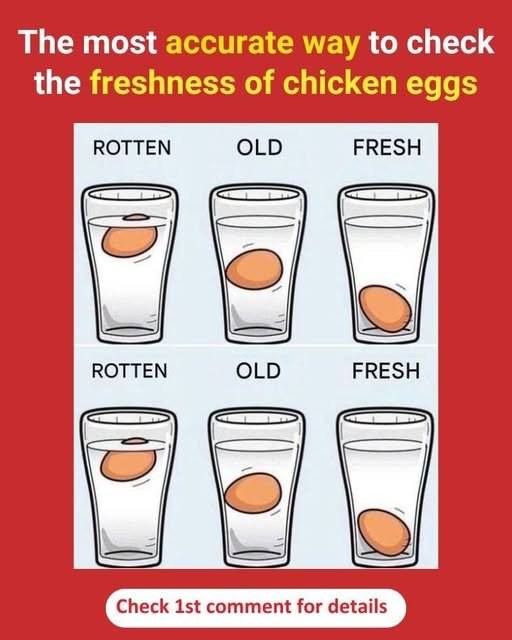
A popular home trick often shared online is the “egg freshness test,” which is usually passed down as a simple way to check whether eggs are still safe to eat. The method is easy, requires no tools, and is based on a basic idea about how eggs change over time.
The Basic Water Test
The most common version of the test involves placing an egg in a bowl of water:
- If the egg sinks and lies flat, it is considered very fresh
- If it stands upright, it is older but still often safe to use
- If it floats, it is usually considered too old and should be discarded
This happens because eggshells are porous, meaning tiny amounts of air and moisture slowly pass through them. As an egg gets older, more air enters inside, creating a larger air pocket that makes the egg more buoyant.
Why Eggs Float Over Time
Inside every egg is a small air cell. When the egg is freshly laid, this air pocket is very small. As time passes, moisture inside the egg slowly evaporates and is replaced by air through the shell’s microscopic pores. This process makes the egg lighter in density, so it becomes more likely to float in water. Fresh eggs are denser than water and sink, while older eggs become less dense and rise.
Important Limitations of the Test
Although the float test is widely used, it is not a perfect safety method. It mainly shows age, not freshness or safety. For example, an egg may still float but not necessarily be spoiled in all cases. Likewise, a sinking egg is not a guarantee of perfect quality if it has been contaminated or improperly stored.
Experts recommend combining the float test with other checks:
- Smell test: A rotten egg has a strong sulfur-like odor
- Visual test after cracking: Fresh eggs have firm yolks and thick whites
- Shake test: Sloshing sounds may indicate an older egg
Storage Still Matters Most
Egg freshness depends heavily on how they are stored. Refrigerated eggs generally stay good for several weeks, especially if kept in stable, cold conditions. Temperature changes and improper storage can shorten shelf life even if the egg initially passed the float test.

Conclusion
Nana’s egg freshness test is a simple and useful household trick that can give a quick idea of an egg’s age. It works because older eggs develop larger air pockets that make them float. However, it should be seen as a basic guideline rather than a guaranteed safety test. For best results, it should always be combined with smell, appearance, and proper storage awareness to avoid food waste and ensure safe eating. Regularly checking eggs using multiple methods is the safest approach, especially for households that buy eggs in bulk or store them for longer periods. While the float test is helpful, refrigeration and checking expiration dates remain the most reliable indicators of quality. Proper handling can significantly reduce the risk of foodborne illness and ensure eggs are always safe and fresh for cooking and baking use.